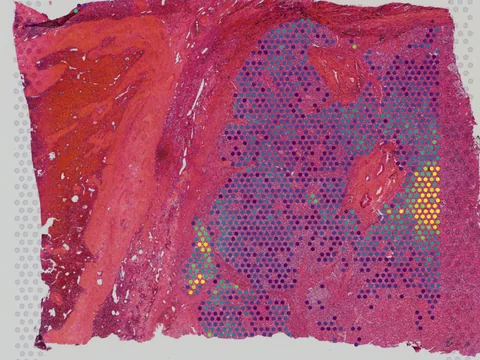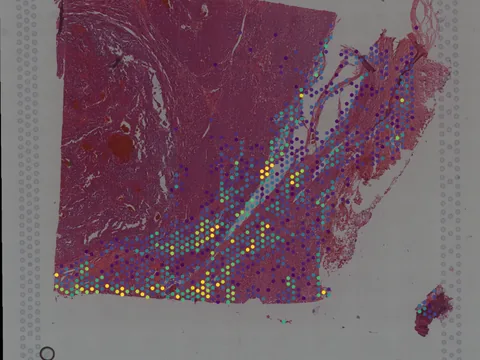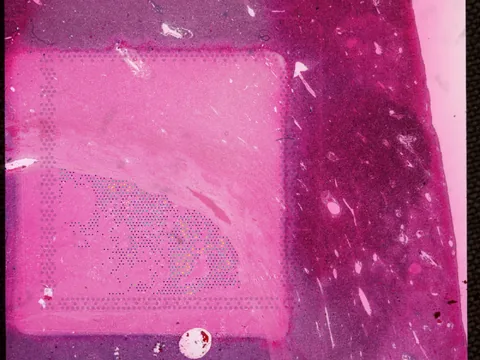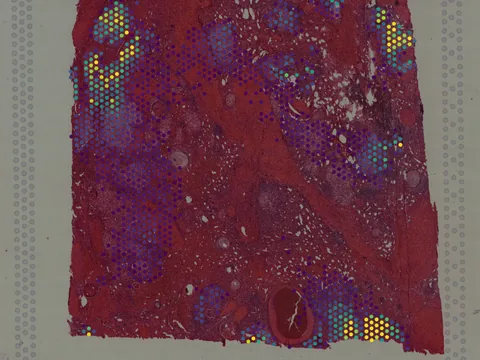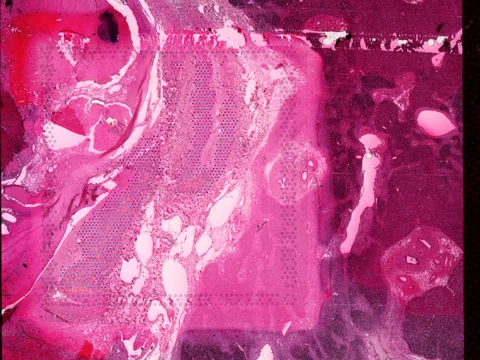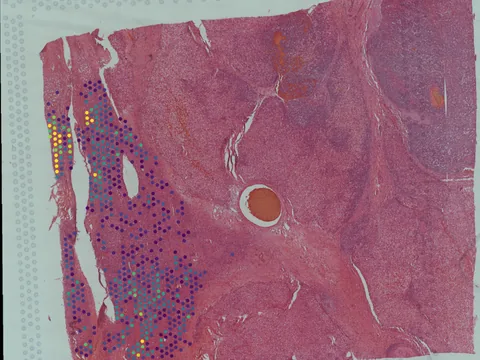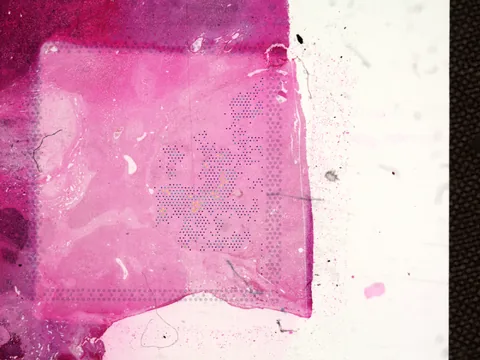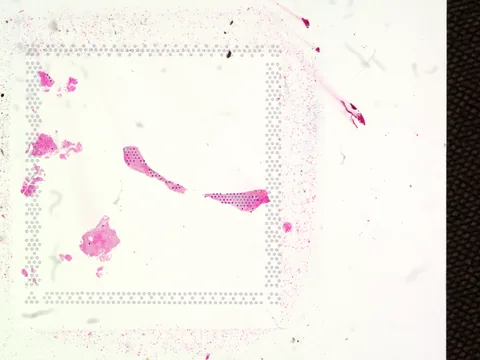
Collections / Multiomic analysis uncovers a continuous spectrum of differentiation and Wnt-MDK-driven immune evasion in hepatoblastoma [Spatial Transcriptomics]

Multiomic analysis uncovers a continuous spectrum of differentiation and Wnt-MDK-driven immune evasion in hepatoblastoma [Spatial Transcriptomics]

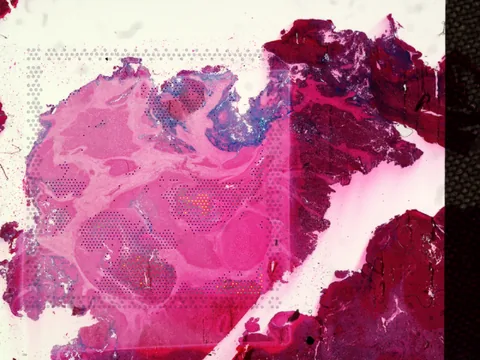
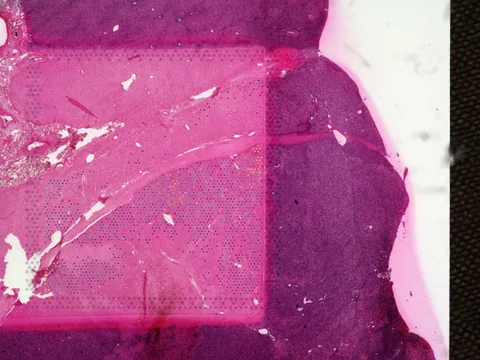
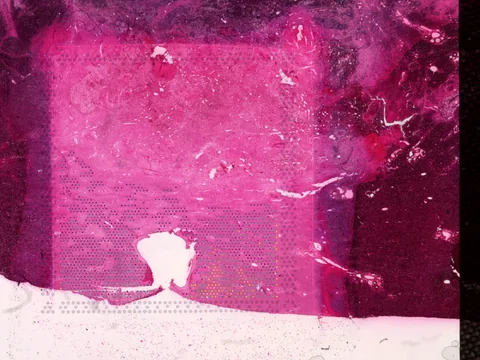
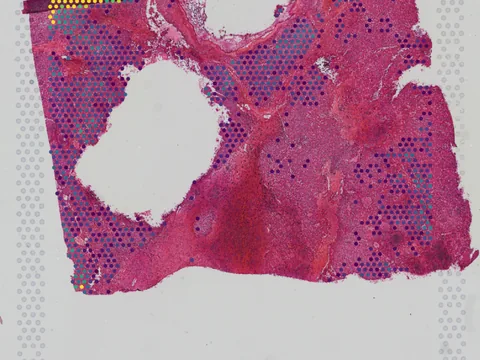
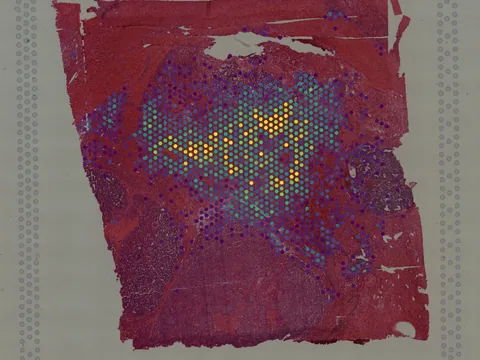
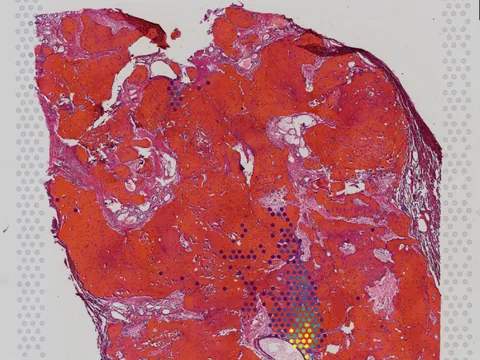
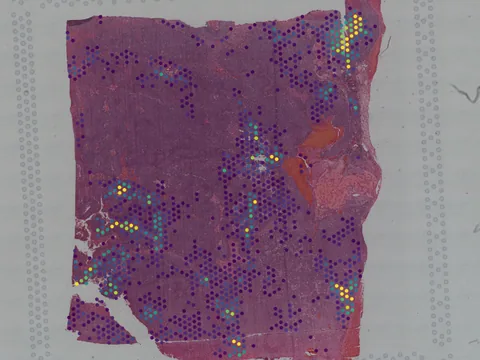
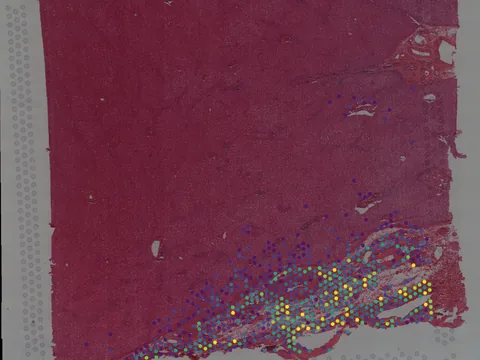
Background & Aims: Hepatoblastoma is the most common pediatric cancer of the liver and the majority of cases display activating mutations in the Wnt/β-catenin pathway. Understanding the complex milieu of the tumor microenvironment has resulted in promising new therapies for adult cancers, but similar approaches in pediatric cancers are still lacking. We aimed to provide a comprehensive analysis of the tumor microenvironment of hepatoblastoma unveiling its spatial architecture and key signaling mechanisms. Methods: Single-cell/-nucleus RNA-seq (n=15), spatial transcriptomics (n=22), and multiplex immunofluorescence stainings (n=7) of treated, untreated, and metastasized pediatric hepatoblastomas were performed. An RNA-seq validation cohort (n=110) including hepatoblastoma, non-tumor and fetal liver samples and single-cell RNA-seq data of healthy immune cells were used for further analysis. Western blotting and RNA-seq of hepatoblastoma and macrophage cell lines were conducted for experimental validation. Results: Of four identified transcriptional tumor programs, “Developmental” and “Metabolic” reflected different hepatic differentiation stages, while “Cycling” was enriched in undifferentiated cells and relapsed samples, and “Intermediate” displayed high activity in samples from patients with poor outcomes. We discovered an increased ratio of anti- to pro-inflammatory immune cells and evidence of immune exclusion from tumor areas. Wnt-responsive upregulation of the immunomodulator midkine in hepatoblastoma cells was associated with a change in macrophage phenotype, which could be partially reversed through midkine inhibition. Conclusions: Hepatoblastoma cells exist along a continuous spectrum of hepatic differentiation and inhabit an altered immune environment. Wnt signaling augments midkine expression, which appears to be involved in shaping the immune environment by modifying macrophages to enable immune evasion, thereby providing a potential therapeutic target.

Datasets22
Size~1.2 GB
AssayVisium
Samplehuman · liver
KindOther
PMID:39900120 ↗
Python · lamindb
import lamindb as ln
import spatialdata as sd

coll = ln.Collection.get(key="geo-gse261958")
coll.ordered_artifacts.df()                 # the 22 members, ordered

# download every member .zarr to the local cache:
paths = [a.cache() for a in coll.ordered_artifacts.all()]

# …or load each straight into memory as a SpatialData object:
sdatas = {a.key: sd.read_zarr(a.cache()) for a in coll.ordered_artifacts.all()}
Open in Vitessce
Visium
Human liver
GSM8657788
human liver hepatoblastoma 30 MB 462 obs silver H&E NCBI GEO policy
TechnologyVisium
Organismhuman
Tissueliver
Conditionhepatoblastoma
Size30 MB
Obs462
silver H&E NCBI GEO policy Open in Vitessce
Open in Vitessce
Visium
Human liver
GSM8155172
human liver hepatoblastoma 45 MB 4,123 obs bronze H&E
TechnologyVisium
Organismhuman
Tissueliver
Conditionhepatoblastoma
Size45 MB
Obs4,123
Magnificationother · 3.425 µm/px
bronze H&E Open in Vitessce
Open in Vitessce
Visium
Human liver
GSM8657786
human liver hepatoblastoma 74 MB 4,563 obs silver H&E NCBI GEO policy
TechnologyVisium
Organismhuman
Tissueliver
Conditionhepatoblastoma
Size74 MB
Obs4,563
silver H&E NCBI GEO policy Open in Vitessce
Open in Vitessce
Visium
Human liver
GSM8657780
human liver hepatoblastoma 73 MB 4,816 obs silver H&E NCBI GEO policy
TechnologyVisium
Organismhuman
Tissueliver
Conditionhepatoblastoma
Size73 MB
Obs4,816
silver H&E NCBI GEO policy Open in Vitessce
Open in Vitessce
Visium
Human liver
GSM8657782
human liver hepatoblastoma 88 MB 4,661 obs silver H&E NCBI GEO policy
TechnologyVisium
Organismhuman
Tissueliver
Conditionhepatoblastoma
Size88 MB
Obs4,661
silver H&E NCBI GEO policy Open in Vitessce
Open in Vitessce
Visium
Human liver
GSM8155170
human liver hepatoblastoma 25 MB 2,897 obs bronze H&E
TechnologyVisium
Organismhuman
Tissueliver
Conditionhepatoblastoma
Size25 MB
Obs2,897
Magnificationother · 3.493 µm/px
bronze H&E Open in Vitessce
Open in Vitessce
Visium
Human liver
GSM8155169
human liver hepatoblastoma 31 MB 4,046 obs bronze H&E
TechnologyVisium
Organismhuman
Tissueliver
Conditionhepatoblastoma
Size31 MB
Obs4,046
Magnificationother · 3.393 µm/px
bronze H&E Open in Vitessce
Open in Vitessce
Visium
Human liver
GSM8155175
human liver hepatoblastoma 50 MB 3,333 obs bronze H&E
TechnologyVisium
Organismhuman
Tissueliver
Conditionhepatoblastoma
Size50 MB
Obs3,333
Magnificationother · 3.509 µm/px
bronze H&E Open in Vitessce
Open in Vitessce
Visium
Human liver
GSM8657783
human liver hepatoblastoma 89 MB 4,983 obs silver H&E NCBI GEO policy
TechnologyVisium
Organismhuman
Tissueliver
Conditionhepatoblastoma
Size89 MB
Obs4,983
silver H&E NCBI GEO policy Open in Vitessce
Open in Vitessce
Visium
Human liver
GSM8657779
human liver hepatoblastoma 94 MB 4,845 obs silver H&E NCBI GEO policy
TechnologyVisium
Organismhuman
Tissueliver
Conditionhepatoblastoma
Size94 MB
Obs4,845
silver H&E NCBI GEO policy Open in Vitessce
Visium
Human liver
GSM8155178
human liver hepatoblastoma 26 MB 4,049 obs bronze H&E
TechnologyVisium
Organismhuman
Tissueliver
Conditionhepatoblastoma
Size26 MB
Obs4,049
bronze H&E
Open in Vitessce
Visium
Human liver
GSM8657778
human liver hepatoblastoma 66 MB 4,439 obs silver H&E NCBI GEO policy
TechnologyVisium
Organismhuman
Tissueliver
Conditionhepatoblastoma
Size66 MB
Obs4,439
silver H&E NCBI GEO policy Open in Vitessce
Open in Vitessce
Visium
Human liver
GSM8657781
human liver hepatoblastoma 88 MB 4,192 obs silver H&E NCBI GEO policy
TechnologyVisium
Organismhuman
Tissueliver
Conditionhepatoblastoma
Size88 MB
Obs4,192
silver H&E NCBI GEO policy Open in Vitessce
Open in Vitessce
Visium
Human liver
GSM8155176
human liver hepatoblastoma 33 MB 4,372 obs bronze H&E
TechnologyVisium
Organismhuman
Tissueliver
Conditionhepatoblastoma
Size33 MB
Obs4,372
bronze H&E Open in Vitessce
Open in Vitessce
Visium
Human liver
GSM8657785
human liver hepatoblastoma 91 MB 4,938 obs silver H&E NCBI GEO policy
TechnologyVisium
Organismhuman
Tissueliver
Conditionhepatoblastoma
Size91 MB
Obs4,938
silver H&E NCBI GEO policy Open in Vitessce
Open in Vitessce
Visium
Human liver
GSM8657777
human liver hepatoblastoma 33 MB 331 obs silver H&E NCBI GEO policy
TechnologyVisium
Organismhuman
Tissueliver
Conditionhepatoblastoma
Size33 MB
Obs331
silver H&E NCBI GEO policy Open in Vitessce
Open in Vitessce
Visium
Human liver
GSM8155177
human liver hepatoblastoma 51 MB 3,726 obs bronze H&E
TechnologyVisium
Organismhuman
Tissueliver
Conditionhepatoblastoma
Size51 MB
Obs3,726
bronze H&E Open in Vitessce
Open in Vitessce
Visium
Human liver
GSM8155171
human liver hepatoblastoma 30 MB 3,784 obs bronze H&E
TechnologyVisium
Organismhuman
Tissueliver
Conditionhepatoblastoma
Size30 MB
Obs3,784
bronze H&E Open in Vitessce
Open in Vitessce
Visium
Human liver
GSM8155174
human liver hepatoblastoma 65 MB 3,679 obs bronze H&E
TechnologyVisium
Organismhuman
Tissueliver
Conditionhepatoblastoma
Size65 MB
Obs3,679
bronze H&E Open in Vitessce
Open in Vitessce
Visium
Human liver
GSM8155173
human liver hepatoblastoma 37 MB 4,644 obs bronze H&E
TechnologyVisium
Organismhuman
Tissueliver
Conditionhepatoblastoma
Size37 MB
Obs4,644
bronze H&E Open in Vitessce
Open in Vitessce
Visium
Human liver
GSM8657784
human liver hepatoblastoma 67 MB 4,694 obs silver H&E NCBI GEO policy
TechnologyVisium
Organismhuman
Tissueliver
Conditionhepatoblastoma
Size67 MB
Obs4,694
silver H&E NCBI GEO policy Open in Vitessce
Open in Vitessce
Visium
Human liver
GSM8657787
human liver hepatoblastoma 26 MB 337 obs silver H&E NCBI GEO policy
TechnologyVisium
Organismhuman
Tissueliver
Conditionhepatoblastoma
Size26 MB
Obs337
silver H&E NCBI GEO policy Open in Vitessce

Cite this collection

No linked publication found — please cite the data source.