
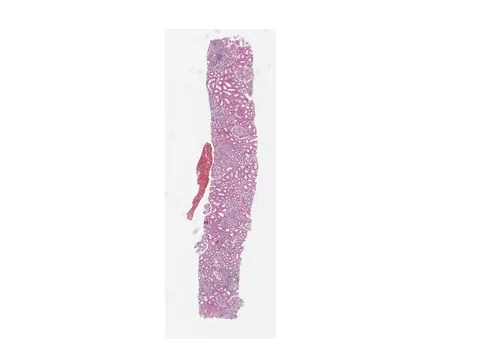
 Visium HD
Human kidney
GSM9467251
human kidney type 2 diabetes mellitus 50 MB 175,742 obs bronze H&E
TechnologyVisium HD
Organismhuman
Tissuekidney
Conditiontype 2 diabetes mellitus
Obs175,742
bronze H&E
Hypoxia drives diabetic kidney disease (DKD) progression through Hypoxia Inducible Factor (HIF) signaling. The kidney’s cellular heterogeneity and complex architecture pose challenges for directly assessing the pharmacologic effects on kidney oxygenation and hypoxia responsive pathways in vivo, such as treatment with SGLT2 inhibitors (SGLT2i), presumed to impact kidney oxygenation. Using single-cell transcriptional profiling of kidney tissue from youth with type 2 diabetes (T2D) who showed minimal clinical evidence of DKD, we identified cell type enrichment of HIF regulated genes, findings that replicated in people with later stage DKD in the Kidney Precision Medicine Project (KPMP). Using conserved transcription factor (TF) binding motifs, higher-order promoter regulatory structures identified potential cooperating TFs that explained the cell type enrichment pattern. From these promoter elements, 7 interconnected regulatory pathways were identified, comprising a network of 237 genes. Analysis of multiome data from reference tissue in KPMP demonstrated that 80% of the network genes resided in accessible chromatin. Expression of network genes increased significantly in late compared to early stage DKD and were validated in a hypoxic human organoid model system. Kidney tissue from individuals with T2D treated with SGLT2i demonstrated reversal of the accumulated changes in the HIF network compared to those not treated with SGLT2i. Most high confidence genes showed concordant differential expression in spatial transcriptomics from individuals with T2D. Hypoxic kidney organoids treated with SGLT2i confirmed these protective effects. Our promoter-anchored HIF regulatory network provides a multi-component read-out that captures disease progression and quantifies therapeutic response to SGLT2i.
import lamindb as ln
import spatialdata as sd

coll = ln.Collection.get(key="geo-gse317226")
coll.ordered_artifacts.df()                 # the 4 members, ordered

# download every member .zarr to the local cache:
paths = [a.cache() for a in coll.ordered_artifacts.all()]

# …or load each straight into memory as a SpatialData object:
sdatas = {a.key: sd.read_zarr(a.cache()) for a in coll.ordered_artifacts.all()}Hypoxia drives diabetic kidney disease (DKD) progression through Hypoxia Inducible Factor (HIF) signaling. The kidney's cellular heterogeneity and complex architecture pose challenges for directly assessing the pharmacologic effects on kidney oxygenation and hypoxia-responsive pathways in vivo, such as treatment with SGLT2 inhibitors (SGLT2i), presumed to impact kidney oxygenation. Using single-cell transcriptional profiling of kidney tissue from youth with type 2 diabetes (T2D) who showed minimal clinical evidence of DKD, we identified cell type enrichment of HIF-regulated genes, findings that replicated in people with later-stage DKD in the Kidney Precision Medicine Project (KPMP). Using conserved transcription factor (TF) binding motifs, higher-order promoter regulatory structures identified potential cooperating TFs that explained the cell type enrichment pattern. From these promoter elements, 7 interconnected regulatory pathways were identified, comprising a network of 237 genes. Analysis of multiome data from reference tissue in KPMP demonstrated that 80% of the network genes resided in accessible chromatin. Expression of network genes increased significantly in the late compared to the early stage DKD and was validated in a hypoxic human organoid model system. Kidney tissue from individuals with T2D treated with SGLT2i demonstrated reversal of the accumulated changes in the HIF network compared to those not treated with SGLT2i. Most high-confidence genes showed concordant differential expression in spatial transcriptomics from individuals with T2D. Hypoxic kidney organoids treated with SGLT2i confirmed these protective effects. Our promoter-anchored HIF regulatory network provides a multi-component read-out that captures disease progression and quantifies therapeutic response to SGLT2i.
Visium HD 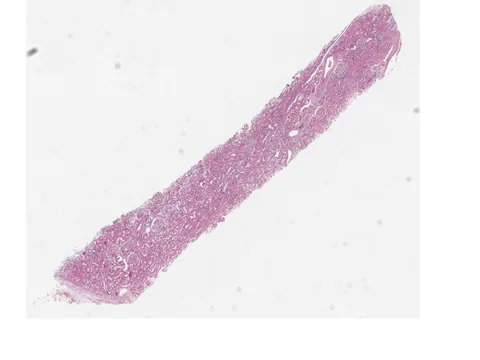 Visium HD
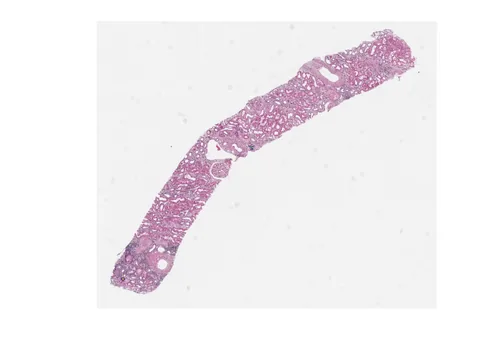 Visium HD
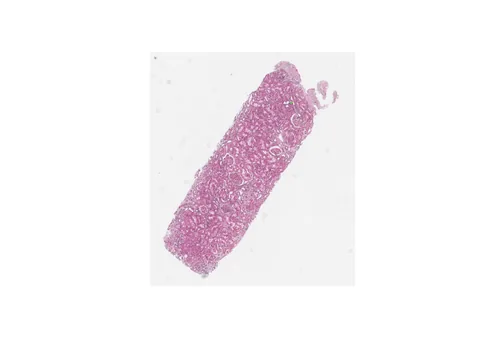 Visium HD
@article{Nair_2026,
  title = {Hypoxia inducible factor network reflects kidney disease progression in diabetes and sodium-glucose co-transporters inhibition},
  volume = {11},
  ISSN = {2059-3635},
  url = {http://dx.doi.org/10.1038/s41392-026-02653-0},
  DOI = {10.1038/s41392-026-02653-0},
  number = {1},
  journal = {Signal Transduction and Targeted Therapy},
  publisher = {Springer Science and Business Media LLC},
  author = {Nair, Viji and Minakawa, Akihiro and Smith, Cathy and Berthier, Celine C. and Hartman, John and Menon, Rajasree and Fermin, Damian and Otto, Edgar A. and Gisch, Debora L. and Eadon, Michael T. and Jain, Sanjay and Choi, Ye Ji and Pyle, Laura and Eichinger, Felix and Alakwaa, Fadhl M. and Rose, Michael P. and Subramanian, Lalita and El Saghir, Jamal and Beamish, Jeffrey A. and Hodgin, Jeffrey B. and Brosius, Frank C. and Bjornstad, Petter and Nelson, Peter J. and Harder, Jennifer L. and Werner, Thomas and Kretzler, Matthias and Schaub, Jennifer A.},
  year = {2026},
  month = Apr
}