
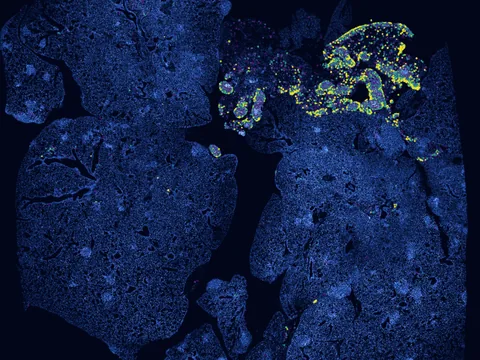
 10x Xenium
Mouse lung
GSM9360616
mouse lung lung cancer 5.0 GB 678,432 obs silver NCBI GEO policy
Technology10x Xenium
Organismmouse
Tissuelung
Conditionlung cancer
Obs678,432
silver NCBI GEO policy
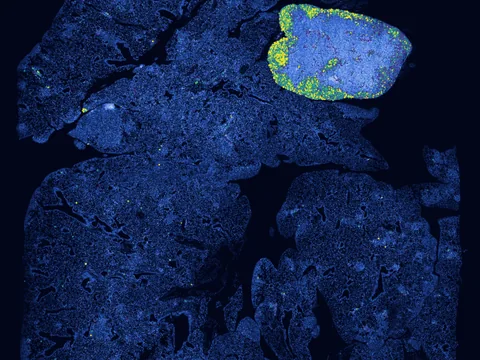
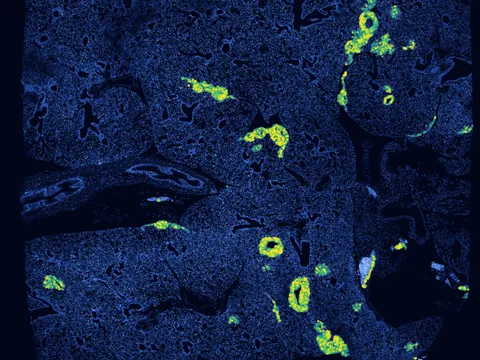
Macrophages are among the most abundant immune cells in solid tumors, yet how their diverse origins and spatial organization shape anti-tumor immunity remains unclear. Here, we uncover a fundamental division of labor between tissue-resident interstitial macrophage (IM) subsets and recruited macrophages (recMacs) in lung cancer. Using single-cell and spatial transcriptomics, we identify chemokine-defined IM subsets with opposing functions: Cxcl13-, Cxcl9-, and Cxcl10-producing CD206hi IMs positioned along bronchovascular regions drive tertiary lymphoid structure formation, lymphocyte recruitment, and tumor control, whereas Ccl2-expressing IMs localize within tumor regions and recruit pro-tumorigenic recMacs. We further show that recMac-derived moDCs function as immunosuppressive antigen-presenting cells in draining lymph nodes. During neoantigen vaccination, CCR5 inhibition with Maraviroc selectively blocks antigen-bearing monocyte but not dendritic cell migration, thereby enhancing dendritic cell-mediated tumor immunity. These findings reveal how macrophage ontogeny and spatial compartmentalization govern tumor immunity and point to therapeutic strategies that preserve protective IM functions while disrupting recMac-driven immunosuppression.
import lamindb as ln
import spatialdata as sd

coll = ln.Collection.get(key="geo-gse313081")
coll.ordered_artifacts.df()                 # the 4 members, ordered

# download every member .zarr to the local cache:
paths = [a.cache() for a in coll.ordered_artifacts.all()]

# …or load each straight into memory as a SpatialData object:
sdatas = {a.key: sd.read_zarr(a.cache()) for a in coll.ordered_artifacts.all()}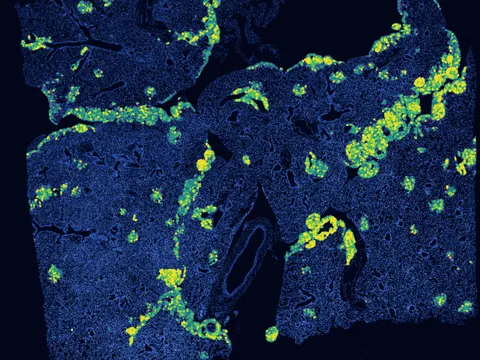 10x Xenium
 10x Xenium
 10x Xenium