
 Visium
Mouse skin of body
GSM8974358
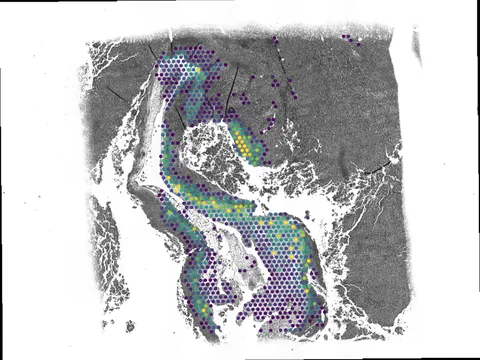
mouse skin of body melanoma 60 MB 3,066 obs bronze H&E
TechnologyVisium
Organismmouse
Tissueskin of body
Conditionmelanoma
Obs3,066
bronze H&E
In cancer, metabolic changes and uncontrolled tumor growth alter nutrient availability, impacting antitumor immune responses. Regulatory T (Treg) cells are a subset of T cells with immunosuppressive properties that has been found to additionally possess the ability to control tissue homeostasis and repair. However, it is not known how these functions are molecularly controlled and if they are influenced by tumor metabolism. Here, we report that excessive release of polyamines in the tumor microenvironment directs the functional polarization of Treg cells towards immunosuppression in a protein kinase CK2 (CK2)-dependent manner. Polyamine deprivation as well as genetic or pharmacological inhibition of CK2 activity in Treg cells induced tissue reparative properties in Treg cells that orchestrated efficient antitumor type 2 immune responses, and coordinated tissue repair mechanisms to support tumor eradication. These findings suggest the potential for targeted modulation of Treg cell functions, offering new avenues for cancer therapy.
import lamindb as ln
import spatialdata as sd

coll = ln.Collection.get(key="geo-gse296660")
coll.ordered_artifacts.df()                 # the 2 members, ordered

# download every member .zarr to the local cache:
paths = [a.cache() for a in coll.ordered_artifacts.all()]

# …or load each straight into memory as a SpatialData object:
sdatas = {a.key: sd.read_zarr(a.cache()) for a in coll.ordered_artifacts.all()}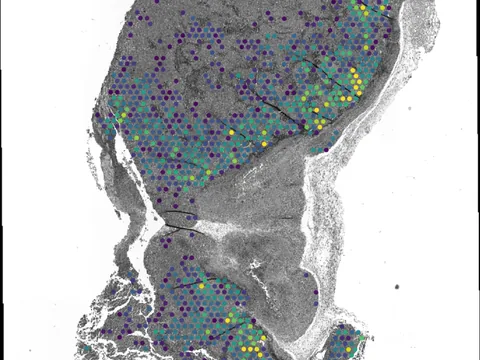 Visium
No linked publication found — please cite the data source.