
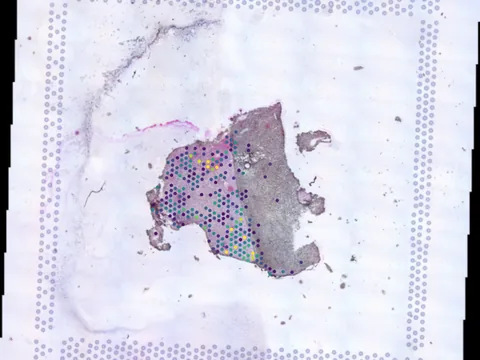
 Visium
Human brain
GSM9902436
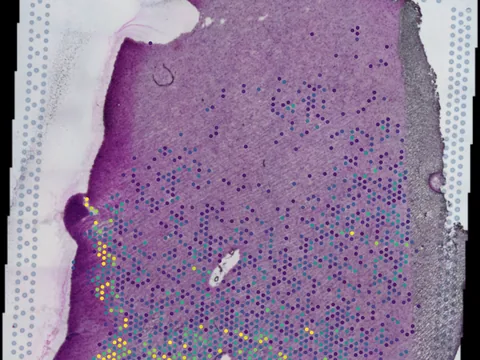
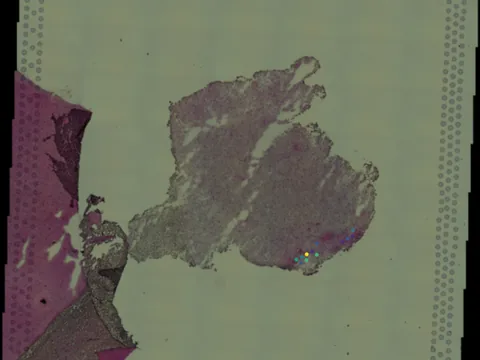
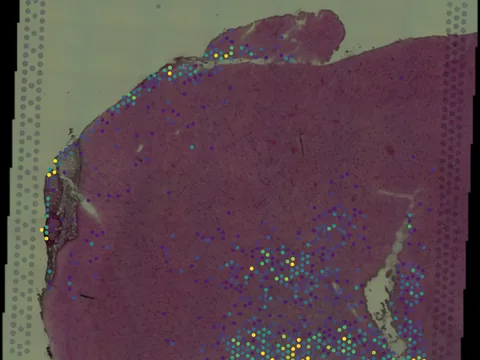
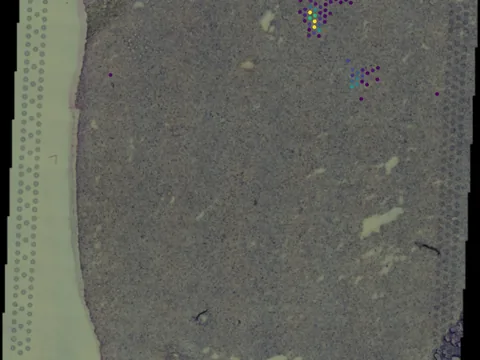
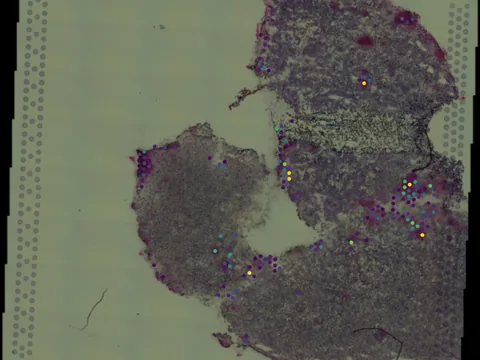
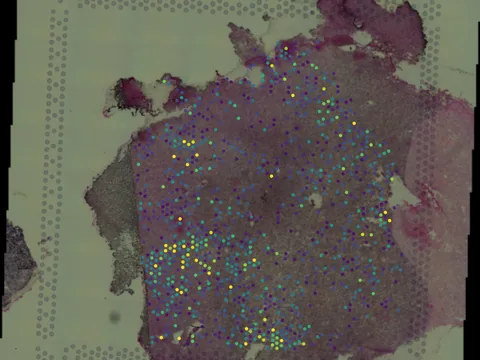
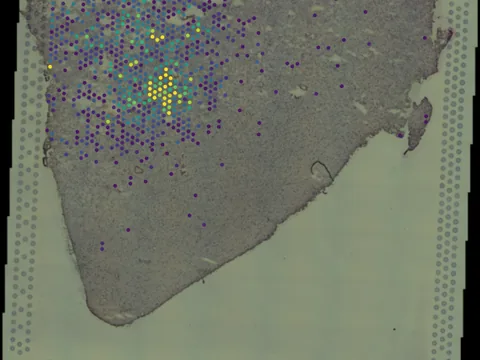
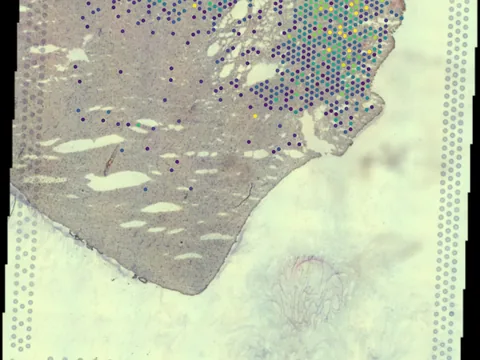
human brain glioma 4.3 MB 797 obs silver H&E
TechnologyVisium
Organismhuman
Tissuebrain
Conditionglioma
Obs797
silver H&E
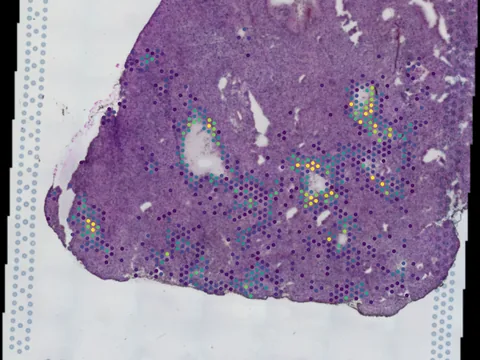
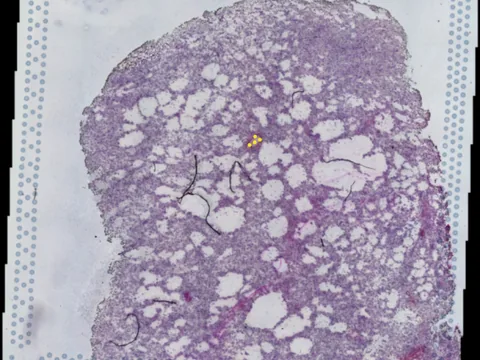
Adult diffuse gliomas comprise malignant cell states interwoven with the non-malignant brain microenvironment. Here, we combine spatial transcriptomics and spatial proteomics of IDH-mutant gliomas to define organizational principles across histological grades. In low-grade tumors, spatial organization is shaped by underlying brain anatomy. We identify a functional white–grey matter junction that restricts cortical invasion and is associated with marked changes in tumor composition and cellular phenotypes. This boundary is preferentially traversed by oligodendrocyte progenitor (OPC)-like malignant cells, suggesting a role in tumor expansion. In contrast, intermediate-grade tumors are largely disorganized, with few recurring interactions between cancer cell states and microenvironmental cell types. In high-grade tumors, hypoxia-associated structure emerges, resembling IDH-wildtype glioblastoma. Together, these findings reveal two independent axes of spatial organization—from anatomy-driven structure in low-grade tumors to hypoxia-driven organization in high-grade tumors—and establish a framework linking tumor grade to recurrent spatial interactions.
import lamindb as ln
import spatialdata as sd

coll = ln.Collection.get(key="geo-gse341225")
coll.ordered_artifacts.df()                 # the 12 members, ordered

# download every member .zarr to the local cache:
paths = [a.cache() for a in coll.ordered_artifacts.all()]

# …or load each straight into memory as a SpatialData object:
sdatas = {a.key: sd.read_zarr(a.cache()) for a in coll.ordered_artifacts.all()}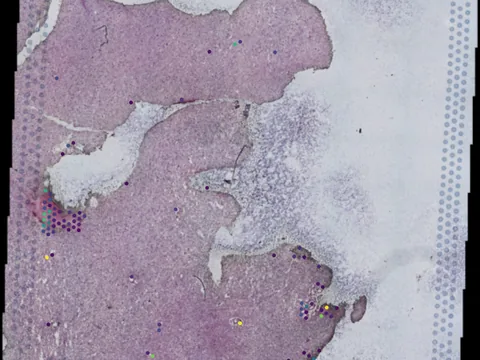 Visium
 Visium
 Visium
 Visium
 Visium
 Visium
 Visium
 Visium
 Visium
 Visium
 Visium
No linked publication found — please cite the data source.