Collections / Integrated bulk and spatial transcriptomic analysis identifies progression-associated molecular signatures in biopsy-proven hypertensive nephropathy [Spatial Transcriptomics]

Integrated bulk and spatial transcriptomic analysis identifies progression-associated molecular signatures in biopsy-proven hypertensive nephropathy [Spatial Transcriptomics]

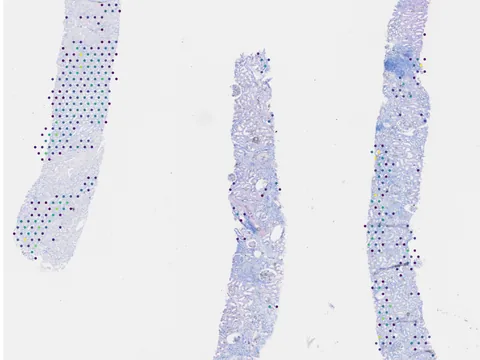
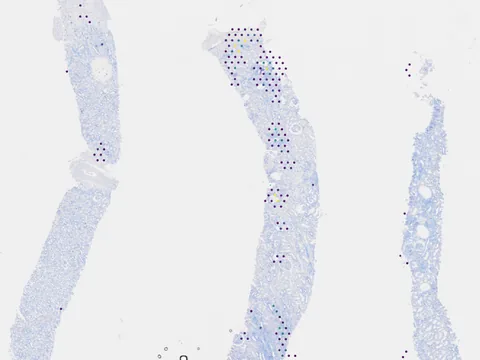
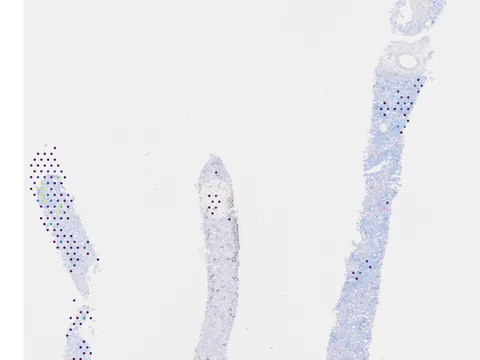
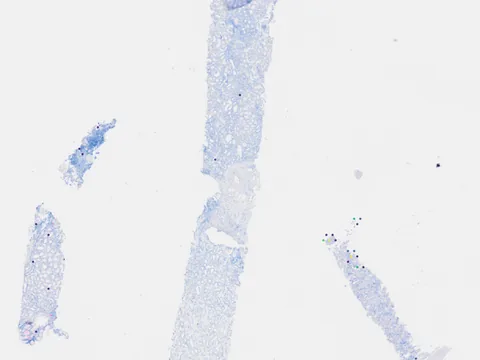
Hypertensive nephropathy (HN) is a leading cause of chronic kidney disease (CKD), but molecular mechanisms underlying disease progression remain poorly understood. We aimed to identify transcriptomic signatures associated with disease progression and to localize these signatures within renal architectures. Patients with biopsy-proven HN were selected from the Norwegian Kidney Biopsy Registry and stratified after ≥5 years of follow-up into early stable (ES), early progressor (EP), late stable (LS) and late progressor (LP) based on baseline kidney function and annual eGFR decline. Bulk transcriptomic profiling was performed in a discovery cohort and validated in an independent cohort using nCounter profiling. Spatial transcriptomics was applied to map progression-associated signatures to nephron compartments. Bulk RNA sequencing identified 415 differentially expressed genes (DEGs) between ES and EP, and 692 between LS and LP samples. ES was enriched in circadian rhythm pathways, with reduced NR1D1 and NR1D2 expression in EP. LP was associated with metabolic reprogramming including glutathione, retinol and amino acid metabolism. Random forest modelling identified NR1D1 gene expression as a key classifier, validated in an independent cohort. Spatial transcriptomics revealed nephron segment-specific expression patterns, including a proximal tubule cluster enriched in ferroptosis in LP. Comparative nephron-segment analyses across groups revealed progression-associated biomarkers, including CHGA, CCN2 and SFRP2 in glomeruli, and APOE in proximal tubules. HN progression appears to involve stage-specific and compartmentalized molecular programs. Integration of bulk and spatial transcriptomics identifies candidate biomarkers and pathways, potentially supporting innovative prognostic stratification and therapeutic strategies.

Datasets4
Size~147 MB
AssayVisium
Samplehuman · kidney
KindComparison
www.ncbi.nlm.nih.gov/geo/query/acc.cgi?acc=GSE339455 ↗
Python · lamindb
import lamindb as ln
import spatialdata as sd

coll = ln.Collection.get(key="geo-gse339455")
coll.ordered_artifacts.df()                 # the 4 members, ordered

# download every member .zarr to the local cache:
paths = [a.cache() for a in coll.ordered_artifacts.all()]

# …or load each straight into memory as a SpatialData object:
sdatas = {a.key: sd.read_zarr(a.cache()) for a in coll.ordered_artifacts.all()}
Open in Vitessce
Visium
Human kidney
GSM9895923
human kidney hypertensive nephropathy 32 MB 4,985 obs silver H&E NCBI GEO policy
TechnologyVisium
Organismhuman
Tissuekidney
Conditionhypertensive nephropathy
Size32 MB
Obs4,985
silver H&E NCBI GEO policy Open in Vitessce
Open in Vitessce
Visium
Human kidney
GSM9895921
human kidney hypertensive nephropathy 43 MB 4,992 obs silver H&E NCBI GEO policy
TechnologyVisium
Organismhuman
Tissuekidney
Conditionhypertensive nephropathy
Size43 MB
Obs4,992
silver H&E NCBI GEO policy Open in Vitessce
Open in Vitessce
Visium
Human kidney
GSM9895922
human kidney hypertensive nephropathy 40 MB 4,992 obs silver H&E NCBI GEO policy
TechnologyVisium
Organismhuman
Tissuekidney
Conditionhypertensive nephropathy
Size40 MB
Obs4,992
silver H&E NCBI GEO policy Open in Vitessce
Open in Vitessce
Visium
Human kidney
GSM9895920
human kidney hypertensive nephropathy 32 MB 4,892 obs silver H&E NCBI GEO policy
TechnologyVisium
Organismhuman
Tissuekidney
Conditionhypertensive nephropathy
Size32 MB
Obs4,892
silver H&E NCBI GEO policy Open in Vitessce

Cite this collection

No linked publication found — please cite the data source.