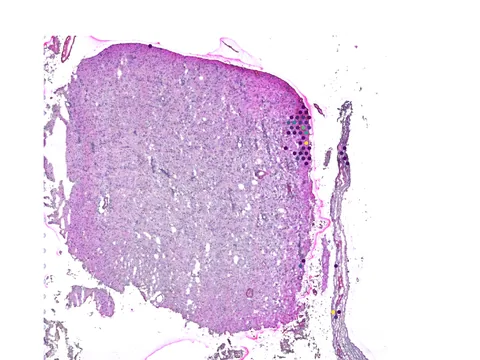
 Visium
Human brain
GSM9744832
human brain glioblastoma 21 MB 2,287 obs silver H&E
TechnologyVisium
Organismhuman
Tissuebrain
Conditionglioblastoma
Obs2,287
silver H&E
Glioblastoma (GBM) remains a formidable challenge in neuro-oncology, with immune checkpoint blockade (ICB) only showing efficacy in some patients, while the mechanisms governing therapeutic responsiveness are poorly defined. Although MAPK/ERK signaling correlates with survival following ICB, its causal role and mechanisms underlying tumor immunogenicity remain unclear. Here, we perform in vivo kinome-wide CRISPR/Cas9 screens in murine gliomas where we identify RAF-MEK-ERK axis as the strongest modulators of glioma susceptibility to anti-programmed cell death protein 1 (anti-PD-1) therapy and CD8+ T cell recognition. Experimentally-induced ERK phosphorylation (p-ERK) enhances survival after anti-PD-1 and anti-CLTA4, leading to durable antitumor immunity upon rechallenge. Additionally, glioma cell p-ERK promotes increased interferon responses and T cell infiltration. Notably, BRAF/MEK inhibition disrupts interferon programs and tumor-microglia interactions in BRAFV600E ex vivo in human GBM/brain slice cultures. Our findings elucidate that tumor-intrinsic MAPK/ERK promotes immunotherapy response, interferon responses, T cell tumor infiltration, and GBM cell-microglia interactions.
import lamindb as ln
import spatialdata as sd

coll = ln.Collection.get(key="geo-gse331374")
coll.ordered_artifacts.df()                 # the 4 members, ordered

# download every member .zarr to the local cache:
paths = [a.cache() for a in coll.ordered_artifacts.all()]

# …or load each straight into memory as a SpatialData object:
sdatas = {a.key: sd.read_zarr(a.cache()) for a in coll.ordered_artifacts.all()}
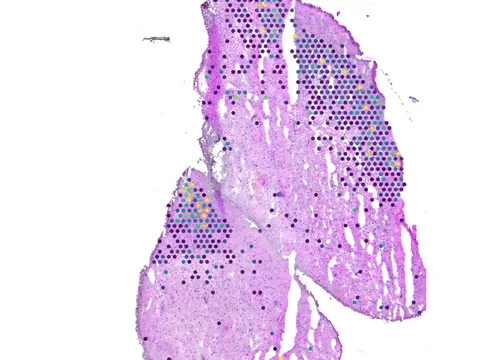 Visium
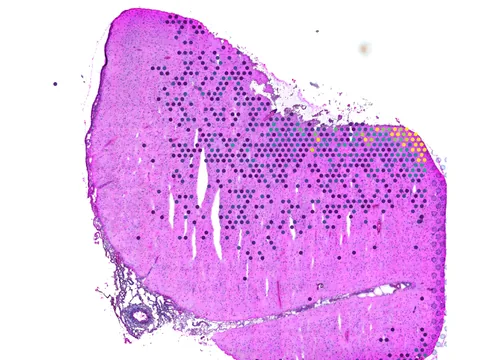 Visium
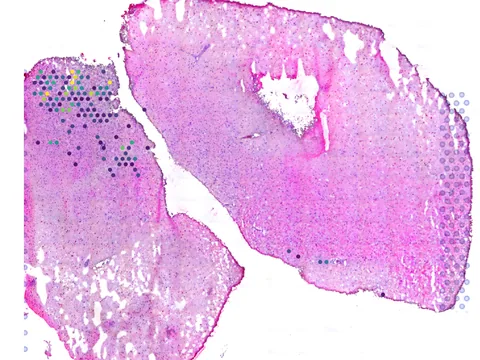 Visium
No linked publication found — please cite the data source.