
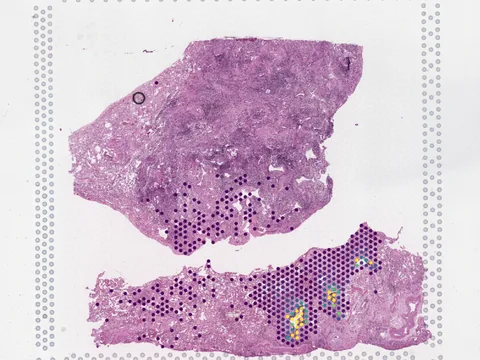
 Visium
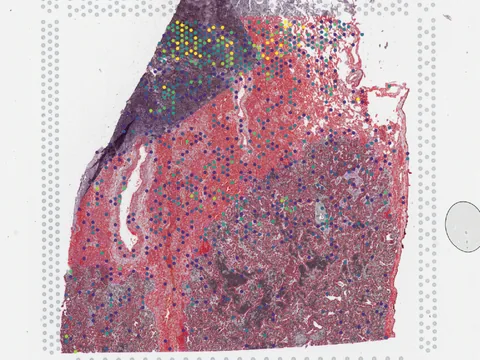
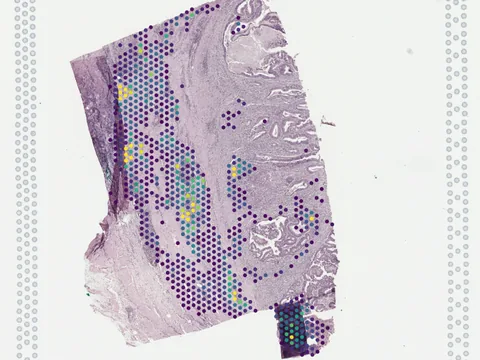
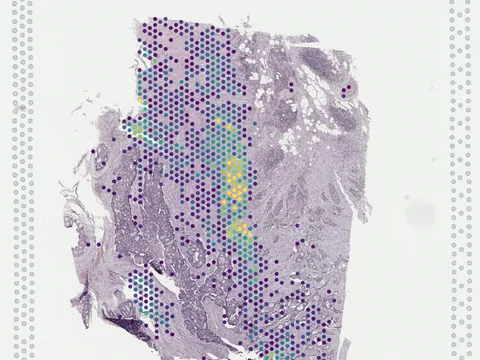
Human lung
GSM9554209
human lung non-small cell lung carcinoma 43 MB 2,894 obs bronze H&E
TechnologyVisium
Organismhuman
Tissuelung
Conditionnon-small cell lung carcinoma
Obs2,894
bronze H&E
Tertiary lymphoid structures (TLS) correlate with favorable responses to immunotherapy, yet the mechanisms governing their formation and maintenance in tumors remain poorly defined. Through high-resolution spatial mapping across human tumors, we identified a consistent accumulation of CCR7⁺ mature dendritic cells (DC) within TLS. To dissect their function, we developed a non-small cell lung cancer (NSCLC) model that recapitulates mature TLS formation. Using this model, we demonstrate that TLS induction requires IFNγ-driven maturation of type 1 conventional dendritic cells (cDC1), their migration to tumor-draining lymph nodes (tdLN), and the subsequent recruitment of tdLN-primed T cells into the tumor microenvironment. As tumors progress, TLS persist even in the absence of tdLN T cell egress, coinciding with impaired cDC1 migration to tdLN and their retention within intratumoral stromal hubs enriched in CCR7 ligands. Timed depletion of cDC1 or blockade of their localization to these hubs disrupts TLS maintenance. Strikingly, concomitant genetic ablation of both MHC class I and II on cDC1 abolishes the maintenance of TLS, T follicular helper (TFH) cells, germinal center formation, tumor-specific IgG production, and the differentiation of progenitor exhausted CD8⁺ T cells. These findings establish that local cDC1-mediated antigen presentation to CD8⁺ and CD4⁺ T cells is a central orchestrator of anti-tumor TLS programs and compelling targets for therapeutic intervention.
import lamindb as ln
import spatialdata as sd

coll = ln.Collection.get(key="geo-gse322553")
coll.ordered_artifacts.df()                 # the 7 members, ordered

# download every member .zarr to the local cache:
paths = [a.cache() for a in coll.ordered_artifacts.all()]

# …or load each straight into memory as a SpatialData object:
sdatas = {a.key: sd.read_zarr(a.cache()) for a in coll.ordered_artifacts.all()}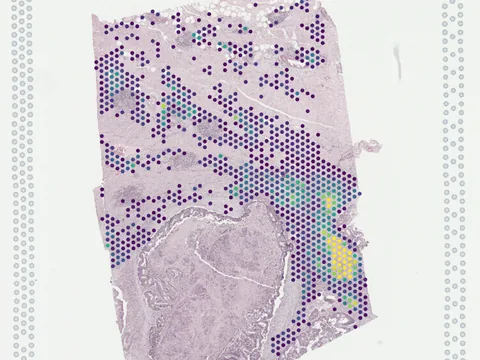 Visium
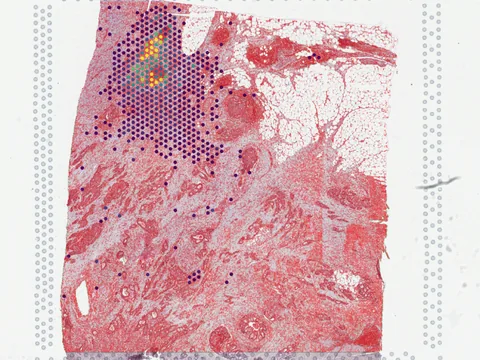 Visium
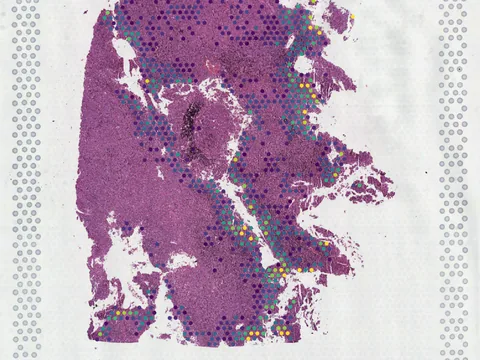 Visium
 Visium
 Visium
 Visium
No linked publication found — please cite the data source.