
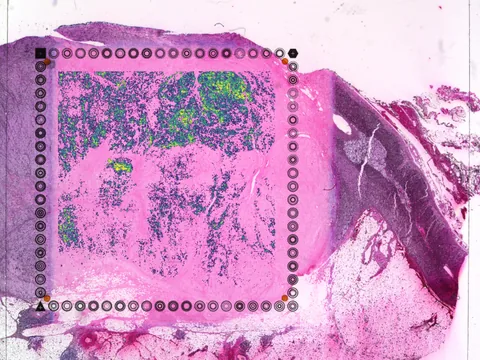
 Visium HD
Human unknown
GSM9532661
human unknown melanoma 731 MB 175,561 obs silver H&E
TechnologyVisium HD
Organismhuman
Tissueunknown
Conditionmelanoma
Obs175,561
silver H&E
Multicellular programs in the tumor microenvironment (TME) drive cancer pathogenesis and response to therapy but remain challenging to identify and profile clinically. Here, we present a machine learning framework for multi-analyte profiling of spatially dependent cell states and multicellular ecosystems, termed spatial ecotypes (SEs). By integrating 10M single-cell and spot-level spatial transcriptomes from diverse human carcinomas and melanomas, we identified nine SEs with broad conservation—each with unique biology, geospatial features, and clinical outcome associations, including several linked to immunotherapy response. Notably, SEs were distinguishable by DNA methylation profiling and recoverable from plasma cell-free DNA (cfDNA) using deep learning. In cfDNA from nearly 100 melanoma patients, SE levels exhibited striking associations with immunotherapy response. Our data reveal fundamental units of TME organization and demonstrate a multimodal platform for solid and liquid TME profiling, with implications for improved risk stratification and therapy personalization.
import lamindb as ln
import spatialdata as sd

coll = ln.Collection.get(key="geo-gse320041")
coll.ordered_artifacts.df()                 # the 2 members, ordered

# download every member .zarr to the local cache:
paths = [a.cache() for a in coll.ordered_artifacts.all()]

# …or load each straight into memory as a SpatialData object:
sdatas = {a.key: sd.read_zarr(a.cache()) for a in coll.ordered_artifacts.all()}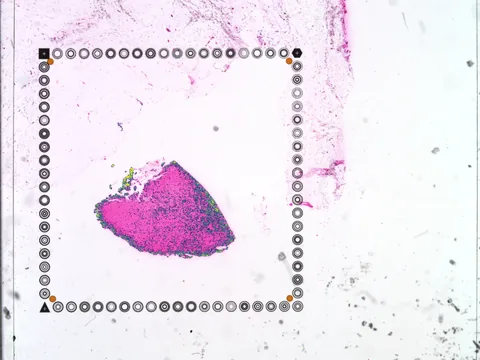 Visium HD
No linked publication found — please cite the data source.