
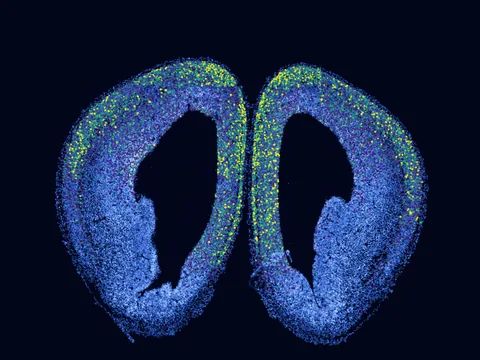
 10x Xenium
Mouse brain
GSM9489188
mouse brain 620 MB 60,038 obs silver NCBI GEO policy
Technology10x Xenium
Organismmouse
Tissuebrain
Obs60,038
silver NCBI GEO policy
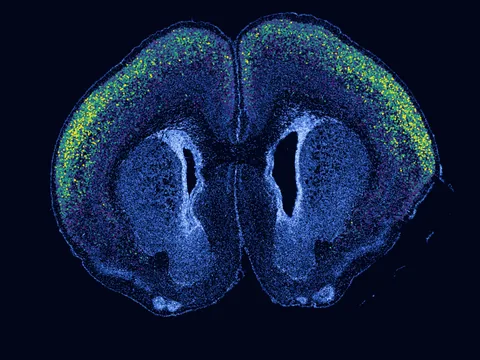
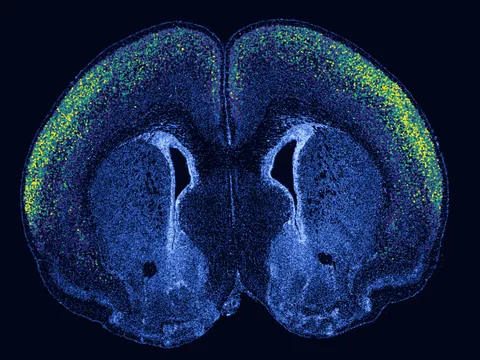
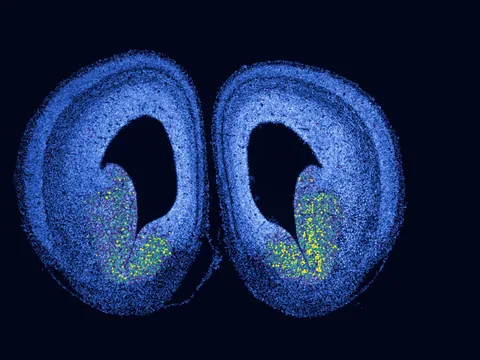
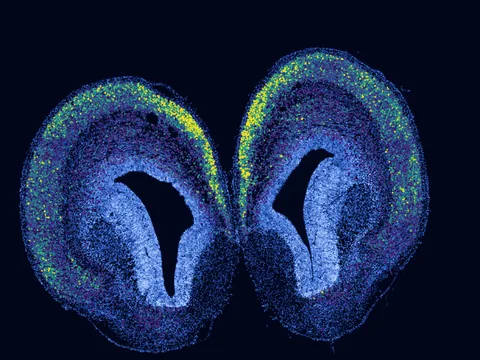
Here, we ask how adult neural stem cells (NSCs) arise developmentally, focusing on murine cortical precursors that generate excitatory neurons embryonically and interneurons and glial cells postnatally. Using complementary single-cell spatial, transcriptomic, and epigenomic approaches, we show that postnatal NSC state acquisition involves a gradual transcriptional and epigenetic shift in the entire embryonic cortical precursor cell population and identify a distinct transition precursor state at E17/18 when both embryonic and the first postnatal progeny are being generated. Non-proliferative adult NSCs are also first seen at this transition timepoint, but they arise in a spatial domain distinct from that of the first postnatal progeny, indicating that NSC state acquisition is not a necessary prelude to the switch in cell genesis. These findings support a gradual epigenetically-continuous model for the transition from developing cortical precursors to NSCs and show that this is spatially separable from the transition to generating postnatal cell types.
import lamindb as ln
import spatialdata as sd

coll = ln.Collection.get(key="geo-gse318202")
coll.ordered_artifacts.df()                 # the 10 members, ordered

# download every member .zarr to the local cache:
paths = [a.cache() for a in coll.ordered_artifacts.all()]

# …or load each straight into memory as a SpatialData object:
sdatas = {a.key: sd.read_zarr(a.cache()) for a in coll.ordered_artifacts.all()}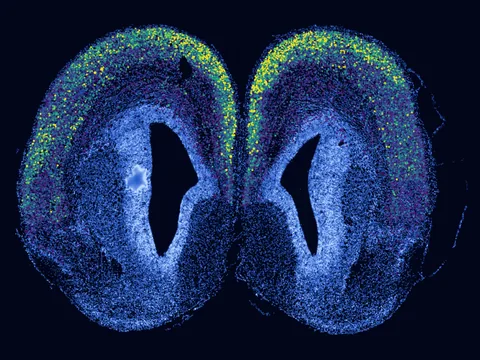 10x Xenium
 10x Xenium
 10x Xenium
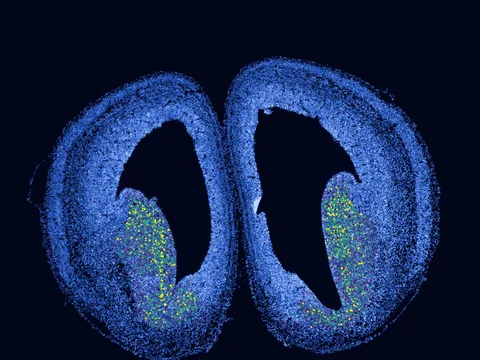 10x Xenium
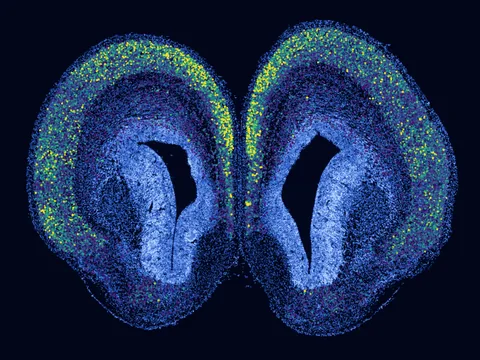 10x Xenium
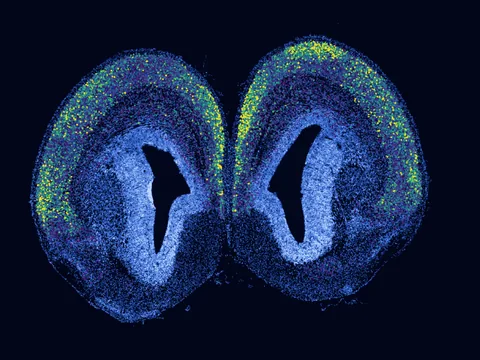 10x Xenium
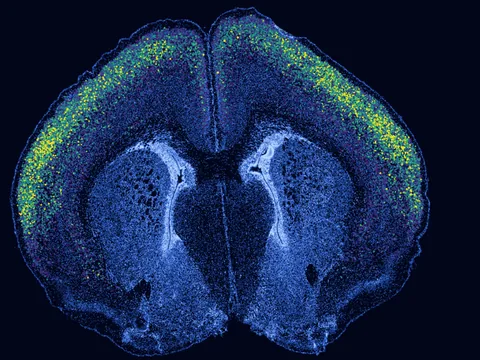 10x Xenium
 10x Xenium
 10x Xenium
No linked publication found — please cite the data source.