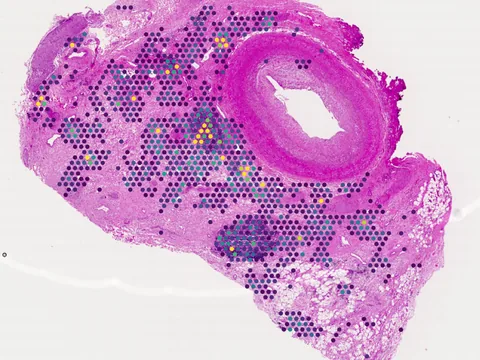
 Visium
Human coronary artery
GSM9451528
human coronary artery 29 MB 3,146 obs silver H&E
TechnologyVisium
Organismhuman
Tissuecoronary artery
Obs3,146
silver H&E
Cardiac allograft vasculopathy (CAV) is the leading cause of mortality in heart transplant recipients. Despite the prevalence of CAV, there are no targeted therapeutic options to prevent or reverse disease progression, and patients ultimately require retransplant. CAV is characterized by progressive neointimal hyperplasia in donor heart coronary arteries, leading to luminal obliteration and ultimately allograft failure or sudden cardiac death. Although immune and stromal cell interactions are believed to play a key role in CAV pathogenesis, the specific cellular players and molecular signals driving disease remain undefined. In this study, we leverage single-cell RNA sequencing and spatial transcriptomics of human coronary arteries to transcriptionally characterize CAV and define the neointimal microenvironment. We compare arteries with CAV to atherosclerotic coronary artery disease and non-disease controls to identify a unique CAV transcriptional signature. Integration of single-cell RNA sequencing and spatial transcriptomic datasets revealed that modulated vascular smooth muscle cells and macrophage subsets dominate the CAV neointima and suggest that these cells interact to propagate type 1 interferon (IFN)-mediated inflammation. In a mouse CAV model, we demonstrate that interferon blockade with Ruxolitinib significantly reduced the incidence of CAV and prolonged allograft survival. Collectively, this study offers a novel and detailed characterization of the unique cellular and transcriptional landscape of CAV and identify a candidate pathway that may underly CAV pathogenesis, which could serve as a new therapeutic target for this devastating disease.
import lamindb as ln
import spatialdata as sd

coll = ln.Collection.get(key="geo-gse316390")
coll.ordered_artifacts.df()                 # the 4 members, ordered

# download every member .zarr to the local cache:
paths = [a.cache() for a in coll.ordered_artifacts.all()]

# …or load each straight into memory as a SpatialData object:
sdatas = {a.key: sd.read_zarr(a.cache()) for a in coll.ordered_artifacts.all()}
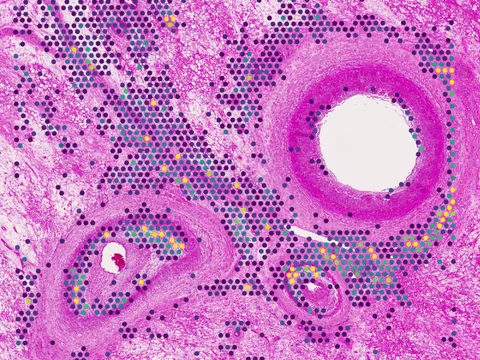 Visium
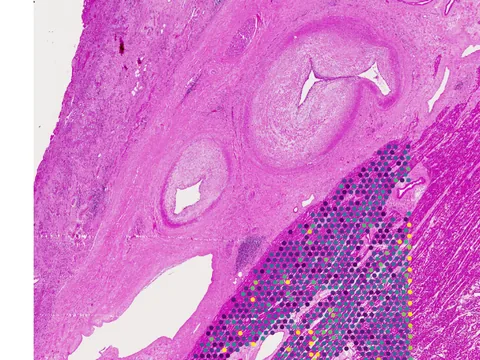 Visium
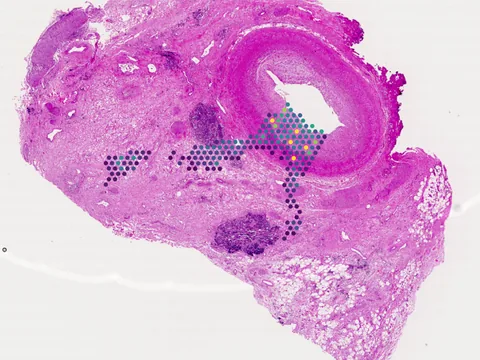 Visium
No linked publication found — please cite the data source.