
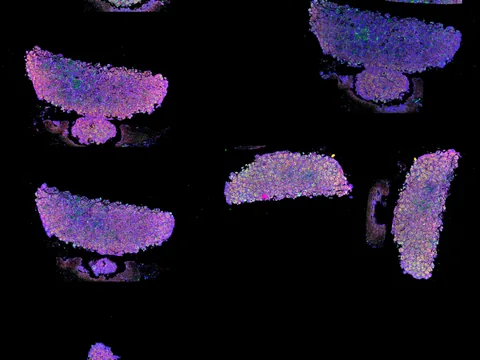
 10x Xenium
Human kidney
GSM9428111
human kidney 15 GB 433,710 obs silver NCBI GEO policy
Technology10x Xenium
Organismhuman
Tissuekidney
Obs433,710
silver NCBI GEO policy
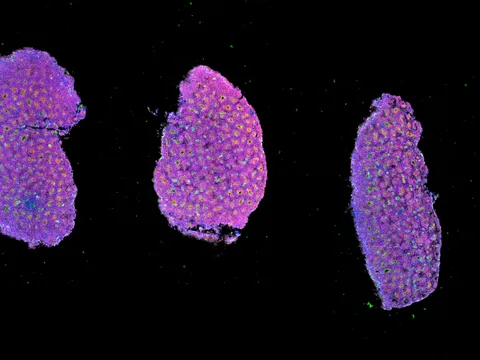
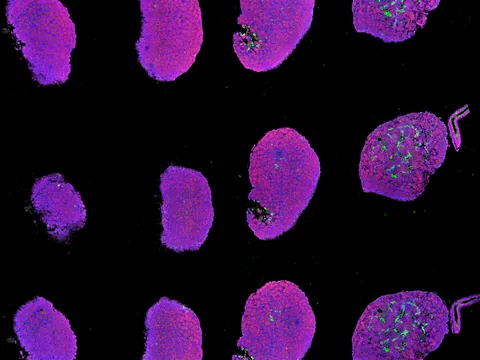
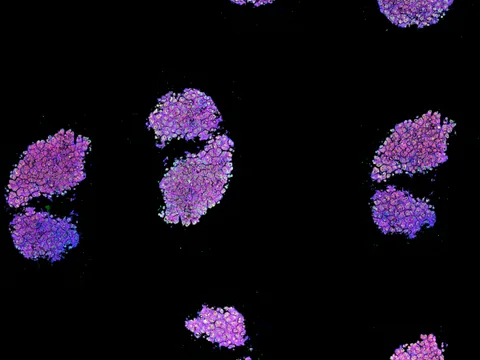
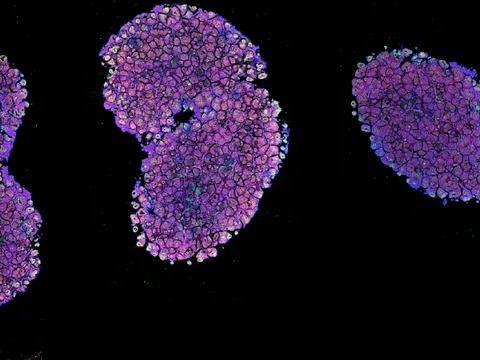
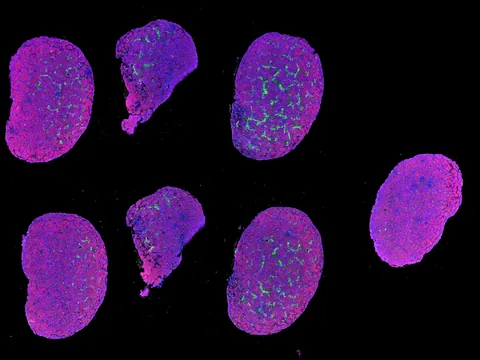
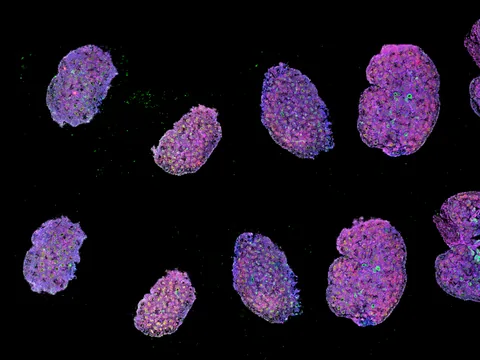
The mammalian kidney achieves massive parallelization of function by exponentially duplicating nephron-forming niches during development. Each niche caps a tip of the ureteric bud epithelium (the future urinary collecting duct tree) as it undergoes branching morphogenesis, while nephron progenitors within niches balance self-renewal and differentiation to early nephron cells. Nephron formation rate approximately matches branching rate over a large fraction of mouse gestation, yet the nature of this apparent pace-maker is unknown. Here we correlate spatial transcriptomics data with branching ‘life-cycle’ to discover rhythmically alternating signatures of nephron progenitor differentiation and renewal across Wnt, Hippo/Yap, retinoic acid (RA), and other pathways. Our data bring temporal resolution to the renewal vs. differentiation balance in the nephrogenic niche and inform new strategies to achieve self-sustaining nephron formation in synthetic human kidney tissues.
import lamindb as ln
import spatialdata as sd

coll = ln.Collection.get(key="geo-gse315435")
coll.ordered_artifacts.df()                 # the 11 members, ordered

# download every member .zarr to the local cache:
paths = [a.cache() for a in coll.ordered_artifacts.all()]

# …or load each straight into memory as a SpatialData object:
sdatas = {a.key: sd.read_zarr(a.cache()) for a in coll.ordered_artifacts.all()}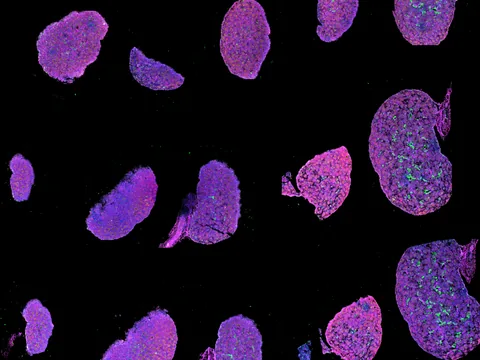 10x Xenium
 10x Xenium
 10x Xenium
 10x Xenium
 10x Xenium
 10x Xenium
 10x Xenium
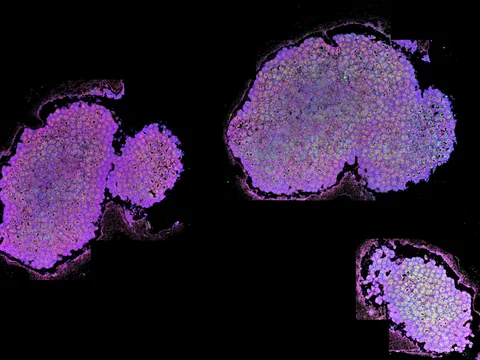 10x Xenium
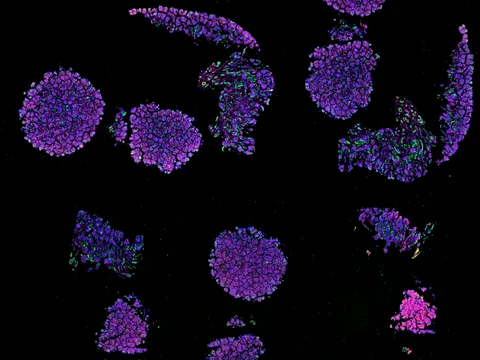 10x Xenium
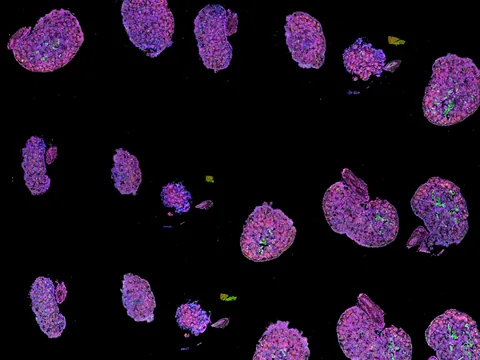 10x Xenium
No linked publication found — please cite the data source.