
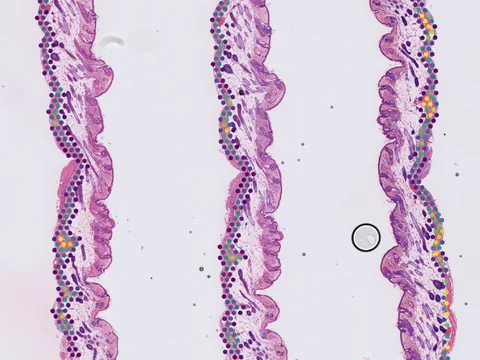
 Visium
Human skin of body
GSM9368377
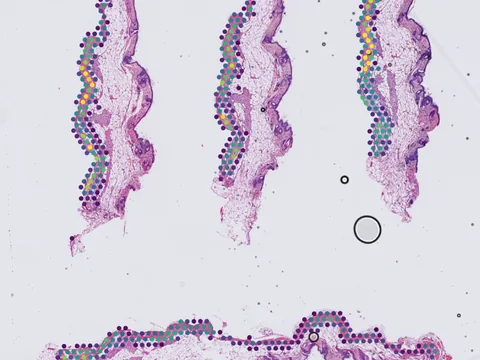
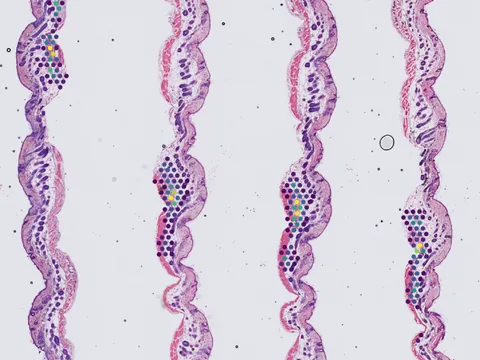
human skin of body 14 MB 2,102 obs bronze H&E
TechnologyVisium
Organismhuman
Tissueskin of body
Obs2,102
bronze H&E
Background Recessive dystrophic epidermolysis bullosa (RDEB) is a severe skin disease caused by loss-of-function mutations in COL7A1 encoding type VII collagen (C7). Patients with RDEB suffer since birth from skin and mucosal blistering and develop severe local and systemic complications resulting in poor prognosis. Mesenchymal stromal cells (MSCs) demonstrated potential to improve wound healing and skin inflammation in RDEB patients due to their anti-inflammatory properties and capacity to express C7. The aim of this work was to optimize in vitro conditioning of human bone marrow-derived MSCs (BM-MSCs) to improve their survival following local injection in a murine model. Methods BM-MSCs from healthy donors were transduced with a lentiviral vector encoding firefly luciferase and mCherry reporter proteins and were subjected to various culture conditions: monolayer on plastic or spheroid culture, either in hypoxia (5% O2) or in normoxia (21% O2). These cells were subsequently injected intradermally (ID) in immunodeficient mice and their survival was assessed by in vivo imaging. BM-MSCs populations were analyzed prior to injection by single-cell RNA sequencing (scRNAseq). Murine skin injected with BM-MSCs were sampled two months post-injection and the surviving subpopulations were characterized by spatial transcriptomic. Results scRNAseq analysis revealed notable variations between monolayer and spheroid conditions, however oxygen level did not impact significantly the cell populations. Although most injected cells gradually died within the first two months in all tested conditions, 1% of live bioluminescent cells persisted for 54 up to 61 weeks post-injection. Spatial transcriptomics data demonstrated that all surviving cells, regardless of their in vitro preconditioning, retained THY1, ENG, and NT5E expression, shared features with fibroblasts, and exhibited enriched expression in genes related to extracellular matrix and collagen fibril organization, key processes in wound healing. Additionally, spatial transcriptomic and scRNAseq data integration suggested that surviving BM-MSCs were initially present in the injected population, regardless of their culture condition. Remarkably, none of the in vitro preconditioning strategies appeared to affect their survival capacity or functional properties following local injection. Conclusions The identification and characterization of a BM-MSC subpopulation capable of long-term survival following ID injection hold promise for the development of improved cell therapy protocols for RDEB.
import lamindb as ln
import spatialdata as sd

coll = ln.Collection.get(key="geo-gse313471")
coll.ordered_artifacts.df()                 # the 7 members, ordered

# download every member .zarr to the local cache:
paths = [a.cache() for a in coll.ordered_artifacts.all()]

# …or load each straight into memory as a SpatialData object:
sdatas = {a.key: sd.read_zarr(a.cache()) for a in coll.ordered_artifacts.all()}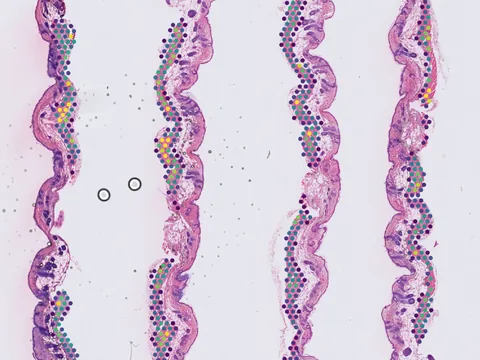 Visium
 Visium
 Visium
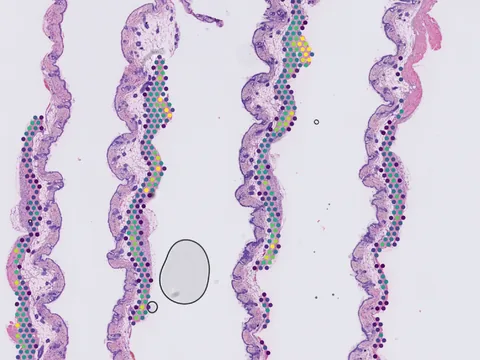 Visium
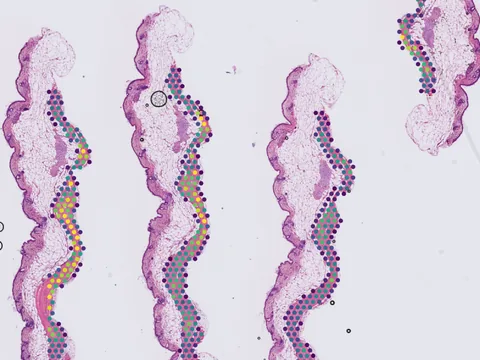 Visium
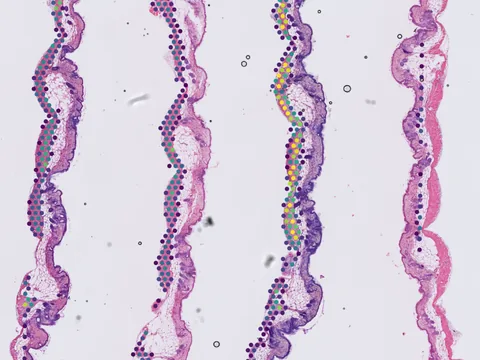 Visium
No linked publication found — please cite the data source.