
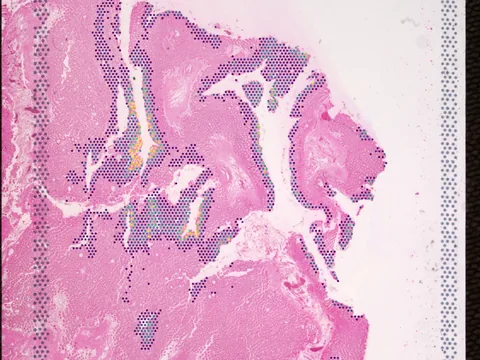
 Visium
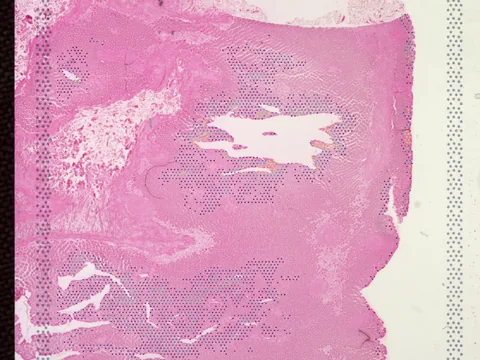
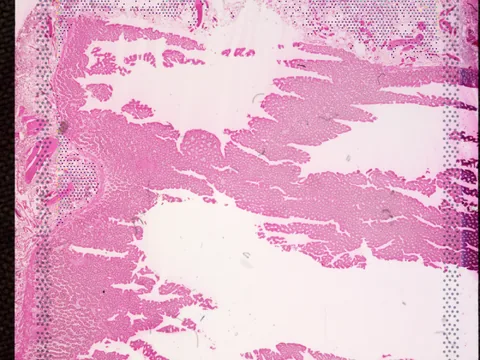
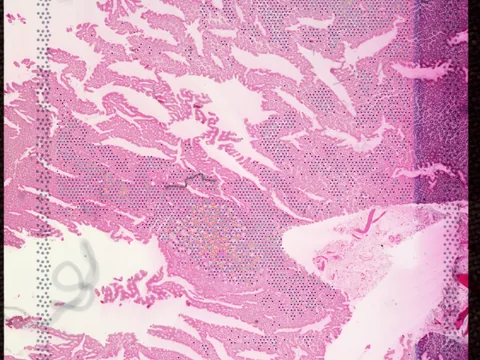
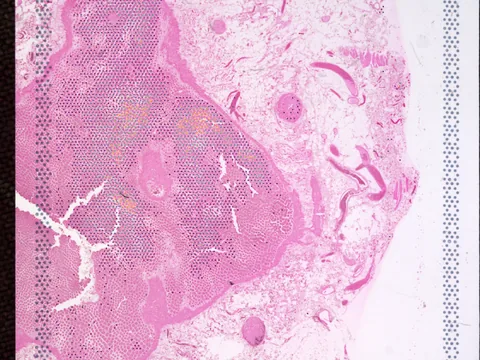
Human colon
GSM9340382
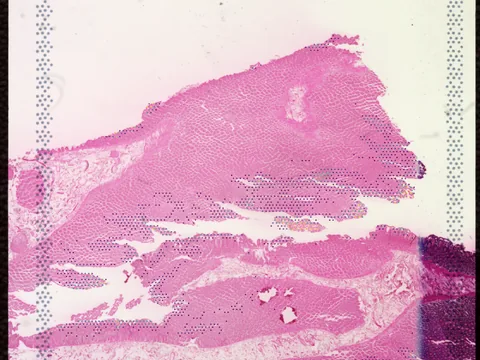
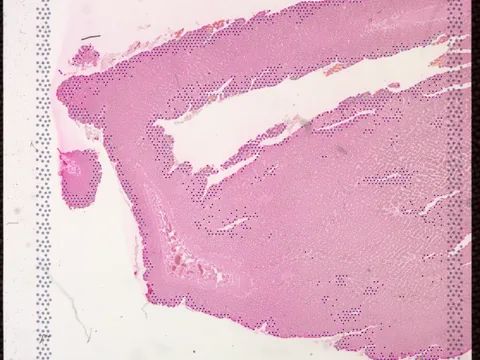
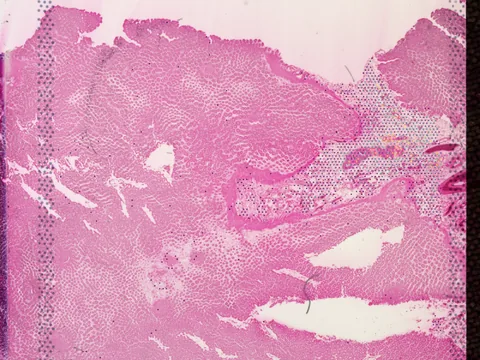
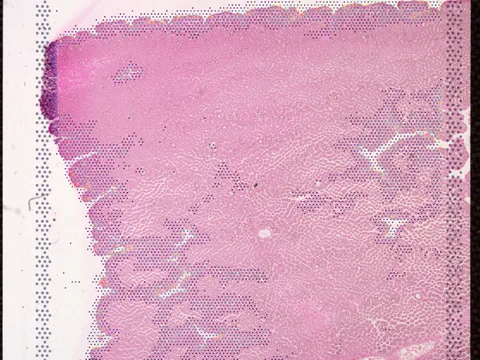
human colon 205 MB H&E
TechnologyVisium
Organismhuman
Tissuecolon
H&E
Aged normal tissues harbour cancer mutations predisposing to transformation. However, previous studies of human colon have not allowed a comparison of the prevalence and behaviours of different pro-oncogenic events. Here, having detected cancer driver mutations in histologically normal FFPE tissue using targeted amplicon sequencing, we perform spatial transcriptomics to investigate whether monoallelic cancer driver clones can be phenotypically profiled in normal tissue. We found that KRAS mutant clones are associated with a profound shift in their transcriptome and were able to create a signature of 628 genes. The results highlighted phenotypic heterogeneity in KRAS mutant clones of the same genotype, with mixed lineage presentation seen in a proportion of them, a state that has been linked with increased risk of transformation in other organs. REG4 was also identified as a surrogate protein marker of KRAS mutant clones, the use of which could be further validated in a clinical setting for patient stratification.
import lamindb as ln
import spatialdata as sd

coll = ln.Collection.get(key="geo-gse312204")
coll.ordered_artifacts.df()                 # the 20 members, ordered

# download every member .zarr to the local cache:
paths = [a.cache() for a in coll.ordered_artifacts.all()]

# …or load each straight into memory as a SpatialData object:
sdatas = {a.key: sd.read_zarr(a.cache()) for a in coll.ordered_artifacts.all()}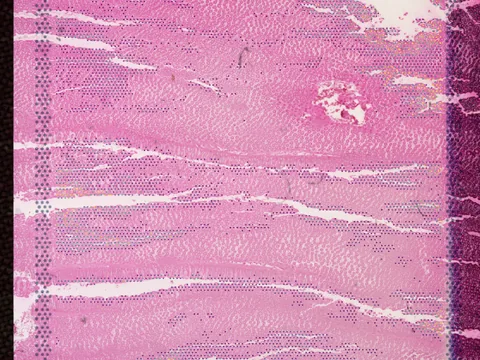 Visium
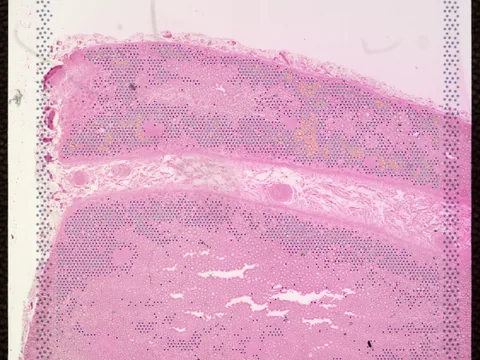 Visium
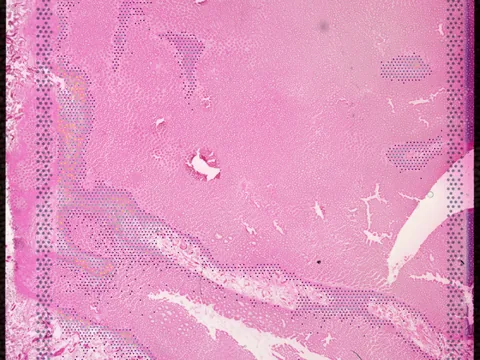 Visium
 Visium
 Visium
 Visium
 Visium
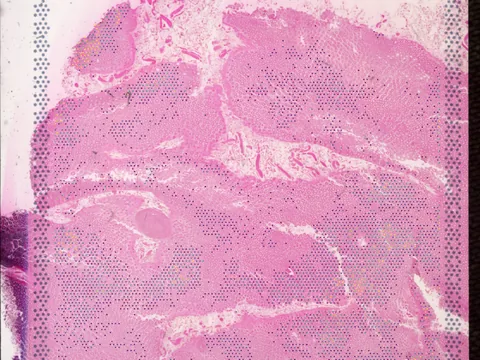 Visium
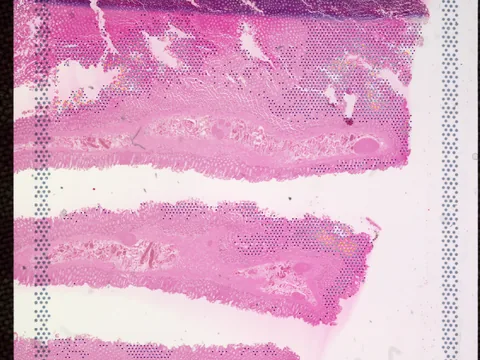 Visium
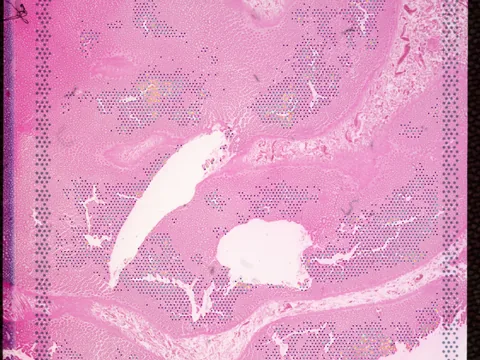 Visium
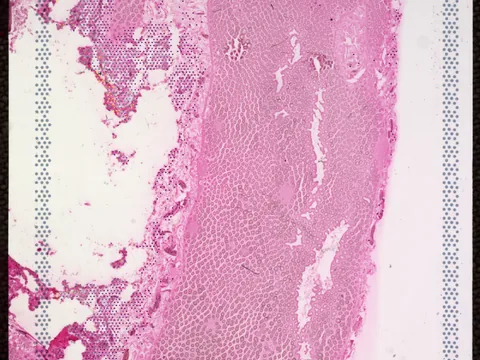 Visium
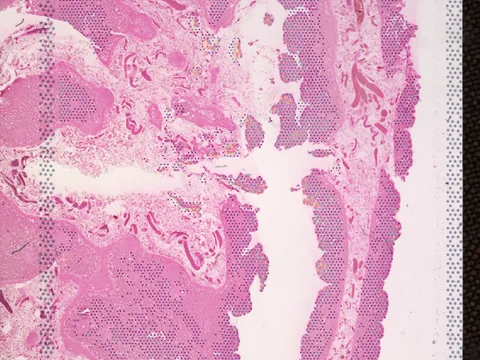 Visium
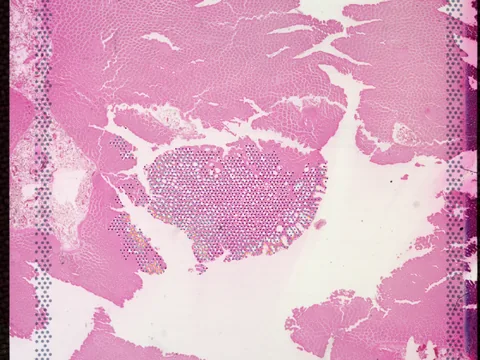 Visium
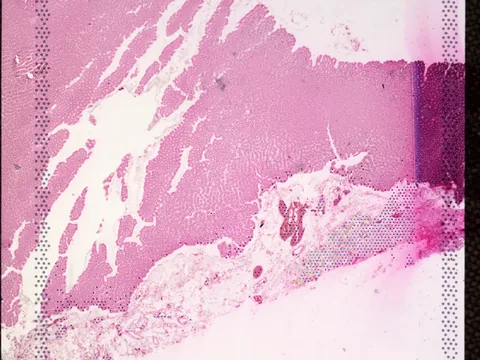 Visium
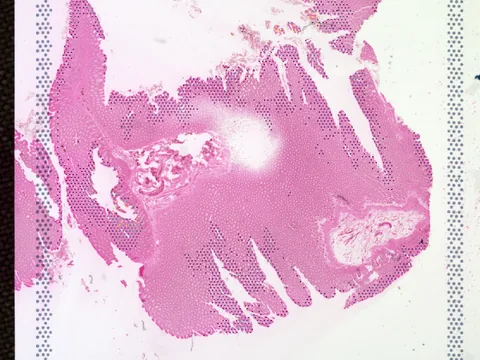 Visium
 Visium
 Visium
 Visium
 Visium
No linked publication found — please cite the data source.