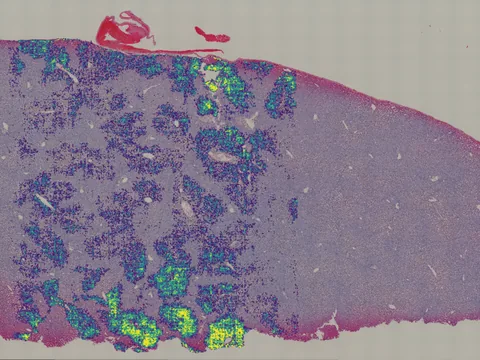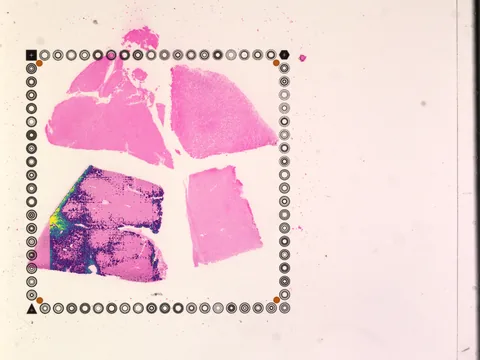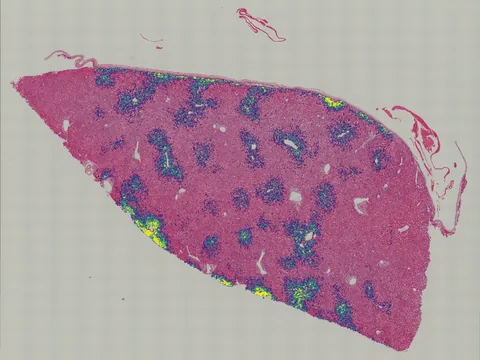
High-resolution spatial transcriptomics of human liver with VisiumHD
The liver plays a critical role in metabolism and immune function. These crucial functions are diminished in chronic liver diseases, leading to over two million deaths annually worldwide due to liver failure. Single-cell transcriptomics has provided insights into the cellular composition of the liver in health and disease, but is inherently biased due to cell type-specific enrichment and destruction during the single-cell dissociation process. Previous work has highlighted difficulties in capturing specific populations such as cholangiocytes and hepatocytes. Spatial transcriptomics is a promising approach that does not have inherent bias for cell populations and adds important spatial context. Until recently, spatial transcriptomics technologies have only been at a multi-cellular resolution leading to mixed signals from different cell types. The latest spatial transcriptomic technology from 10X Genomics, VisiumHD, enables high-resolution spatial mapping of gene expression in tissue samples, offering a sophisticated platform for exploring the cellular composition of the liver. With a bin width of 2um, it can quantify transcripts at a sub-cellular resolution. Samples from three healthy human liver donors were sequenced and cells were clustered into cell types by integrating spatial transcriptomic data with existing single-cell reference maps. Spatially distinct cell signatures were identified through differential expression analyses and a high-resolution map of the liver was created. This resource provides cell-level and spatially-resolved insights into the cellular and geographical heterogeneity of the liver to serve as a resource for researchers to identify disease-specific spatial signatures and novel therapeutic targets.
import lamindb as ln
import spatialdata as sd
coll = ln.Collection.get(key="geo-gse311383")
coll.ordered_artifacts.df() # the 3 members, ordered
# download every member .zarr to the local cache:
paths = [a.cache() for a in coll.ordered_artifacts.all()]
# …or load each straight into memory as a SpatialData object:
sdatas = {a.key: sd.read_zarr(a.cache()) for a in coll.ordered_artifacts.all()} Cite this collection
No linked publication found — please cite the data source.