
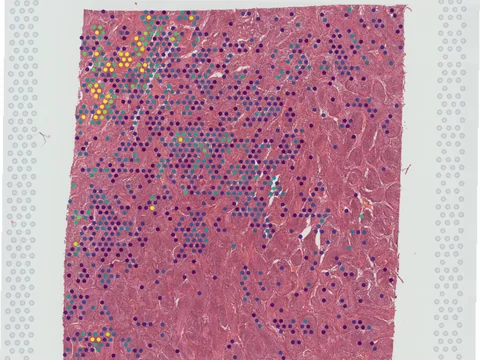
 Visium
Human cerebellum
GSM9202345
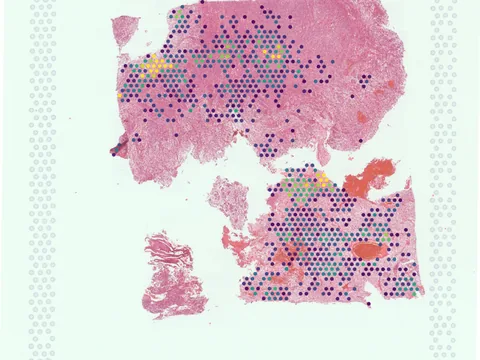
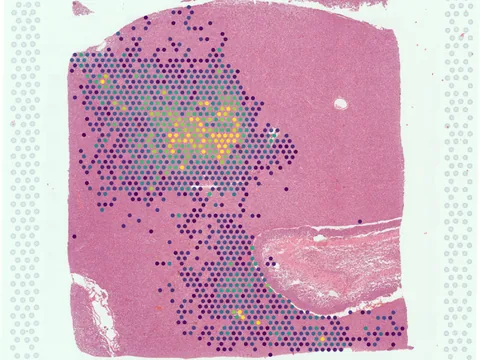
human cerebellum medulloblastoma 70 MB 3,817 obs bronze H&E
TechnologyVisium
Organismhuman
Tissuecerebellum
Conditionmedulloblastoma
Obs3,817
Magnificationother · 3.345 µm/px
bronze H&E
Medulloblastoma is the most common malignant pediatric brain tumor and is classified into four molecular subgroups: WNT, SHH, Group 3, and Group 4. Accurate characterization and classification of these subtypes are critical for prognosis and personalized treatment. In this study, we integrate spatial transcriptomics, machine learning, and explainable artificial intelligence to comprehensively analyze the spatial and transcriptional heterogeneity of the most prevalent and aggressive medulloblastoma subtypes (SHH, Group 3, and Group 4) in Mexican pediatric patients. By implementing a multiscale framework, we uncover extensive intra- and intertumoral variability that challenges traditional molecular classification. Our approach reveals subtype-specific gene expression signatures, identifies a core set of robust biomarkers and highlights distinct spatial patterns of tumor organization, including invasive and metabolically active niches. Notably, we demonstrate that Group 3 tumors, despite being the most aggressive, exhibit the lowest transcriptional heterogeneity, suggesting a streamlined malignant program centered on invasion and plasticity. These findings underscore the scope of bulk molecular profiling and support the implementation of spatially informed diagnostic tools and personalized therapeutic strategies that account for the complex architecture and functional diversity within MB tumors.
import lamindb as ln
import spatialdata as sd

coll = ln.Collection.get(key="geo-gse306506")
coll.ordered_artifacts.df()                 # the 6 members, ordered

# download every member .zarr to the local cache:
paths = [a.cache() for a in coll.ordered_artifacts.all()]

# …or load each straight into memory as a SpatialData object:
sdatas = {a.key: sd.read_zarr(a.cache()) for a in coll.ordered_artifacts.all()}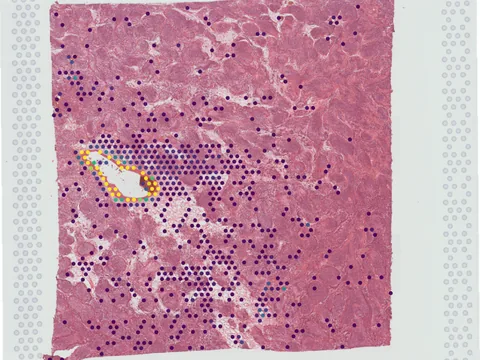 Visium
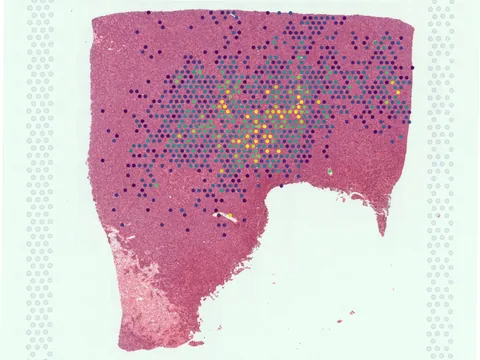 Visium
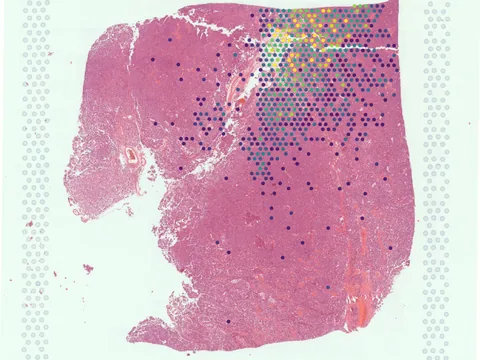 Visium
 Visium
 Visium
No linked publication found — please cite the data source.