Collections / Integrated single-cell and spatial analysis identifies context-dependent myeloid-T cell interactions in head and neck cancer immune checkpoint blockade response

Integrated single-cell and spatial analysis identifies context-dependent myeloid-T cell interactions in head and neck cancer immune checkpoint blockade response

Background Approximately 15-20% of head and neck cancer squamous cell carcinoma (HNSCC) patients respond favorably to immune checkpoint blockade (ICB). Previous single-cell RNA-Seq (scRNA-Seq) studies identified immune features, including macrophage subset ratios and T-cell subtypes, in HNSCC ICB response. However, the spatial features of HNSCC-infiltrated immune cells in response to ICB treatment need to be better characterized. Methods Here, we perform a systematic evaluation of cell interactions between immune cell types within the tumor microenvironment using spatial omics data using complementary techniques from both 10X Visium spot-based spatial transcriptomics and Nanostring CosMx single-cell spatial omics with RNA gene panel including 435 ligands and receptors. In this study, we used integrated bioinformatics analyses to identify cellular neighborhoods of co-localizing cell types in single-cell spatial transcriptomics and proteomics data. In addition, we used both publicly available scRNA-Seq and in-house spatial RNA-Seq data to identify spatially constrained Ligand-Receptor interactions in Responder patients. Results With 522,399 single cells profiled with both RNA and protein from 26 patients, in addition to spot-resolved spatial RNA-Seq from 8 patients treated with ICB together with bioinformatics analysis of publicly available single-cell and bulk RNA-Seq, we have identified a spatial and cell-type specific context-dependency of myeloid and T cell interaction difference between Responders and Non-Responders. We defined further cellular neighborhood and the sources of chemokine CXCL9/10-CXCR3 interactions in Responders, emerging targets in ICB, as well as CXCL16-CXCR6, CCL4/5-CCR5, and other underappreciated and potential markers and targets for ICB response in HNSCC. In addition, we have contributed a rich data resource of cell-cell Ligand Receptor interactions for the immunotherapy and HNSCC research community. Discussion Our work provides a comprehensive single-cell and spatial atlas of immune cell interactions that correlate with response to ICB in HNSCC. We showcase how integrating multiple technologies and bioinformatics approaches can provide new insights into potential immune-based biomarkers of ICB response. Our results suggested refining future studies using preclinical animal models in a more context-specific manner to elucidate potential underlying mechanisms that lead to improved ICB responses. What is already known on this topic Most cancer patients still do not experience clinical benefits from immune checkpoint blockade (ICB), necessitating the development of response biomarkers and new immunotherapeutic targets. What this study adds Here, we use integrated high-dimensional omics and bioinformatics approaches to identify immune cell-cell interaction markers associated with ICB response in patients with Head and neck squamous cell carcinoma. How this study might affect research, practice or policy We identified spatial and cell-type specificity of Ligand-Receptor interactions between myeloid and T cells in ICB Responder patients that may help inform further mechanistic studies and biomarker development

Datasets8
Size~367 MB
AssayVisium
Samplehuman · multiple
KindComparison
PMID:41837744 ↗
Python · lamindb
import lamindb as ln
import spatialdata as sd

coll = ln.Collection.get(key="geo-gse301720")
coll.ordered_artifacts.df()                 # the 8 members, ordered

# download every member .zarr to the local cache:
paths = [a.cache() for a in coll.ordered_artifacts.all()]

# …or load each straight into memory as a SpatialData object:
sdatas = {a.key: sd.read_zarr(a.cache()) for a in coll.ordered_artifacts.all()}
Open in Vitessce
Visium
Human oropharynx
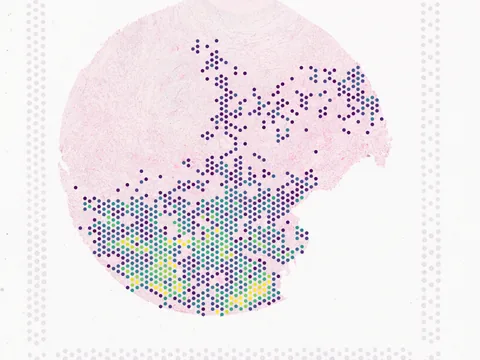
GSM9087753
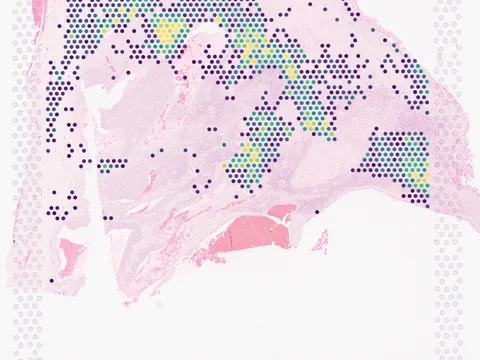
human oropharynx head and neck squamous cell carcinoma 26 MB 1,526 obs bronze H&E
TechnologyVisium
Organismhuman
Tissueoropharynx
Conditionhead and neck squamous cell carcinoma
Size26 MB
Obs1,526
Magnificationother · 3.753 µm/px
bronze H&E Open in Vitessce
Open in Vitessce
Visium
Human oropharynx
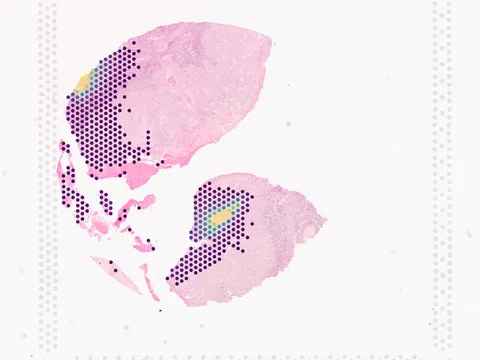
GSM9087747
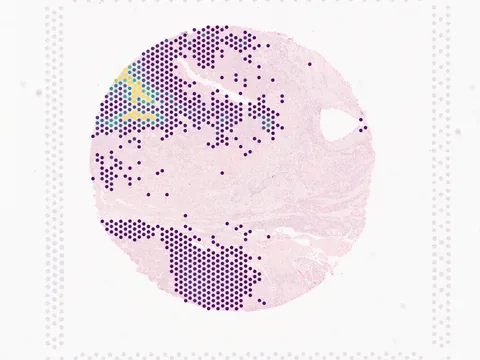
human oropharynx head and neck squamous cell carcinoma 66 MB 2,261 obs bronze H&E
TechnologyVisium
Organismhuman
Tissueoropharynx
Conditionhead and neck squamous cell carcinoma
Size66 MB
Obs2,261
Magnificationother · 3.512 µm/px
bronze H&E Open in Vitessce
Open in Vitessce
Visium
Human oral cavity
GSM9087754
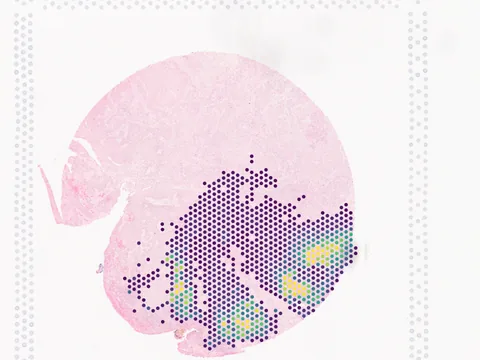
human oral cavity head and neck squamous cell carcinoma 35 MB 2,608 obs bronze H&E
TechnologyVisium
Organismhuman
Tissueoral cavity
Conditionhead and neck squamous cell carcinoma
Size35 MB
Obs2,608
Magnificationother · 3.827 µm/px
bronze H&E Open in Vitessce
Open in Vitessce
Visium
Human oropharynx
GSM9087748
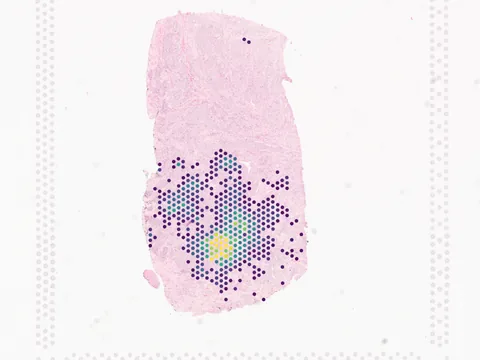
human oropharynx head and neck squamous cell carcinoma 62 MB 2,948 obs bronze H&E
TechnologyVisium
Organismhuman
Tissueoropharynx
Conditionhead and neck squamous cell carcinoma
Size62 MB
Obs2,948
Magnificationother · 3.491 µm/px
bronze H&E Open in Vitessce
Open in Vitessce
Visium
Human oropharynx
GSM9087750
human oropharynx head and neck squamous cell carcinoma 44 MB 2,511 obs bronze H&E
TechnologyVisium
Organismhuman
Tissueoropharynx
Conditionhead and neck squamous cell carcinoma
Size44 MB
Obs2,511
Magnificationother · 3.828 µm/px
bronze H&E Open in Vitessce
Open in Vitessce
Visium
Human oropharynx
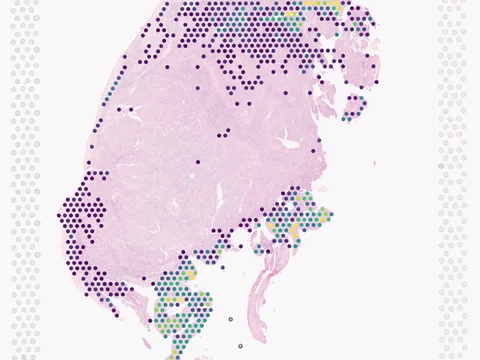
GSM9087749
human oropharynx head and neck squamous cell carcinoma 44 MB 2,606 obs bronze H&E
TechnologyVisium
Organismhuman
Tissueoropharynx
Conditionhead and neck squamous cell carcinoma
Size44 MB
Obs2,606
Magnificationother · 3.753 µm/px
bronze H&E Open in Vitessce
Open in Vitessce
Visium
Human oropharynx
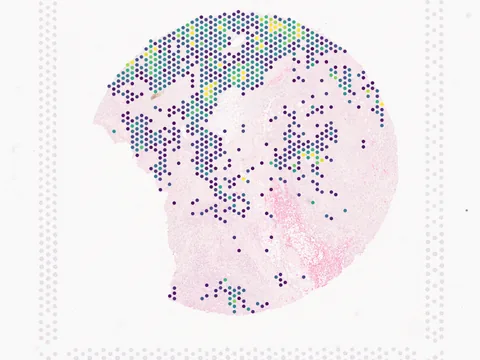
GSM9087752
human oropharynx head and neck squamous cell carcinoma 36 MB 1,642 obs bronze H&E
TechnologyVisium
Organismhuman
Tissueoropharynx
Conditionhead and neck squamous cell carcinoma
Size36 MB
Obs1,642
bronze H&E Open in Vitessce
Open in Vitessce
Visium
Human nasal cavity
GSM9087751
human nasal cavity head and neck squamous cell carcinoma 54 MB 2,945 obs bronze H&E
TechnologyVisium
Organismhuman
Tissuenasal cavity
Conditionhead and neck squamous cell carcinoma
Size54 MB
Obs2,945
bronze H&E Open in Vitessce

Cite this collection

No linked publication found — please cite the data source.