
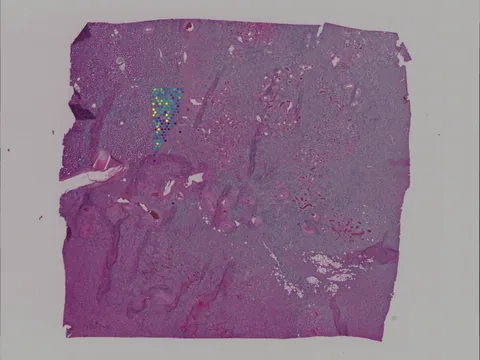
 Visium
Human kidney
GSM9034733
human kidney tuberous sclerosis 120 MB H&E NCBI GEO policy
TechnologyVisium
Organismhuman
Tissuekidney
Conditiontuberous sclerosis
H&E NCBI GEO policy
Tuberous sclerosis complex (TSC) is a multisystem genetic disorder caused by mutations in TSC1 or TSC2, leading to constitutive activation of the mTORC1 pathway. Among its manifestations, renal angiomyolipomas (AMLs) are a common and distinctive tumor type. However, the molecular differences between TSC-associated AMLs (TSC-AMLs) and sporadic AMLs remain poorly understood. To address this, we performed spatial transcriptomic profiling (CytAssist Visium) on FFPE tissue sections from one case each of TSC-AML, sporadic AML, and renal cell carcinoma (RCC). This approach enabled in situ analysis of gene expression while preserving tissue architecture and cellular context. Our findings provide insight into the unique molecular landscape of TSC-associated tumors and offer a valuable resource for identifying disease-specific biomarkers and therapeutic targets.
import lamindb as ln
import spatialdata as sd

coll = ln.Collection.get(key="geo-gse299165")
coll.ordered_artifacts.df()                 # the 3 members, ordered

# download every member .zarr to the local cache:
paths = [a.cache() for a in coll.ordered_artifacts.all()]

# …or load each straight into memory as a SpatialData object:
sdatas = {a.key: sd.read_zarr(a.cache()) for a in coll.ordered_artifacts.all()}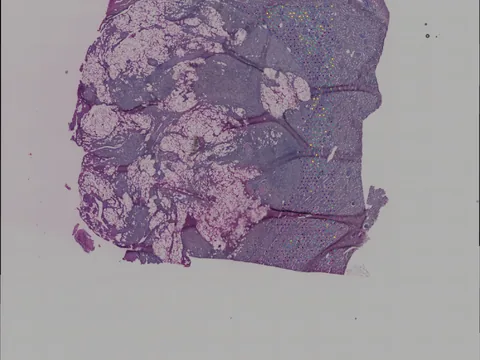 Visium
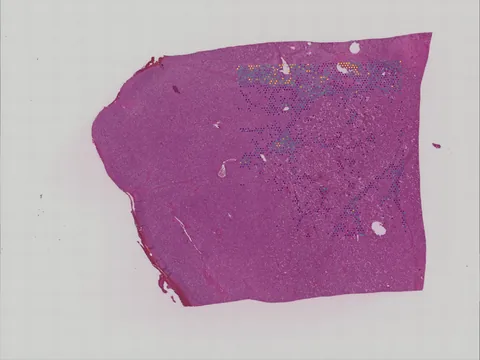 Visium
No linked publication found — please cite the data source.