
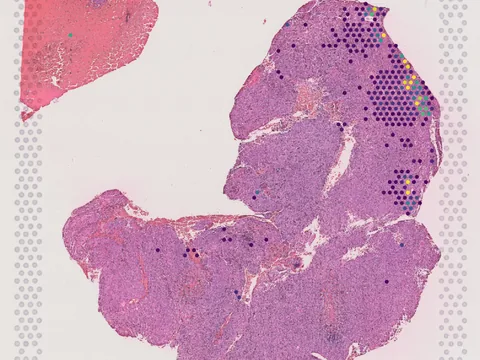
 Visium
Human bone tissue
GSM9030939
human bone tissue osteosarcoma 28 MB 3,020 obs bronze H&E
TechnologyVisium
Organismhuman
Tissuebone tissue
Conditionosteosarcoma
Obs3,020
Magnificationother · 3.449 µm/px
bronze H&E
Osteosarcoma is the most common malignant bone tumor in children, characterized by a high degree of genomic instability, resulting in copy-number alterations and genomic rearrangements without disease-defining recurrent mutations. Clinical trials based on molecular characterization have failed to find new effective therapies or improve outcomes over the last 40 years. To better understand the immune microenvironment of osteosarcoma, we performed single-cell RNA sequencing on six tumor biopsy samples, combined with a previously-published cohort of six samples. Additional osteosarcoma samples were profiled using spatial transcriptomics for validation of discovered subtypes and to add spatial context. Analysis revealed immunosuppressive cells, including myeloid-derived suppressor cells (MDSCs), regulatory and exhausted T-cells, and LAMP3+ dendritic cells. Using cell-cell communication modeling, we identified robust interactions between MDSCs and other cells, leading to NF-κB upregulation and an immunosuppressive microenvironment, as well as interactions involving regulatory T-cells and osteosarcoma cells that promoted tumor progression and a proangiogenic niche.
import lamindb as ln
import spatialdata as sd

coll = ln.Collection.get(key="geo-gse299025")
coll.ordered_artifacts.df()                 # the 2 members, ordered

# download every member .zarr to the local cache:
paths = [a.cache() for a in coll.ordered_artifacts.all()]

# …or load each straight into memory as a SpatialData object:
sdatas = {a.key: sd.read_zarr(a.cache()) for a in coll.ordered_artifacts.all()}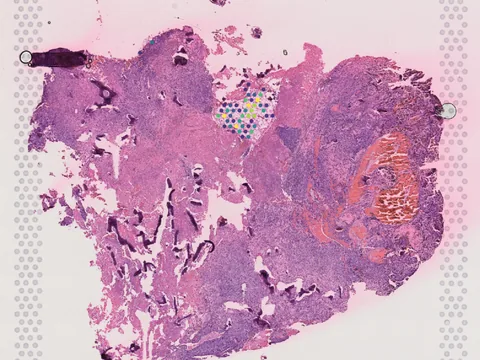 Visium
No linked publication found — please cite the data source.