Collections / Molecular pathology of acute spinal cord injury in middle-aged mice

Molecular pathology of acute spinal cord injury in middle-aged mice

The median age of sustaining a spinal cord injury has steadily increased from 29 to 43 over the last several decades. Although more pre-clinical studies in aged rodents are being done to address this shift in demographics, there have not been comprehensive transcriptomic studies investigating SCI pathobiology in middle-aged mice. To address this gap in knowledge, we compared behavioral, histopathological, and transcriptional outcomes in young (2-4 months-old) and middle-aged (10-12 months-old) mice. In contrast to previous studies, open field tests showed no differences in locomotor recovery between the young and middle-aged mice over a one-month period. The injury site also demonstrated similar histopathology in terms of lesion size, numbers of macrophages and fibroblasts. Acutely after injury, proliferation of macrophages, fibroblasts, and astrocytes were also similar between the two age groups. In addition, spatial transcriptomics showed similar transcriptionally defined regions around the injury site at 3 days post injury. However, single cell RNA-sequencing of the cells at the injury site and surrounding spared tissue showed differences in select cell subpopulations. Taken together, our results indicate that although young and middle-aged mice display similar locomotor recovery and histopathology after SCI, changes in cell subpopulations may underly a decline in repair mechanisms that are manifested after this age.

Datasets4
Size~120 MB
AssayVisium
Samplemouse · spinal cord
KindTime course
PMID:40653490 ↗
Python · lamindb
import lamindb as ln
import spatialdata as sd

coll = ln.Collection.get(key="geo-gse298545")
coll.ordered_artifacts.df()                 # the 4 members, ordered

# download every member .zarr to the local cache:
paths = [a.cache() for a in coll.ordered_artifacts.all()]

# …or load each straight into memory as a SpatialData object:
sdatas = {a.key: sd.read_zarr(a.cache()) for a in coll.ordered_artifacts.all()}
Open in Vitessce
Visium
Mouse spinal cord
GSM9016869
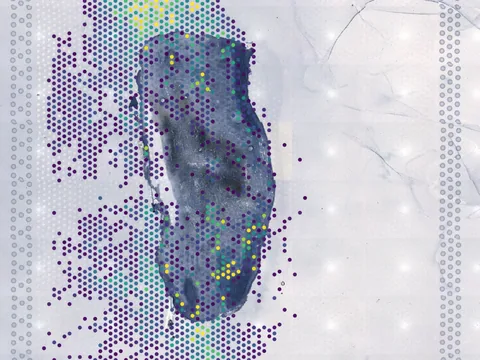
mouse spinal cord spinal cord injury 32 MB 4,992 obs bronze H&E
TechnologyVisium
Organismmouse
Tissuespinal cord
Conditionspinal cord injury
Size32 MB
Obs4,992
Magnificationother · 3.553 µm/px
bronze H&E Open in Vitessce
Open in Vitessce
Visium
Mouse spinal cord
GSM9016867
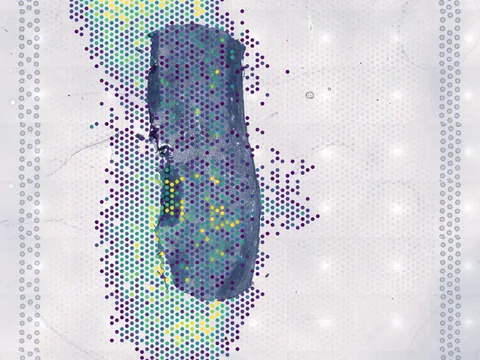
mouse spinal cord spinal cord injury 28 MB 4,992 obs bronze H&E
TechnologyVisium
Organismmouse
Tissuespinal cord
Conditionspinal cord injury
Size28 MB
Obs4,992
Magnificationother · 3.490 µm/px
bronze H&E Open in Vitessce
Open in Vitessce
Visium
Mouse spinal cord
GSM9016866
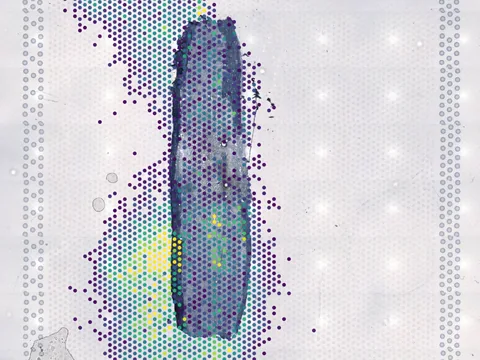
mouse spinal cord spinal cord injury 28 MB 4,992 obs bronze H&E
TechnologyVisium
Organismmouse
Tissuespinal cord
Conditionspinal cord injury
Size28 MB
Obs4,992
Magnificationother · 3.450 µm/px
bronze H&E Open in Vitessce
Open in Vitessce
Visium
Mouse spinal cord
GSM9016868
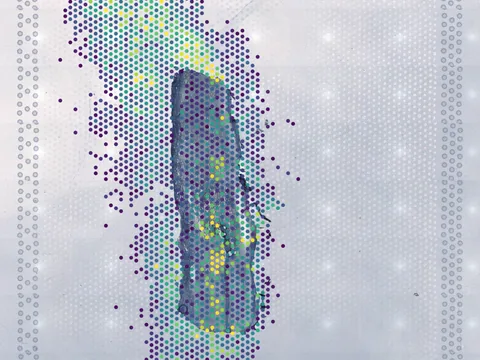
mouse spinal cord spinal cord injury 31 MB 4,992 obs bronze H&E
TechnologyVisium
Organismmouse
Tissuespinal cord
Conditionspinal cord injury
Size31 MB
Obs4,992
bronze H&E Open in Vitessce

Cite this collection

No linked publication found — please cite the data source.