Collections / Inhibition of ACLY enhances tumor immunogenicity and resolves MASH-driven HCC
Inhibition of ACLY enhances tumor immunogenicity and resolves MASH-driven HCC
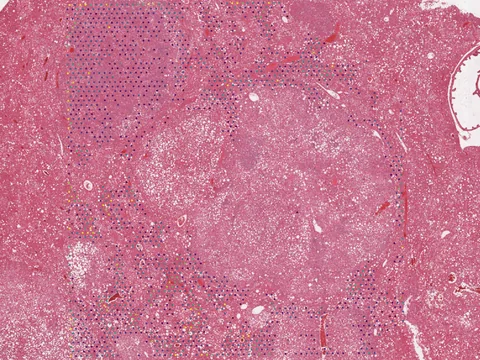
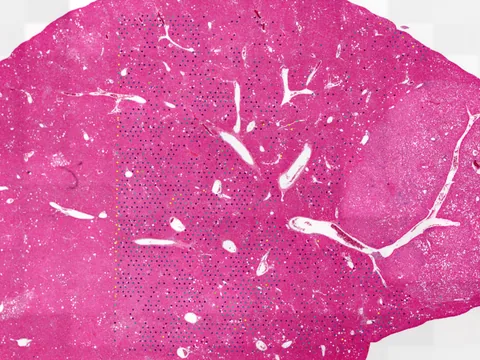
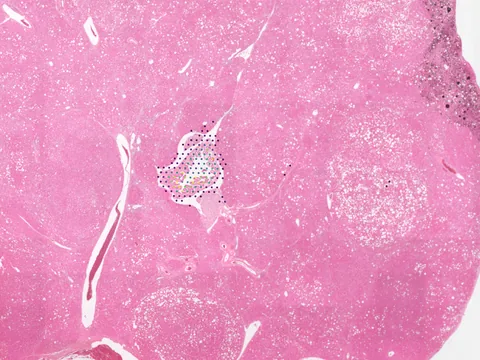
Immunosuppressive tumor microenvironments are common in cancers such as metabolic dysfunction-associated steatohepatitis (MASH)-driven hepatocellular carcinoma. To further investigate tumor–immune interactions, we performed spatial transcriptomics on livers from MASH-driven HCC mouse models (WD-DEN, WT or Acly KO mice and from WD-CCL4, Vehicle, or EVT0185 (100mg/kg) treated mice). GO enrichment analysis of spatially resolved tumor cells showed increased fatty acid and lipid metabolism in both Acly KO and EVT0185-treated mice Spatial analysis also revealed a selective increase in B cells, but not T cells, macrophages, or NKT cells, in tumors from Acly KO and EVT0185-treated mice.
Datasets4
Size~418 MB
AssayVisium
Samplemouse · liver
KindComparison
Download the whole collection
Python · lamindb
import lamindb as ln
import spatialdata as sd
coll = ln.Collection.get(key="geo-gse297081")
coll.ordered_artifacts.df() # the 4 members, ordered
# download every member .zarr to the local cache:
paths = [a.cache() for a in coll.ordered_artifacts.all()]
# …or load each straight into memory as a SpatialData object:
sdatas = {a.key: sd.read_zarr(a.cache()) for a in coll.ordered_artifacts.all()} Member datasets · 4
Cite this collection
No linked publication found — please cite the data source.