
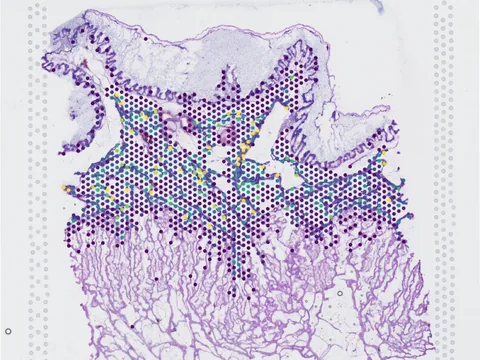
 Visium
Pig placenta
GSM8980980
pig placenta 19 MB 3,740 obs silver H&E
TechnologyVisium
Organismpig
Tissueplacenta
Obs3,740
silver H&E
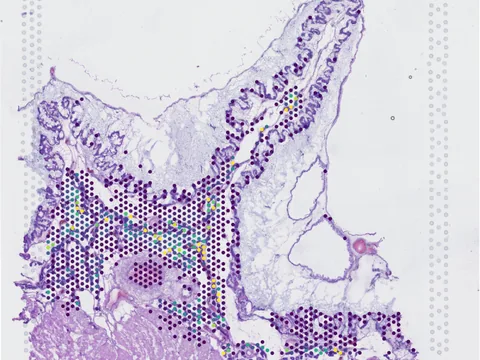
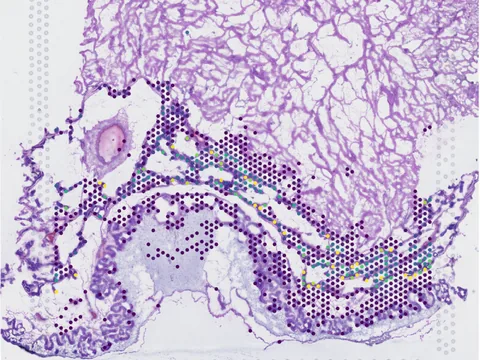
In this study we had two primary aims: 1.) spatially define the transcriptional signatures of porcine maternal-fetal interface and 2.) develop and validate an organoid model which better recapitulated the porcine placenta. Using mid-gestation maternal-fetal interfaces of commercial landrace/large white composite gilts we performed spatial transcriptomics (n=4 interfaces) using Visium v1 spatial transcriptomics. We then went on to isolate trophoblast organoids from fresh-term placentas from crossbred sows consisting</p><p>655 of Yorkshire, Large White, and Landrace breeds. We then characterized the transcriptional profile of these organoids using bulk RNA-seq from 3 seperate lines using a standard Illumina library preparation. To characterize these organoids we performed single cell RNA-sequencing on 3 separate lines of swine trophoblast organoids using a standard 10x Genomics Single Cell 3' Gene Expression platform. All reads/samples were mapped to Sus scrofa v11.1.
import lamindb as ln
import spatialdata as sd

coll = ln.Collection.get(key="geo-gse296975")
coll.ordered_artifacts.df()                 # the 4 members, ordered

# download every member .zarr to the local cache:
paths = [a.cache() for a in coll.ordered_artifacts.all()]

# …or load each straight into memory as a SpatialData object:
sdatas = {a.key: sd.read_zarr(a.cache()) for a in coll.ordered_artifacts.all()}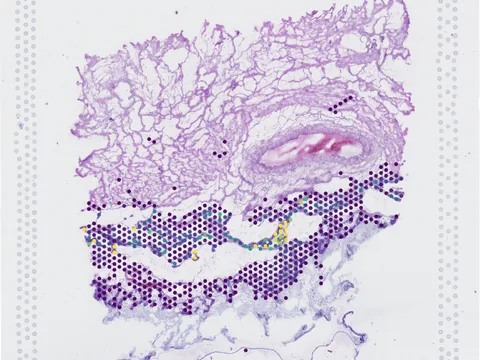 Visium
 Visium
 Visium
No linked publication found — please cite the data source.