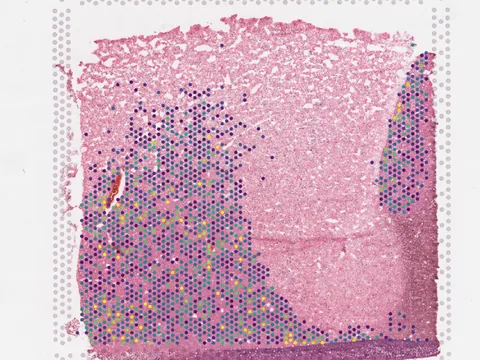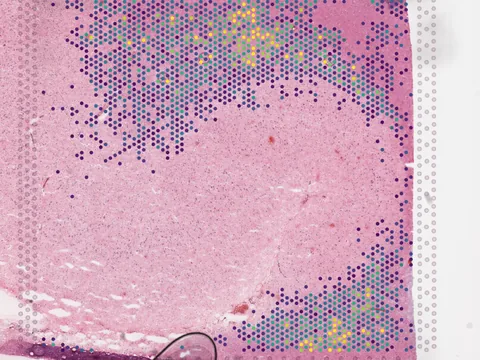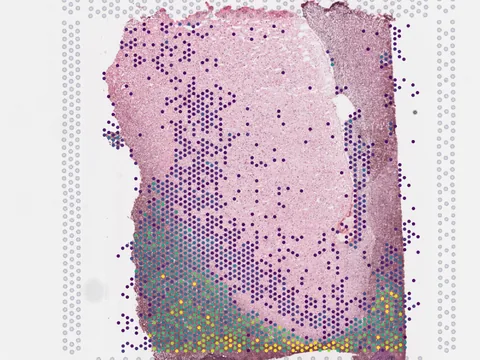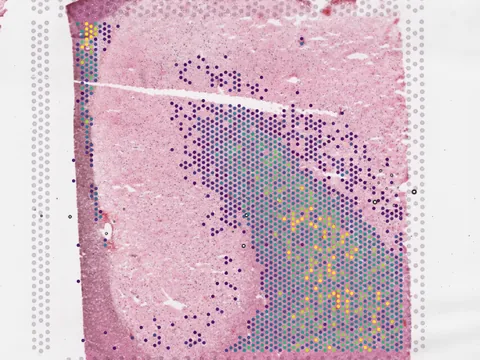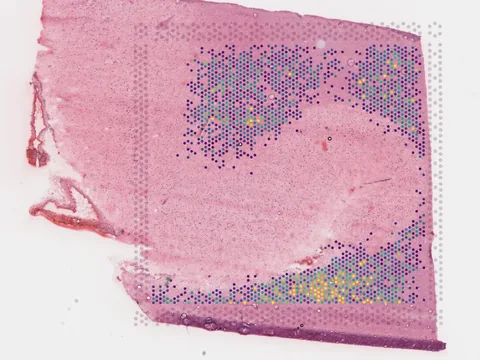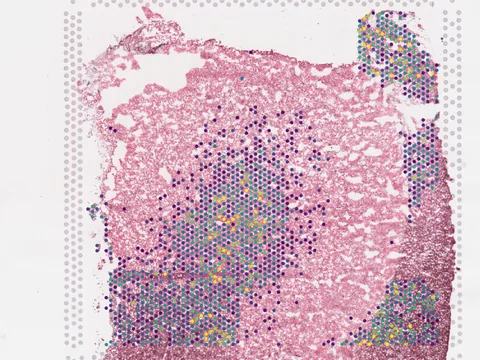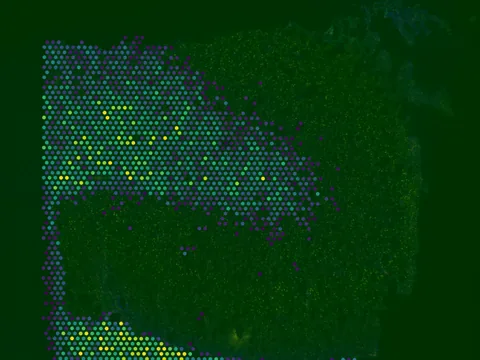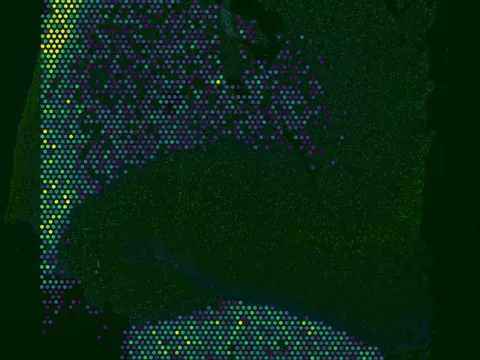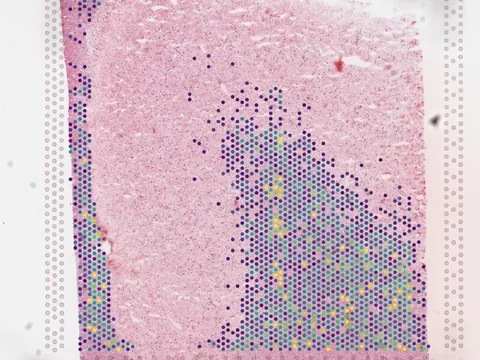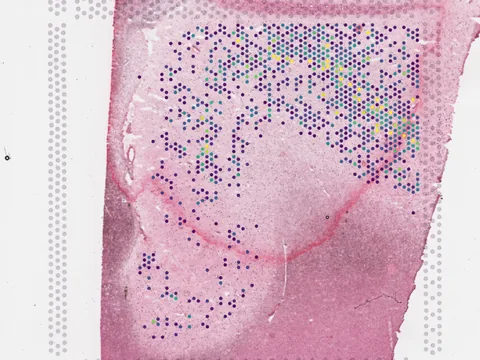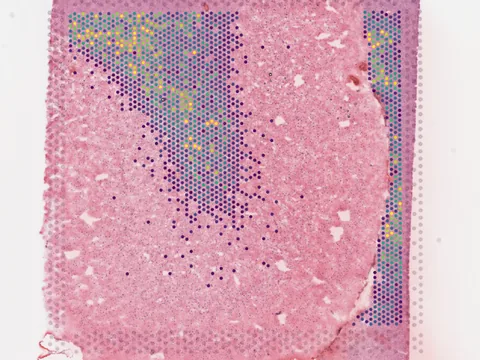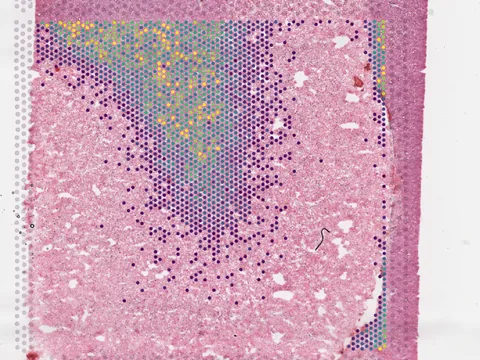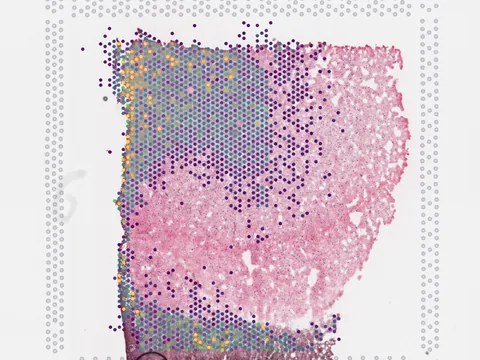
Spatio-molecular gene expression reflects dorsal anterior cingulate cortex structure and function in the human brain [spatial transcriptomics]
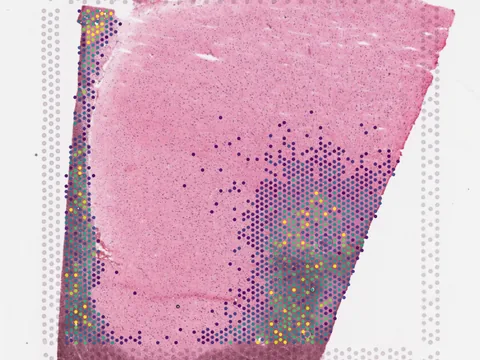
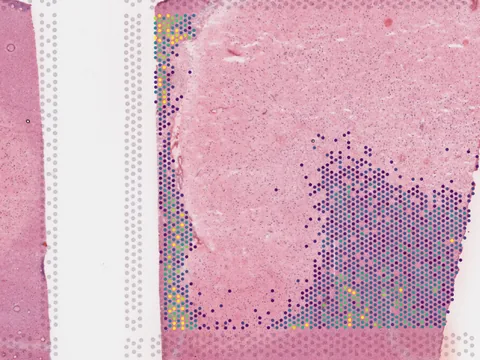
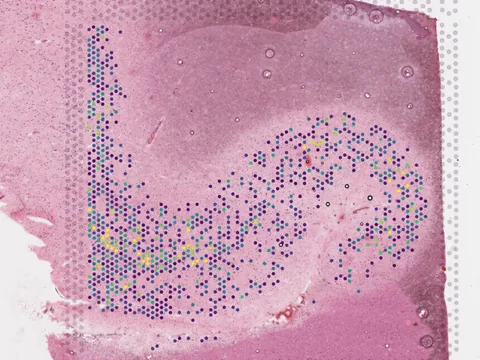
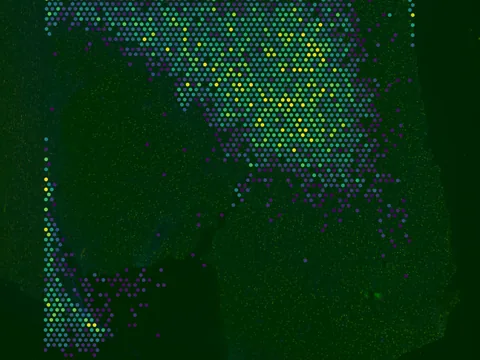
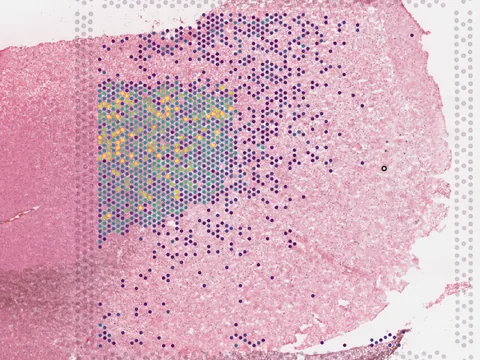
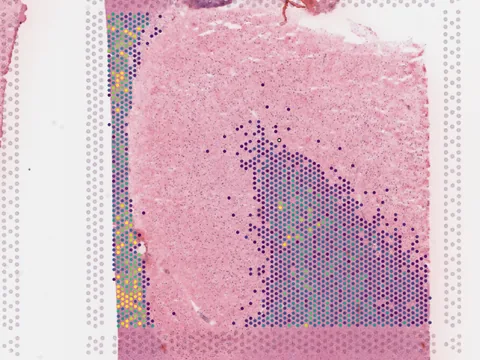
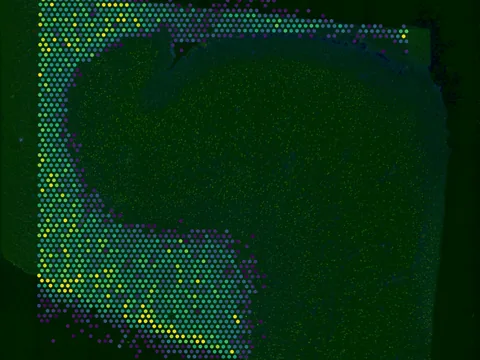
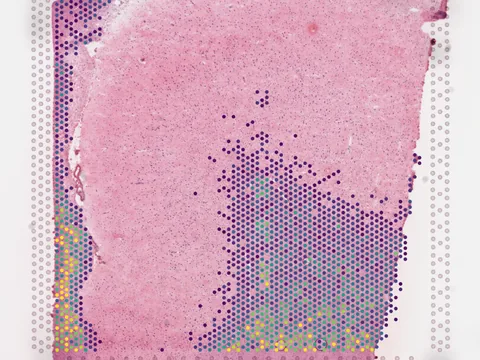
In the human brain, the dorsal anterior cingulate cortex (dACC) plays a key role in the reward pathway, which is connected to drug addiction, substance abuse, and some psychiatric disorders. Specific cell types in the dACC are associated with these disorders, but the breakdown of cell populations and their relative positions are unknown. Uniquely, the dACC has agranular laminar structure due to a lack of layer IV, which relates to distinct biological functions. We generated a human dACC spatial transcriptomic map by integrating 10x Genomics Visium Spatial Gene Expression data from ten neurotypical donors and combining this map with corresponding 10x Genomics Chromium Single Cell Gene Expression data. We utilized nonnegative matrix factorization (NMF) to discover various gene programs, which shed light on von Economo neurons (VENs) in Layer V of the dACC.To better understand the molecular landscape of this region, we compared it with the dorsolateral prefrontal cortex (dlPFC) region in the same ten donors. The brain’s structure and function are closely connected, so our precise pairing of gene expression to spatial information sheds light on how dysregulation in the dACC relates to psychiatric disorders.
import lamindb as ln
import spatialdata as sd
coll = ln.Collection.get(key="geo-gse296789")
coll.ordered_artifacts.df() # the 21 members, ordered
# download every member .zarr to the local cache:
paths = [a.cache() for a in coll.ordered_artifacts.all()]
# …or load each straight into memory as a SpatialData object:
sdatas = {a.key: sd.read_zarr(a.cache()) for a in coll.ordered_artifacts.all()} Cite this collection
No linked publication found — please cite the data source.