
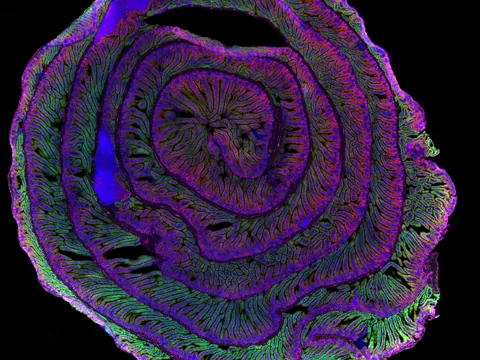
 10x Xenium
Mouse small intestine
GSM8964407
mouse small intestine 6.6 GB 365,769 obs bronze NCBI GEO policy
Technology10x Xenium
Organismmouse
Tissuesmall intestine
Obs365,769
bronze NCBI GEO policy
Mammalian reproduction requires profound maternal immune adaptations to safeguard reproductive success and ultimately shape the evolutionary trajectories of a species. While systemic and placental immunity is known to shift toward tolerance during pregnancy, how maternal immunity adapts in barrier tissues, sites of frequent infection and inflammation, from pregnancy through the postpartum lactation period remains poorly understood. Here, we discovered a previously unrecognized role for eosinophils, a type of granulocyte typically associated with allergies and helminth infections, in remodeling the intestinal barrier during reproduction. Beginning in pregnancy and peaking during lactation, eosinophils originating from bone marrow accumulate in the small intestine in the absence of infection or inflammation. Using genetic and pharmacological perturbations, organoid cultures, and single-cell and spatial transcriptomics, we show that eosinophils promote goblet cell differentiation in a stem-cell-intrinsic manner, leading to increased mucus production. This adaptation culminates during lactation, limits pathogen entry and dissemination, conferring broad innate protection against enteric bacterial infections. Remarkably, both eosinophil accumulation and goblet cell induction persist after lactation, revealing durable remodeling of the intestinal immune and epithelial landscapes with sustained innate defense. Our findings demonstrate that, despite a general trend toward systemic immunosuppression during reproduction, the maternal intestine undergoes remodeling to strengthen innate defense against enteric pathogens, a mechanism that may have evolved to protect mothers and offspring in pathogen-rich environments. More broadly, our work establishes a framework for studying tissue immune adaptation across the reproductive cycle and highlights that tissue can retain memory of physiological states, with lasting implications for host defense and reproductive health.
import lamindb as ln
import spatialdata as sd

coll = ln.Collection.get(key="geo-gse296053")
coll.ordered_artifacts.df()                 # the 8 members, ordered

# download every member .zarr to the local cache:
paths = [a.cache() for a in coll.ordered_artifacts.all()]

# …or load each straight into memory as a SpatialData object:
sdatas = {a.key: sd.read_zarr(a.cache()) for a in coll.ordered_artifacts.all()}Mammalian reproduction requires substantial immune adaptations to safeguard reproductive success and to ultimately shape the evolutionary trajectories of a species. Systemic and placental immunity shift towards tolerance during pregnancy<sup>1,2</sup>; however, how maternal immunity adapts in barrier tissues-which are sites of frequent infection and inflammation-from pregnancy until the postpartum lactation period remains poorly understood. Here we report a previously unrecognized role for eosinophils, a type of granulocyte typically associated with allergies and helminth infections<sup>3,4</sup>, in remodelling the intestinal barrier during reproduction. Beginning in pregnancy and peaking during lactation, eosinophils accumulate in the small intestine in the absence of infection or inflammation. Using genetic and pharmacological perturbations, organoid cultures and single-cell and spatial transcriptomics, we show that eosinophils promote goblet cell differentiation in a stem-cell-intrinsic manner that leads to increased mucus production. This remodelling culminates during lactation and limits pathogen entry and dissemination to confer broad innate protection against enteric bacterial infections. Moreover, in mice, intestinal remodelling and innate defence persist weeks after lactation cessation. Our findings demonstrate that despite a general trend towards systemic immune modulation during reproduction, the maternal intestine undergoes remodelling to strengthen innate defence, a mechanism that may have evolved to protect mothers and offspring in pathogen-rich environments. More broadly, we establish a framework for studying tissue-specific immune adaptation across the reproductive cycle and highlight that tissues can retain changes following physiological reproduction, with lasting implications for host defence and women's health.
10x Xenium 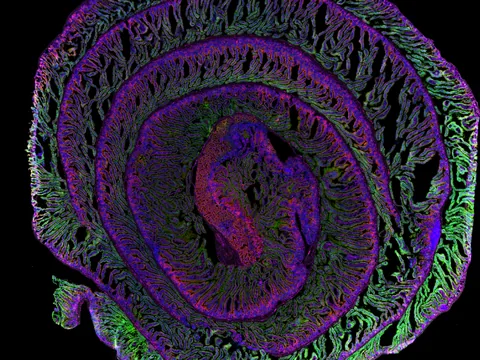 10x Xenium
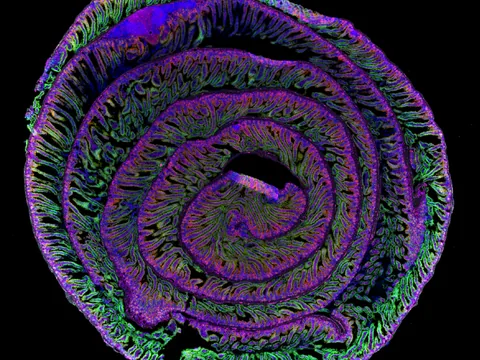 10x Xenium
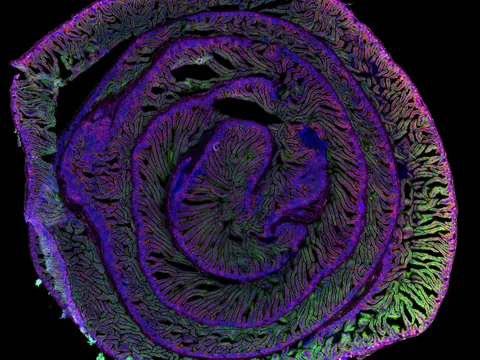 10x Xenium
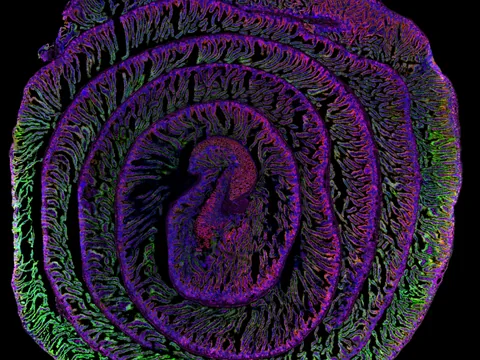 10x Xenium
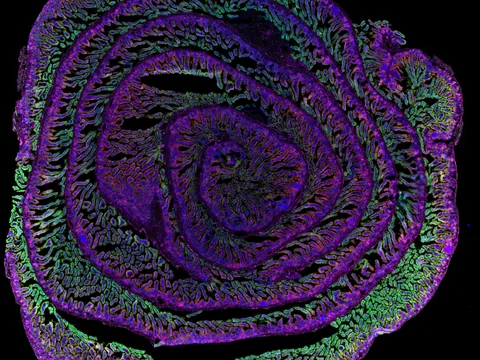 10x Xenium
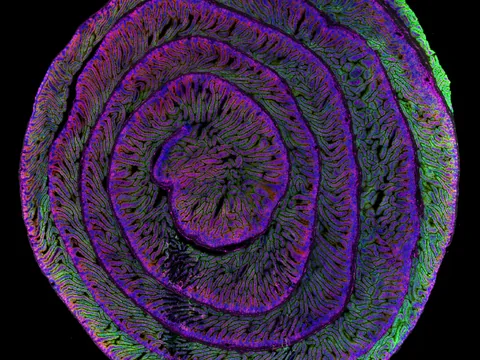 10x Xenium
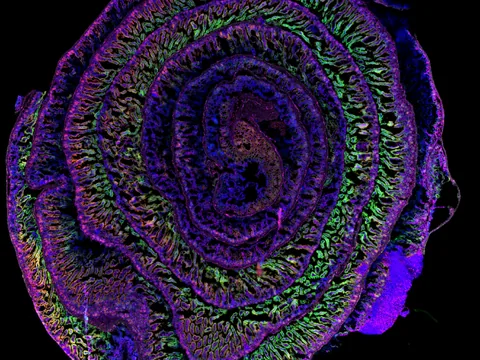 10x Xenium
No linked publication found — please cite the data source.