
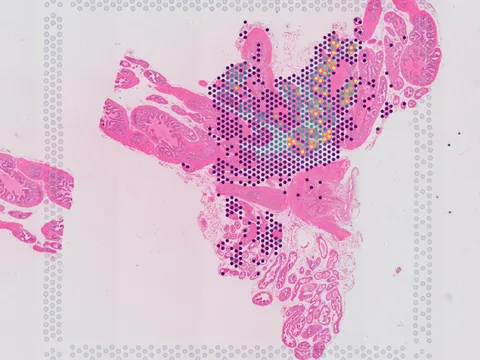
 Visium
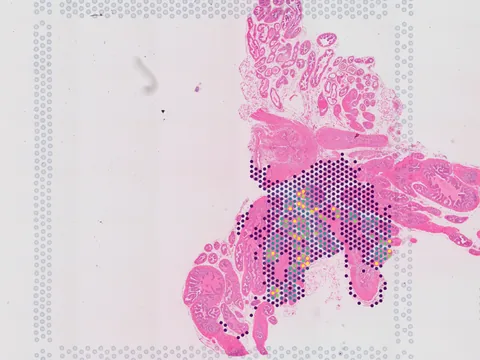
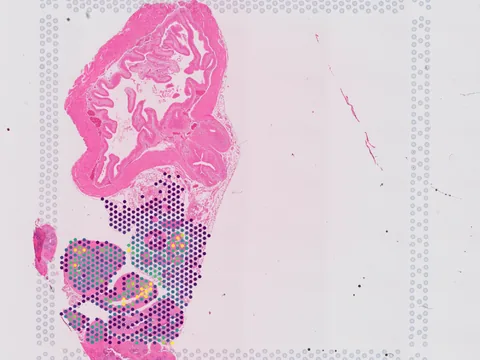
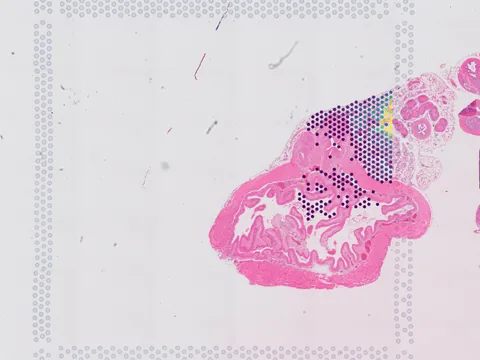
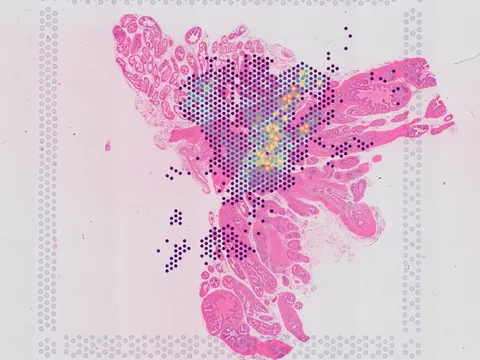
Mouse prostate gland
GSM8941070
mouse prostate gland 48 MB 2,385 obs bronze H&E
TechnologyVisium
Organismmouse
Tissueprostate gland
Obs2,385
Magnificationother · 4.019 µm/px
bronze H&E
Mice models are commonly used to further our understanding of the function of the prostate and response to androgen depletion. We used both spatial transcriptomics and single cell transcriptomics to determine how the mouse prostate degrades after castration. We identified changes in each of the prostate lobes that couuld be tracked over time as well as changes in the immune profile and of the composition of fibroblasts within the prostate. In addition to several previously identified fibroblast subtypes that we were able to show were altered in response to androgen depletion, we identified a novel fibroblast subtype present only in the castrated prostate.
import lamindb as ln
import spatialdata as sd

coll = ln.Collection.get(key="geo-gse295043")
coll.ordered_artifacts.df()                 # the 8 members, ordered

# download every member .zarr to the local cache:
paths = [a.cache() for a in coll.ordered_artifacts.all()]

# …or load each straight into memory as a SpatialData object:
sdatas = {a.key: sd.read_zarr(a.cache()) for a in coll.ordered_artifacts.all()}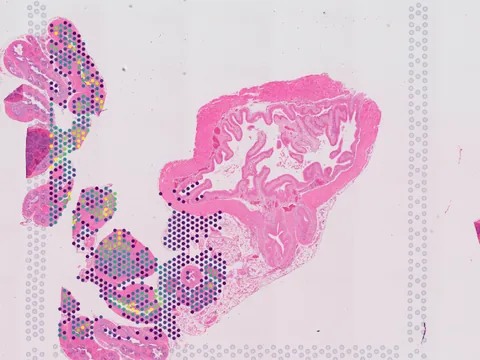 Visium
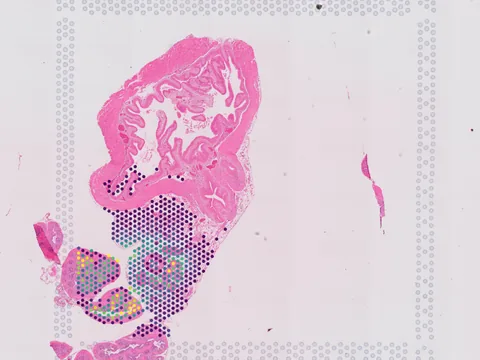 Visium
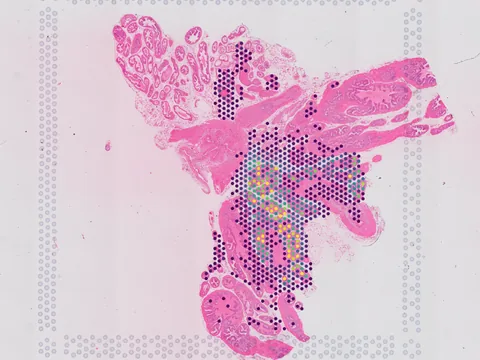 Visium
 Visium
 Visium
 Visium
 Visium
No linked publication found — please cite the data source.