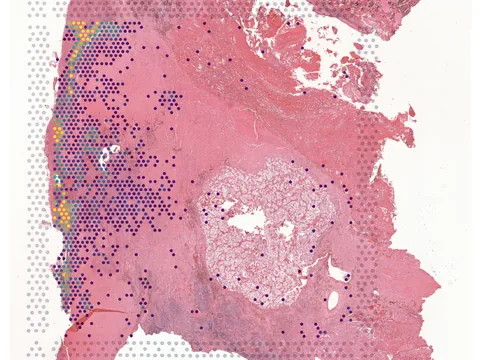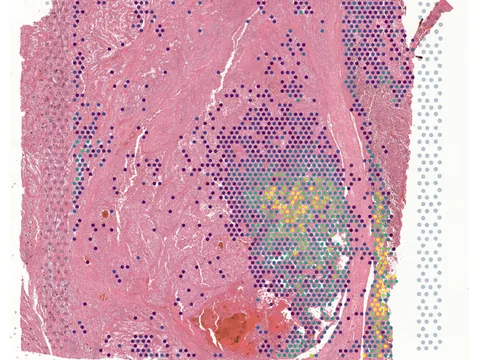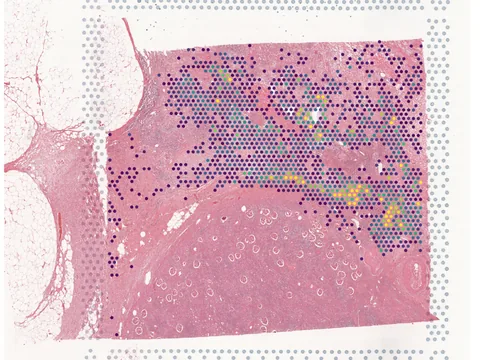
Hypoxia shapes both therapeutic response and resistance in metastatic clear cell renal cell carcinoma [Spatial Transcriptomics]
Vascular endothelial growth factor receptor-targeting tyrosine kinase inhibitors (VEGFR-TKIs) and aPD1 combinations are effective in multiple solid tumors, particularly in clear cell renal cell carcinoma (ccRCC), due it’s characteristic pseudo-hypoxic, hyper-angiogenic state driven by biallelic VHL-loss. However, long-term durability is inferior to dual aPD1/aCTLA4 regimens, yet the mechanisms underlying these differences remain unclear. Since tumor-associated macrophages (TAMs) are implicated in therapeutic resistance, we used scRNAseq to investigate TAM evolution following VEGFR-TKI, aPD1 and combined VEGFR-TKI/aPD1 treatment in a transgenic ccRCC mouse model. We identify hypoxia-responsive SPP1+ TAMs that are absent in baseline pseudo-hypoxic tumors. This proxy of true hypoxia tracks with successful response to VEGFR-TKI/aPD1 in mouse and human on-treatment samples, reflecting treatment-induced hypoxic necrosis. Paradoxically, pretreatment hypoxia predicted worse outcomes across multiple VEGFR-TKI/aPD1 trial and real-world cohorts and extended exposure to hypoxia-inducing VEGFR-TKIs and aPD1 exacerbated metastasis in mice, highlighting the dual implications of hypoxia in ccRCC disease trajectory.
import lamindb as ln
import spatialdata as sd
coll = ln.Collection.get(key="geo-gse294006")
coll.ordered_artifacts.df() # the 3 members, ordered
# download every member .zarr to the local cache:
paths = [a.cache() for a in coll.ordered_artifacts.all()]
# …or load each straight into memory as a SpatialData object:
sdatas = {a.key: sd.read_zarr(a.cache()) for a in coll.ordered_artifacts.all()} Cite this collection
No linked publication found — please cite the data source.