Collections / Mapping Endothelial-Macrophage Interactions in Diabetic Vasculature: Role of TREM2 in Vascular Inflammation and Ischemic Response [Spatial Transcriptomics]

Mapping Endothelial-Macrophage Interactions in Diabetic Vasculature: Role of TREM2 in Vascular Inflammation and Ischemic Response [Spatial Transcriptomics]

Diabetes mellitus (DM) significantly accelerates vascular diseases like peripheral arterial disease (PAD). Endothelial cells (ECs) and macrophages (MΦs) singularly and synergistically are important contributors to DM-associated vascular dysfunction. Single-cell (sc) profiling technologies are revealing the true heterogeneity of ECs and MΦs, but how this cellular diversity translates to cell-cell interactions, and consequentially vascular function, remains unknown. We leveraged scRNA sequencing and spatial transcriptome (ST) profiling to analyze human mesenteric arteries from non-diabetic (ND) and type 2 diabetic (T2D) donors. We generated a transcriptome and interactome map encompassing the major arterial cells and highlighted Triggering Receptor Expressed on Myeloid Cells 2 (TREM2) as a top T2D-induced gene in mononuclear phagocytes (MPs), with concomitant increases of TREM2 ligands in ECs. We verified DM-associated TREM2 induction in cell and mouse models, and found that TREM2 inhibition decreases pro-inflammatory responses in MPs and ECs, as well as increases EC migration in vitro. Furthermore, TREM2 inhibition using a neutralizing antibody enhanced ischemic recovery and flow reperfusion in DM mice subjected to hindlimb ischemia, suggesting that TREM2 promotes ischemic injury in DM. Finally, in human PAD, co-existing DM was associated with greater expression of TREM2 and its interaction with ECs, with a further increase in ischemic tissue compared to patient-matched non-ischemic tissue. Collectively, our study presents the first atlas of human diabetic vessels with single cell and spatial resolution, and identifies TREM2-EC interaction as a key driver of diabetic vasculopathies, the targeting of which may offer an opportunity to ameliorate vascular dysfunction associated with DM-PAD.

Datasets10
Size~75 MB
AssayVisium
Samplehuman · mesenteric artery
KindComparison
PMID:42018669 ↗
Python · lamindb
import lamindb as ln
import spatialdata as sd

coll = ln.Collection.get(key="geo-gse293427")
coll.ordered_artifacts.df()                 # the 10 members, ordered

# download every member .zarr to the local cache:
paths = [a.cache() for a in coll.ordered_artifacts.all()]

# …or load each straight into memory as a SpatialData object:
sdatas = {a.key: sd.read_zarr(a.cache()) for a in coll.ordered_artifacts.all()}
Open in Vitessce
Visium
Human mesenteric artery
GSM8881932
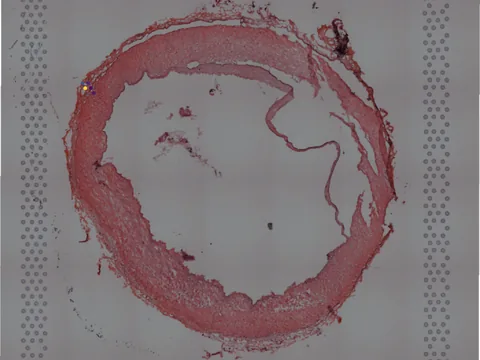
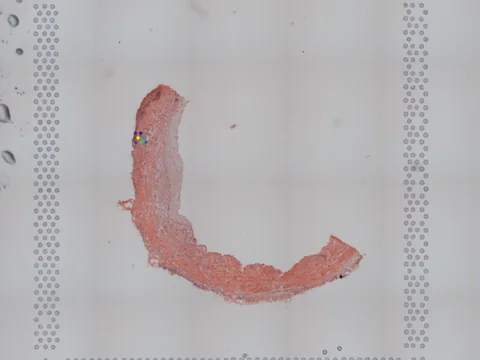
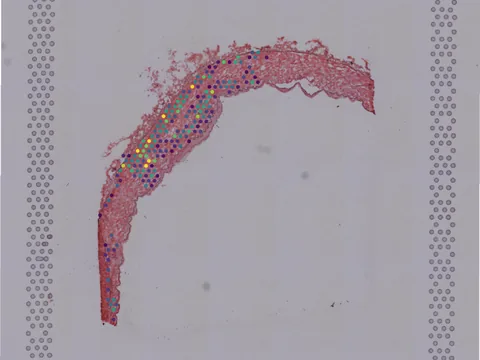
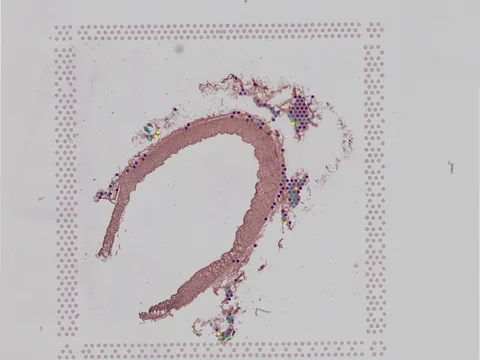
human mesenteric artery 6.6 MB 669 obs bronze H&E
TechnologyVisium
Organismhuman
Tissuemesenteric artery
Size6.6 MB
Obs669
Magnificationother · 4.081 µm/px
bronze H&E Open in Vitessce
Open in Vitessce
Visium
Human mesenteric artery
GSM8881936
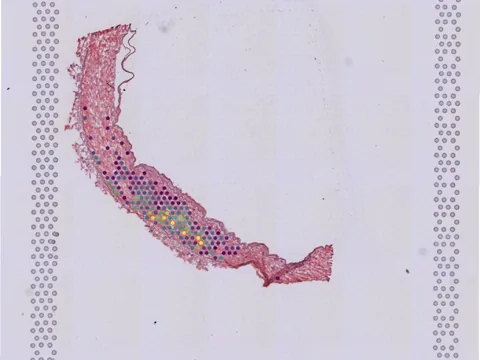
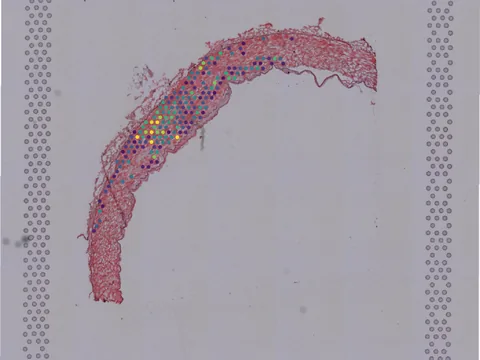
human mesenteric artery type 2 diabetes mellitus 6.9 MB 851 obs bronze H&E
TechnologyVisium
Organismhuman
Tissuemesenteric artery
Conditiontype 2 diabetes mellitus
Size6.9 MB
Obs851
Magnificationother · 4.647 µm/px
bronze H&E Open in Vitessce
Open in Vitessce
Visium
Human mesenteric artery
GSM8881939
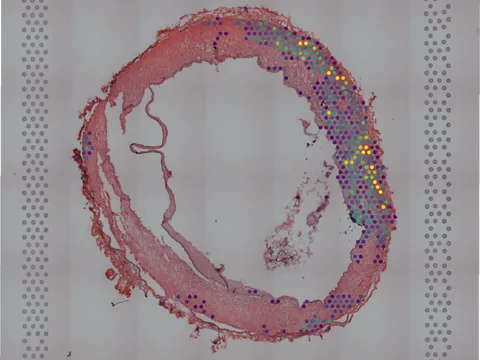
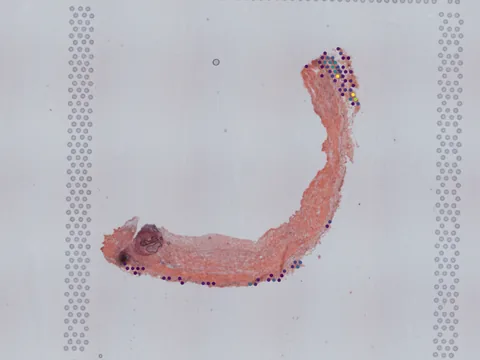
human mesenteric artery type 2 diabetes mellitus 8.1 MB 1,471 obs bronze H&E
TechnologyVisium
Organismhuman
Tissuemesenteric artery
Conditiontype 2 diabetes mellitus
Size8.1 MB
Obs1,471
Magnificationother · 4.077 µm/px
bronze H&E Open in Vitessce
Open in Vitessce
Visium
Human mesenteric artery
GSM8881938
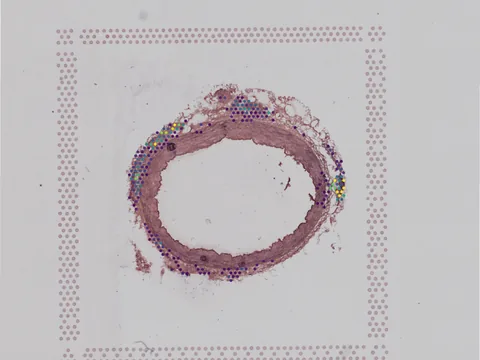
human mesenteric artery type 2 diabetes mellitus 7.7 MB 1,093 obs bronze H&E
TechnologyVisium
Organismhuman
Tissuemesenteric artery
Conditiontype 2 diabetes mellitus
Size7.7 MB
Obs1,093
Magnificationother · 4.647 µm/px
bronze H&E Open in Vitessce
Open in Vitessce
Visium
Human mesenteric artery
GSM8881940
human mesenteric artery type 2 diabetes mellitus 8.2 MB 1,437 obs bronze H&E
TechnologyVisium
Organismhuman
Tissuemesenteric artery
Conditiontype 2 diabetes mellitus
Size8.2 MB
Obs1,437
Magnificationother · 4.076 µm/px
bronze H&E Open in Vitessce
Open in Vitessce
Visium
Human mesenteric artery
GSM8881930
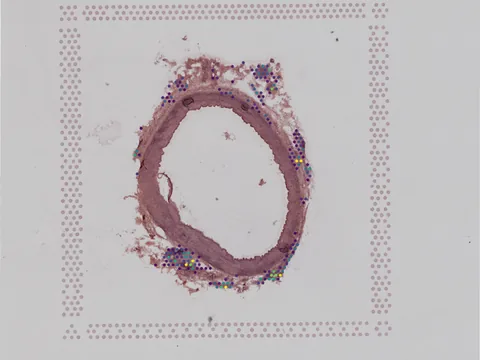
human mesenteric artery 7.1 MB 601 obs bronze H&E
TechnologyVisium
Organismhuman
Tissuemesenteric artery
Size7.1 MB
Obs601
bronze H&E Open in Vitessce
Open in Vitessce
Visium
Human mesenteric artery
GSM8881934
human mesenteric artery 8.1 MB 645 obs bronze H&E
TechnologyVisium
Organismhuman
Tissuemesenteric artery
Size8.1 MB
Obs645
bronze H&E Open in Vitessce
Open in Vitessce
Visium
Human mesenteric artery
GSM8881931
human mesenteric artery 6.2 MB 711 obs bronze H&E
TechnologyVisium
Organismhuman
Tissuemesenteric artery
Size6.2 MB
Obs711
bronze H&E Open in Vitessce
Open in Vitessce
Visium
Human mesenteric artery
GSM8881933
human mesenteric artery 8.6 MB 701 obs bronze H&E
TechnologyVisium
Organismhuman
Tissuemesenteric artery
Size8.6 MB
Obs701
Magnificationother · 3.879 µm/px
bronze H&E Open in Vitessce
Open in Vitessce
Visium
Human mesenteric artery
GSM8881937
human mesenteric artery type 2 diabetes mellitus 7.7 MB 959 obs bronze H&E
TechnologyVisium
Organismhuman
Tissuemesenteric artery
Conditiontype 2 diabetes mellitus
Size7.7 MB
Obs959
bronze H&E Open in Vitessce

Cite this collection

No linked publication found — please cite the data source.