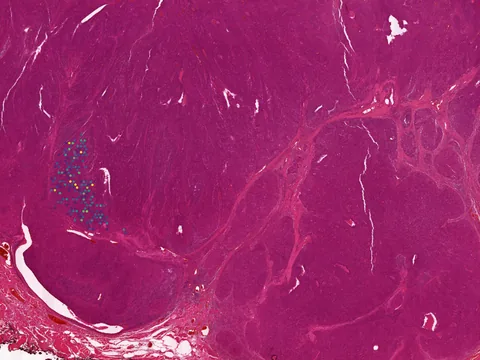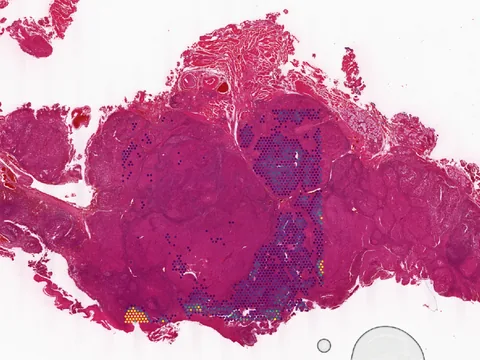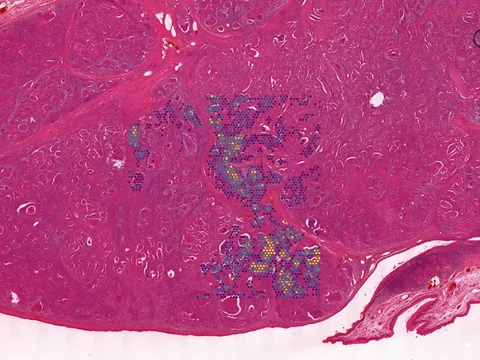
Intratumoral spatiotemporal heterogeneity of HPV status in HPV-associated oropharyngeal squamous cell carcinoma with clinical record
Heterogeneity in HPV status within HPV-associated oropharyngeal squamous cell carcinoma (HPV-OPSCC) has gained attention, but the origin and relevance of HPV-absent cancer cells remain unclear. Among 83 OPSCCs, including 48 HPV-OPSCCs, seven showed spatial HPV heterogeneity. Using HPV-DNA in situ hybridization, histomorphology, immunohistochemistry, and spatial transcriptomics, we revealed that HPV-absent subsets differentiate from initial HPV-positive cells, forming distinct lineages. HPV-OPSCC was associated with p16 expression, with HPV-absent clones showing robust p16 expression and poorly differentiated histology. Despite these aggressive features, prognosis was comparable to HPV-homogeneous tumors, likely due to tumor microenvironment differences. HPV-absent clones exhibited increased interferon signaling, hypoxia signaling, and cytotoxic lymphocyte infiltration, indicating a loss of antiviral immune evasion. Conversely, HPV-positive clones were linked to FGFR3 ligand-receptor signaling. This study highlights the emergence, evolution, and microenvironmental impact of HPV-absent clones in HPV-OPSCC.
import lamindb as ln
import spatialdata as sd
coll = ln.Collection.get(key="geo-gse289363")
coll.ordered_artifacts.df() # the 3 members, ordered
# download every member .zarr to the local cache:
paths = [a.cache() for a in coll.ordered_artifacts.all()]
# …or load each straight into memory as a SpatialData object:
sdatas = {a.key: sd.read_zarr(a.cache()) for a in coll.ordered_artifacts.all()} Cite this collection
No linked publication found — please cite the data source.