
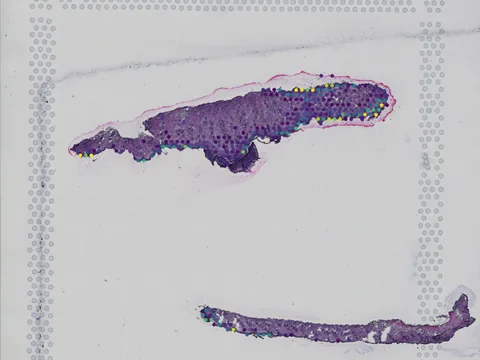
 Visium
Mouse skin of face
GSM8745172
mouse skin of face 15 MB 671 obs bronze H&E
TechnologyVisium
Organismmouse
Tissueskin of face
Obs671
Magnificationother · 4.051 µm/px
bronze H&E
Rapid and scarless wound repair is a hallmark of the oral mucosa, yet the cellular and molecular mechanisms that enable this regeneration remain unclear. By comparing populations of oral mucosal fibroblasts (OMFs) and facial skin fibroblasts (FSFs), we have identified the mechanisms that facilitate regeneration over fibrosis. We found that OMFs utilize Growth arrest specific-6 (GAS6)-AXL signaling to suppress fibrosis-related mechanosignaling via Focal adhesion kinase (FAK). Inhibition and knockdown of AXL in the oral mucosa resulted in fibrotic wounds and increased activation of FAK. At the same time, stimulation of AXL in the facial skin yielded wounds that heal regeneratively. Rare human oral scars that resulted from repetitive injury showed decreased expression of GAS6/AXL and increased FAK. Activating AXL in repetitively injured mouse oral tissue resulted in better wound healing outcomes and reduced scarring. Together, our work demonstrates that AXL signaling is necessary for regenerative wound healing in the oral mucosa and sufficient to limit facial skin fibrosis.
import lamindb as ln
import spatialdata as sd

coll = ln.Collection.get(key="geo-gse287384")
coll.ordered_artifacts.df()                 # the 4 members, ordered

# download every member .zarr to the local cache:
paths = [a.cache() for a in coll.ordered_artifacts.all()]

# …or load each straight into memory as a SpatialData object:
sdatas = {a.key: sd.read_zarr(a.cache()) for a in coll.ordered_artifacts.all()}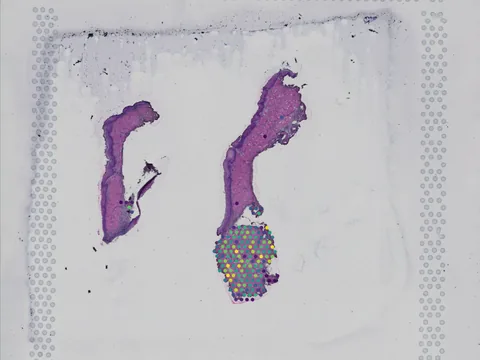 Visium
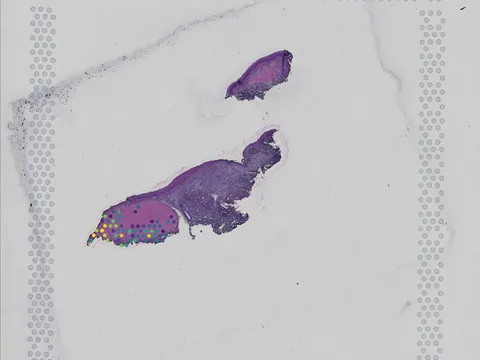 Visium
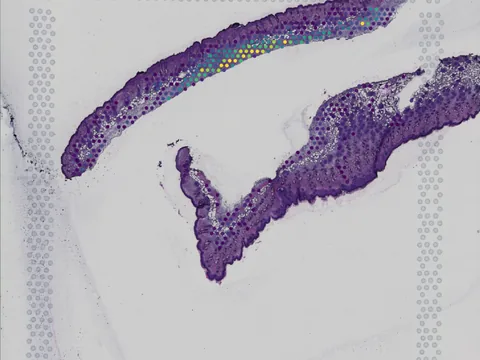 Visium
No linked publication found — please cite the data source.