
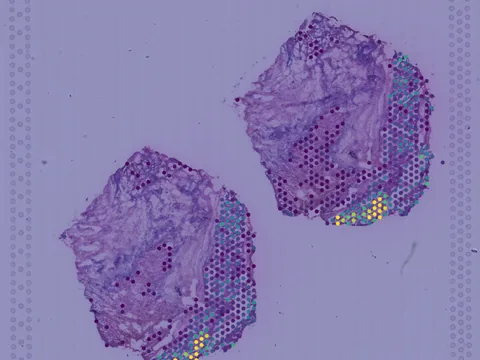
 Visium
Human liver
GSM8627610
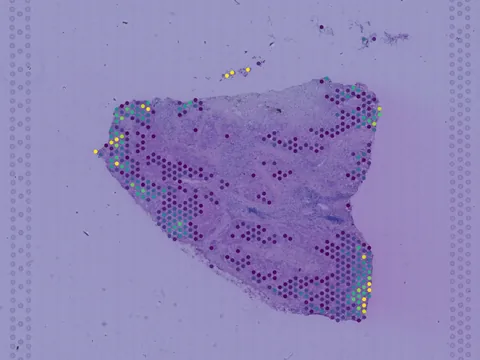
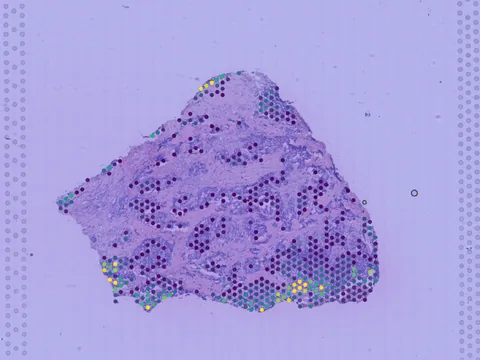
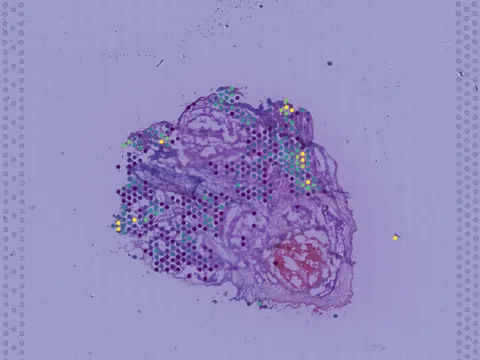
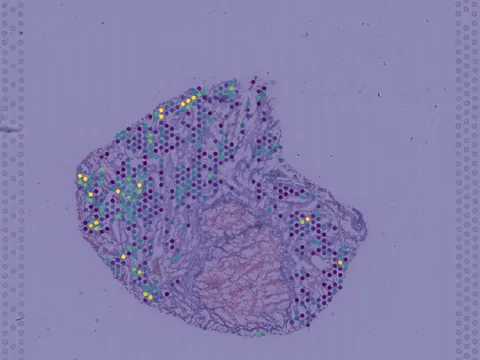
human liver hepatocellular carcinoma 25 MB 1,898 obs bronze H&E
TechnologyVisium
Organismhuman
Tissueliver
Conditionhepatocellular carcinoma
Obs1,898
bronze H&E
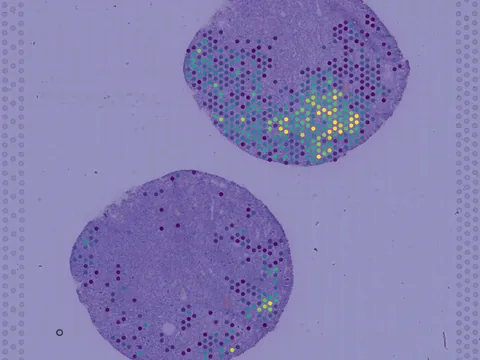
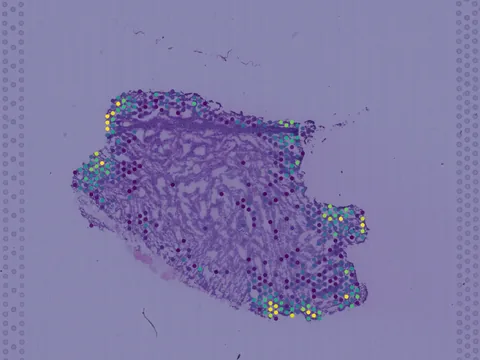
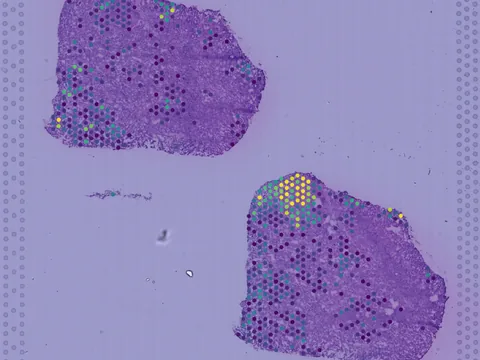
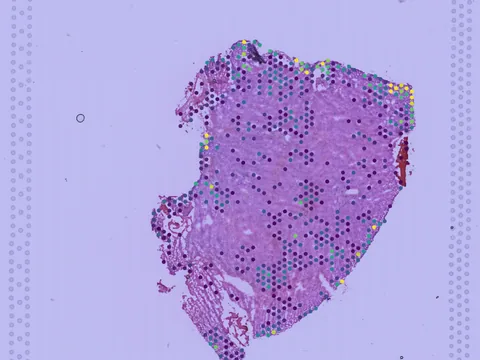
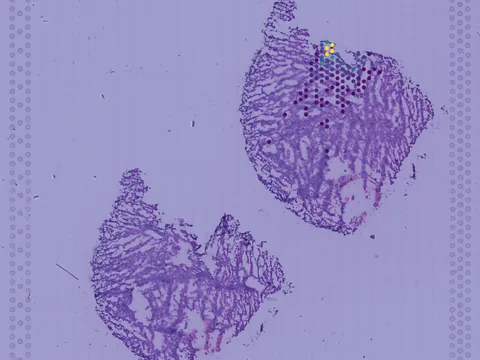
Hepatocellular carcinoma (HCC) exhibits diverse aetiologies and molecular heterogeneities, with a median 5-year overall survival (OS) of less than 70% due to late diagnosis and high recurrence rates post-curative ablation or surgery. This study investigated the complex tumor microenvironment (TME) in HCC, emphasizing the interactions between various cell types and their role in disease recurrence. Using samples from the PLANet 1.0 cohort (NCT03267641), spatial transcriptomics were performed on 17 tissue samples from 4 patients, and bulk RNA-seq on multi-region tumour sectors from 91 patients. Analysis revealed extensive intra- and inter-tumour gene expression heterogeneity, identifying a specific subset of endothelial cells (ECs), INTS6+ ECs, enriched and spatially co-localized with tumour cells in primary tumours of recurrent cases. A significant ANGPTL4-SDC1 ligand-receptor interaction was found between INTS6+ ECs and tumour cells. Interestingly, INTS6+ ECs were enriched in histologically annotated microvascular invasion (MVI). These findings suggest novel therapeutic targets focusing on endothelial cell interactions within TME.
import lamindb as ln
import spatialdata as sd

coll = ln.Collection.get(key="geo-gse281759")
coll.ordered_artifacts.df()                 # the 17 members, ordered

# download every member .zarr to the local cache:
paths = [a.cache() for a in coll.ordered_artifacts.all()]

# …or load each straight into memory as a SpatialData object:
sdatas = {a.key: sd.read_zarr(a.cache()) for a in coll.ordered_artifacts.all()}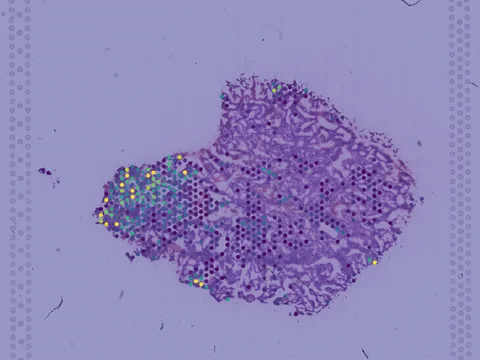 Visium
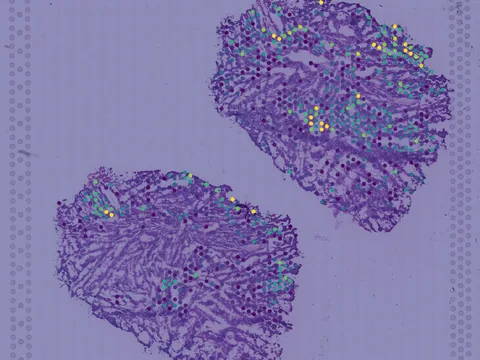 Visium
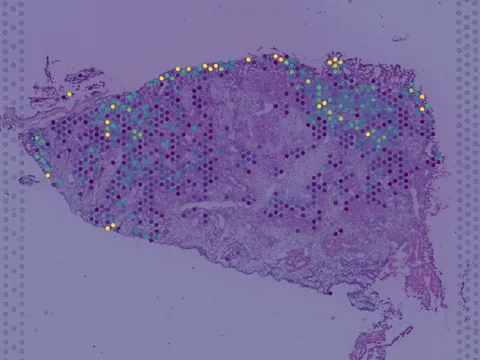 Visium
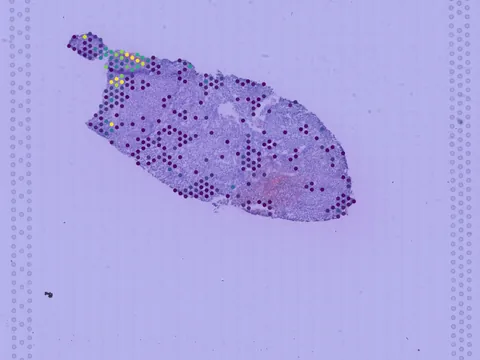 Visium
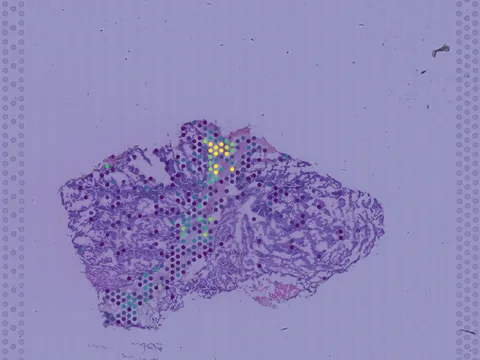 Visium
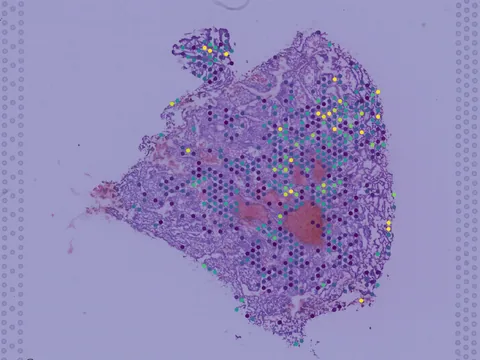 Visium
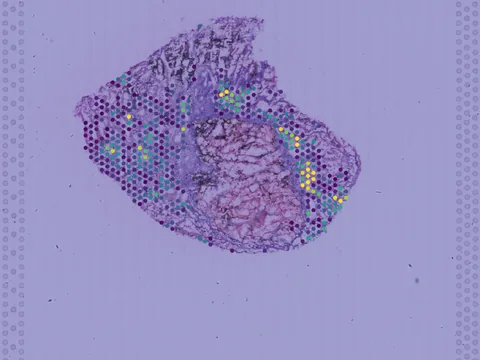 Visium
 Visium
 Visium
 Visium
 Visium
 Visium
 Visium
 Visium
 Visium
 Visium
No linked publication found — please cite the data source.