
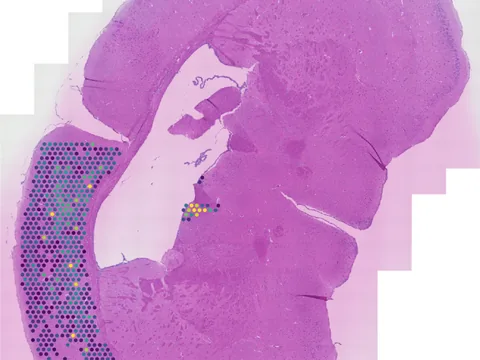
 Visium
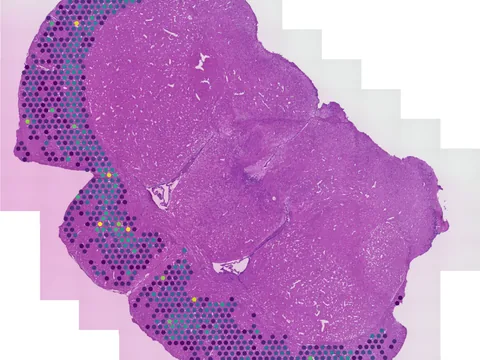
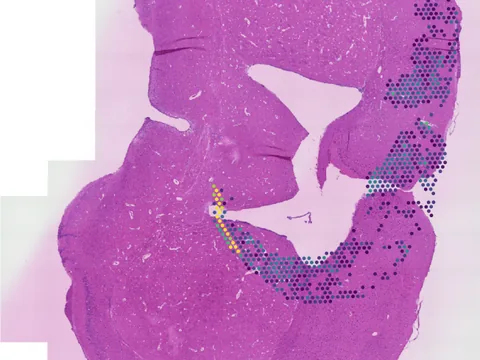
Mouse brain
GSM8604635
mouse brain tic disorder 99 MB 3,294 obs silver H&E
TechnologyVisium
Organismmouse
Tissuebrain
Conditiontic disorder
Obs3,294
silver H&E
The gene CELSR3 (cadherin EGF LAG seven‐pass-G‐type receptor 3) has been recently recognized as a high-confidence risk factor for tic disorders (TD). Celsr3 mutant mice displayed tic-like grooming stereotypies and jerks, as well as sensorimotor gating deficits, which were opposed by TD therapies. Spatial transcriptomic analyses revealed that Celsr3 mutants featured abnormalities of the extracellular matrix in the striatum. Notably, there are alterations in collagen and extracellular organization.
import lamindb as ln
import spatialdata as sd

coll = ln.Collection.get(key="geo-gse280709")
coll.ordered_artifacts.df()                 # the 4 members, ordered

# download every member .zarr to the local cache:
paths = [a.cache() for a in coll.ordered_artifacts.all()]

# …or load each straight into memory as a SpatialData object:
sdatas = {a.key: sd.read_zarr(a.cache()) for a in coll.ordered_artifacts.all()}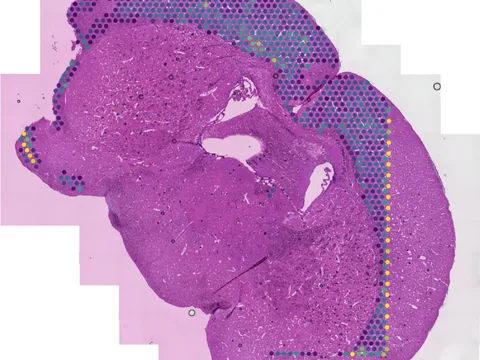 Visium
 Visium
 Visium
No linked publication found — please cite the data source.