
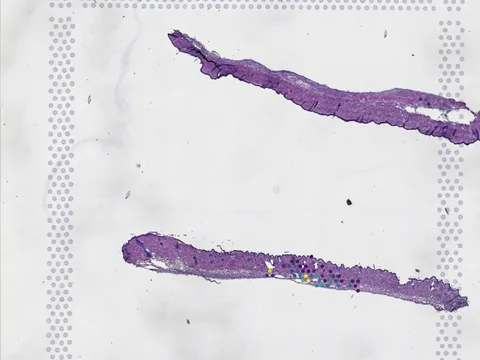
 Visium
Mouse skin of body
GSM8541074
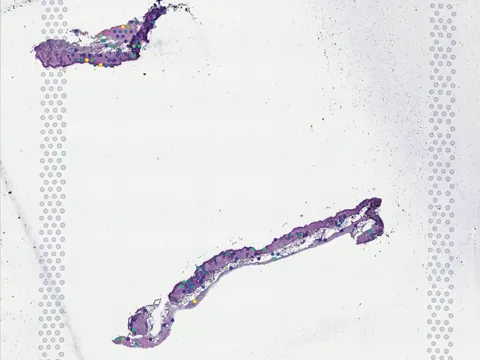
mouse skin of body 9.8 MB 586 obs bronze H&E
TechnologyVisium
Organismmouse
Tissueskin of body
Obs586
Magnificationother · 4.051 µm/px
bronze H&E
In the skin, tissue injury results in fibrosis in the form of scars composed of dense extracellular matrix deposited by fibroblasts. The therapeutic goal of regenerative wound healing has remained elusive, in part because principles of fibroblast programming and adaptive response to injury remain incompletely understood. Here, we present a multimodal -omics platform for the comprehensive study of cell populations in complex tissue, which has allowed us to characterize the cells involved in wound healing using a bleomycin induced ifibrosis model. We employ a bleomycin skin models that recapitulates human tissue repair kinetics. Through integrated analysis of single cell chromatin landscapes and gene expression states, coupled with spatial transcriptomic profiling, we are able to impute fibroblast epigenomes with temporospatial resolution. This has allowed us to reveal potential mechanisms controlling fibroblast fate during migration, proliferation, and differentiation following skin injury, and thereby reexamine the canonical phases of wound healing. These findings have broad implications for the study of tissue repair in complex organ systems.
import lamindb as ln
import spatialdata as sd

coll = ln.Collection.get(key="geo-gse278169")
coll.ordered_artifacts.df()                 # the 5 members, ordered

# download every member .zarr to the local cache:
paths = [a.cache() for a in coll.ordered_artifacts.all()]

# …or load each straight into memory as a SpatialData object:
sdatas = {a.key: sd.read_zarr(a.cache()) for a in coll.ordered_artifacts.all()}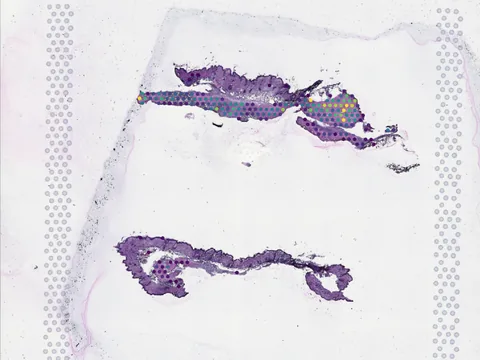 Visium
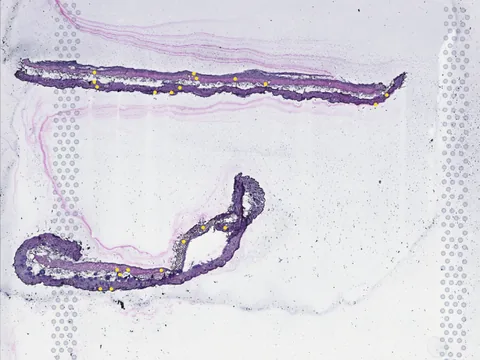 Visium
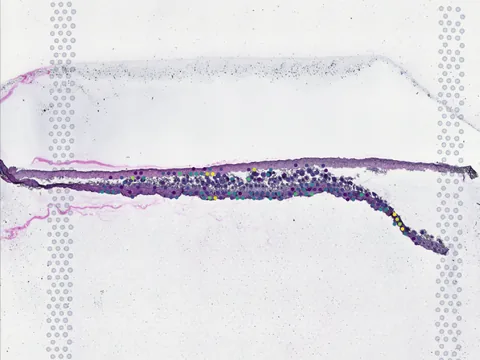 Visium
 Visium
No linked publication found — please cite the data source.