
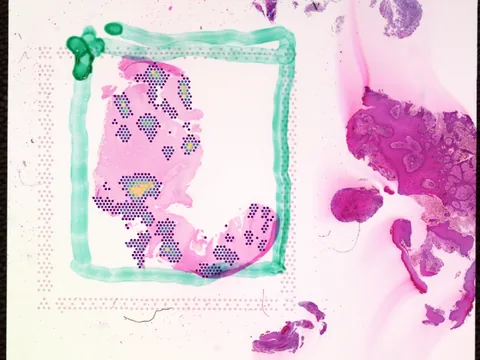
 Visium
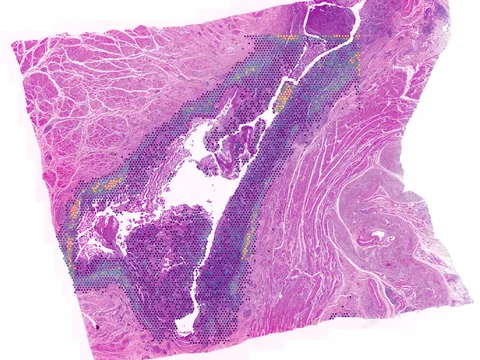
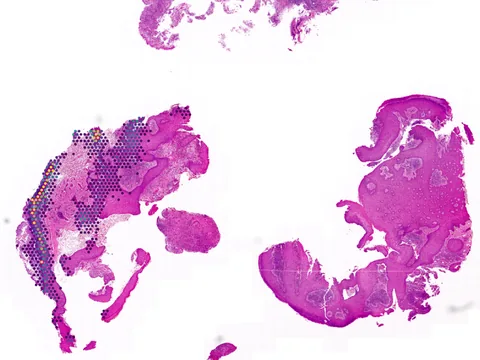
Human perianal skin
GSM8521496
human perianal skin anal fistula 52 MB 2,076 obs silver H&E
TechnologyVisium
Organismhuman
Tissueperianal skin
Conditionanal fistula
Obs2,076
silver H&E
Background & Aims: Perianal fistulizing Crohn’s disease (PCD) is a common and debilitating complication with elusive pathophysiology. We examined biopsies from patients with PCD and related conditions using a multi-omics approach. Methods: Patients with PCD (n=24), CD without perianal disease (NPCD, n=10), and idiopathic perianal fistulas (IPF, or cryptoglandular fistulas, n=25) were recruited. Biopsies were taken from fistula tracts, fistula opening, and rectal mucosa during examination under anesthesia or colonoscopy. Single-cell RNA-sequencing (scRNA-seq), mass cytometry (CyTOF), spatial transcriptomics (ST), immunohistochemistry (IHC), and integrated analysis of published datasets were performed. Results: ScRNA-seq, CyTOF, and ST unraveled immune and non-immune cell compartments in PCD and IPF fistula tracts. PCD fistulas showed hyperactivated pathogenic pathways including interferon (IFN)G response, TNF signaling, and IL6-JAK-STAT3 in myeloid cells. Similarly, stromal cells from PCD fistulas exhibited elevated IFNG and TNF response, TNF signaling, and epithelial-mesenchymal transition (EMT). Further analysis revealed cellular modules associated with anti-TNF therapy in PCD patients. In addition to fistula tracts, intestinal cells from PCD patients also expressed greater levels of IFNG-responsive and EMT genes compared to CD patients without perianal disease. In addition, we showed that both fistula tracts and ileal mucosa from PCD patients harbored expanded IFNG+ Th17 cells, which expressed elevated inflammatory mediators. The findings were independently validated using ST and IHC. Conclusion: Multi-omics analysis revealed immune and nonimmune cell landscapes of PCD. and highlights the pathogenic role of hyperactivated IFNG signaling in both fistula tracts and luminal mucosa of patients with PCD. This study identified IFNG as a potential therapeutic target for PCD.
import lamindb as ln
import spatialdata as sd

coll = ln.Collection.get(key="geo-gse277387")
coll.ordered_artifacts.df()                 # the 6 members, ordered

# download every member .zarr to the local cache:
paths = [a.cache() for a in coll.ordered_artifacts.all()]

# …or load each straight into memory as a SpatialData object:
sdatas = {a.key: sd.read_zarr(a.cache()) for a in coll.ordered_artifacts.all()}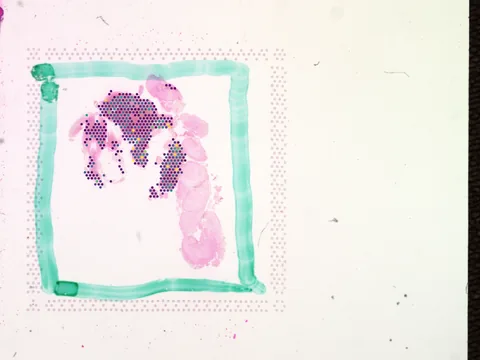 Visium
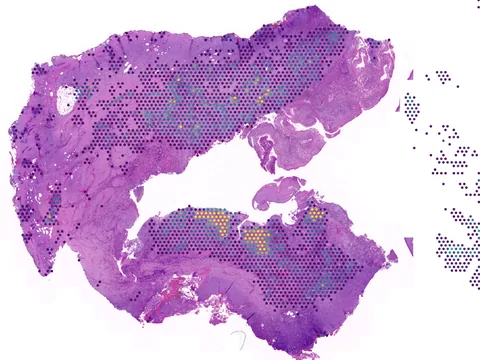 Visium
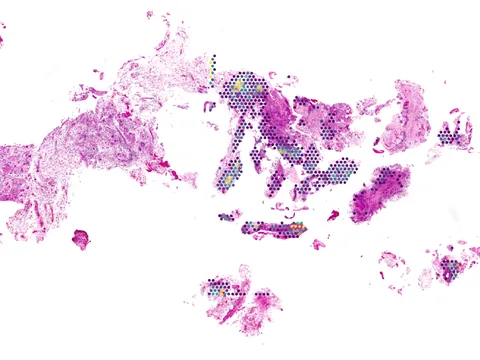 Visium
 Visium
 Visium
No linked publication found — please cite the data source.