
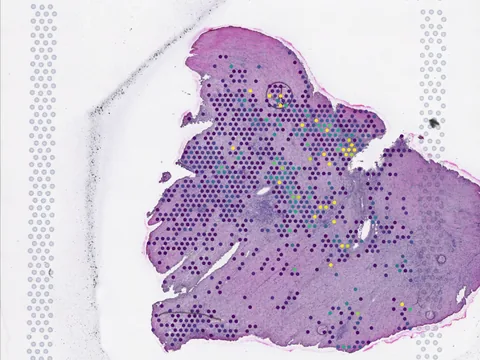
 Visium
Human intestine
GSM8471388
human intestine Crohn disease 16 MB 4,992 obs bronze H&E
TechnologyVisium
Organismhuman
Tissueintestine
ConditionCrohn disease
Obs4,992
Magnificationother · 4.049 µm/px
bronze H&E
A significant complication of Crohn’s disease (CD) is intestinal fibrosis, which narrows the bowel lumen to cause a stricture. Creeping fat (CF) is the wrapping of mesenteric adipose tissue (MAT) around inflamed and fibrotic bowel, but its role in stricture progression in CD is unclear. In this study, we explore whether CF-derived fibroblasts, the cells primarily responsible for extracellular matrix (ECM) deposition, directly contribute to stricture progression. By performing scRNA-seq and Visium on pediatric CD strictures, we identified a CF-associated, mechanosensitive, CTHRC1+ fibroblast enriched for YAP/TAZ signaling that localized to the fibrotic CF-bowel wall interface within the stricture. We developed a novel mouse model of intestinal fibrosis that exhibited CF and used lineage tracing to show that Postn+ mouse fibroblasts, analogous to human CTHRC1+ fibroblasts, infiltrate fibrotic bowel and deposit ECM in a YAP/TAZ-dependent manner through scRNA-seq. Our findings identify mesenteric fat as a key source of pro-fibrotic fibroblasts that can be therapeutically targeted to limit intestinal fibrosis.
import lamindb as ln
import spatialdata as sd

coll = ln.Collection.get(key="geo-gse275144")
coll.ordered_artifacts.df()                 # the 2 members, ordered

# download every member .zarr to the local cache:
paths = [a.cache() for a in coll.ordered_artifacts.all()]

# …or load each straight into memory as a SpatialData object:
sdatas = {a.key: sd.read_zarr(a.cache()) for a in coll.ordered_artifacts.all()}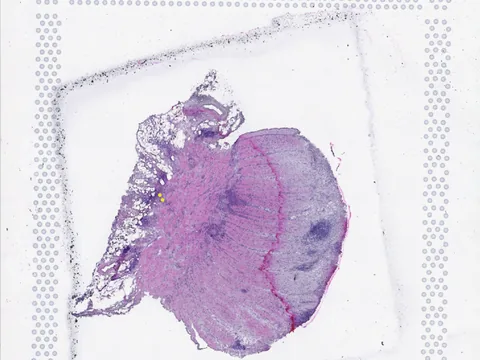 Visium
No linked publication found — please cite the data source.