
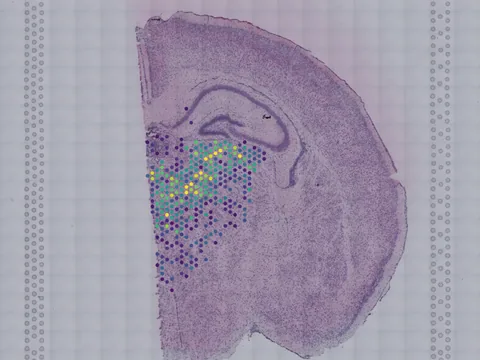
 Visium
Mouse brain
GSM7946802
mouse brain 41 MB 2,692 obs bronze H&E
TechnologyVisium
Organismmouse
Tissuebrain
Obs2,692
Magnificationother · 3.636 µm/px
bronze H&E
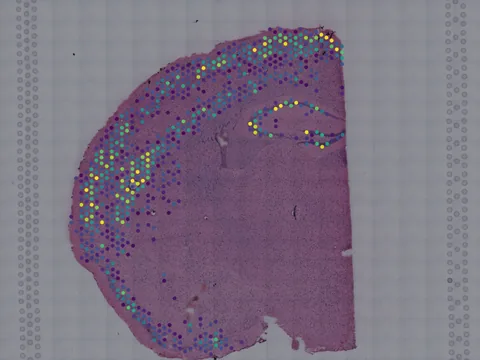
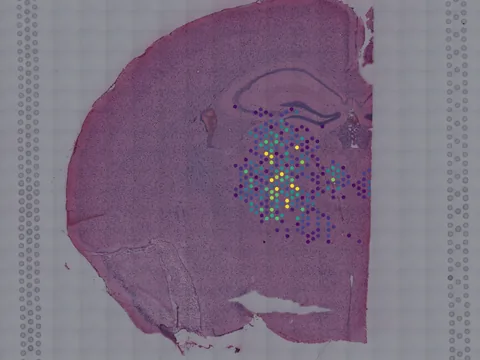
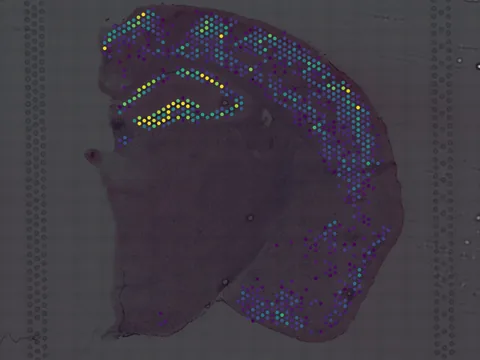
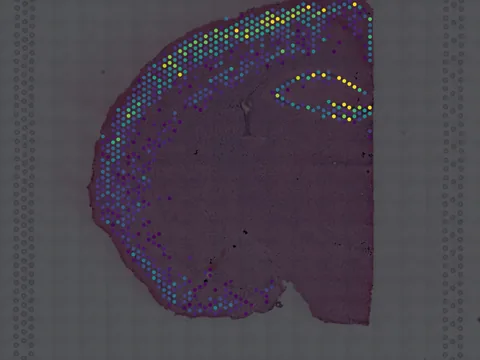
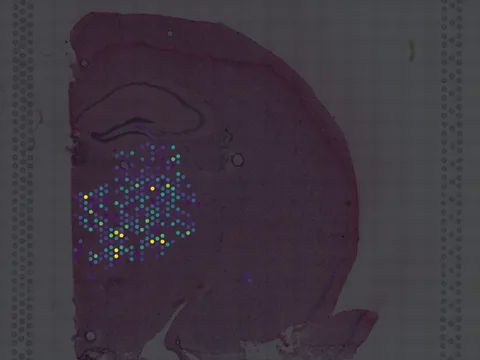
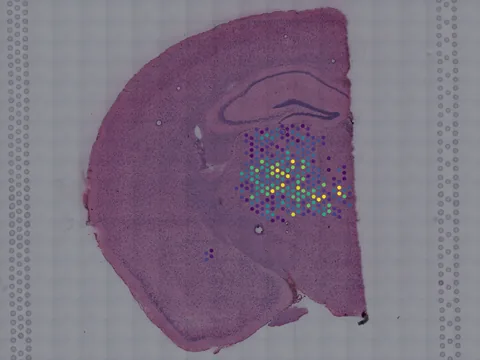
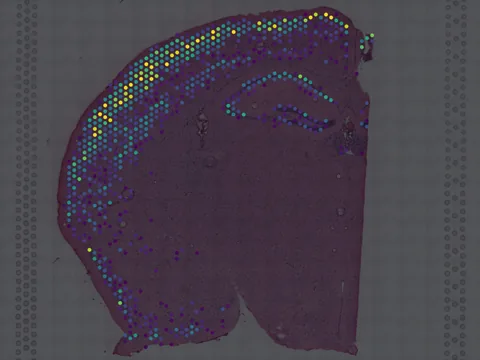
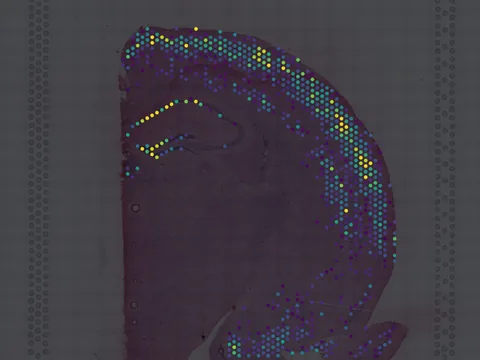
Gene regulation requires coordinated control of RNA synthesis and degradation, yet measuring RNA turnover across intact tissues remains challenging. Here we present spatial NT-seq, a method that combines transgenesis-free metabolic RNA labeling with in situ chemical recoding on spatial transcriptomics platforms to co-map newly synthesized and pre-existing RNAs. Applying spatial NT-seq to the mouse brain reveals pronounced regional heterogeneity in RNA turnover and identifies the dentate gyrus as a spatial hotspot marked by coordinated up-regulation of basal RNA synthesis and decay. Moreover, spatial NT-seq uncovers rapid, brain region-specific transcriptional and post-transcriptional responses to electroconvulsive stimulation, a clinically relevant treatment for refractory depression. Finally, we leverage computational modeling to identify sequence features and post-transcriptional regulators that shape transcriptome-wide mRNA stability across spatial and cellular contexts in the mouse brain. Together, this integrated “in vivo Timescope” framework provides a spatially resolved view of RNA turnover kinetics and reveals the regulatory architecture of RNA stability in vivo.
import lamindb as ln
import spatialdata as sd

coll = ln.Collection.get(key="geo-gse249403")
coll.ordered_artifacts.df()                 # the 19 members, ordered

# download every member .zarr to the local cache:
paths = [a.cache() for a in coll.ordered_artifacts.all()]

# …or load each straight into memory as a SpatialData object:
sdatas = {a.key: sd.read_zarr(a.cache()) for a in coll.ordered_artifacts.all()}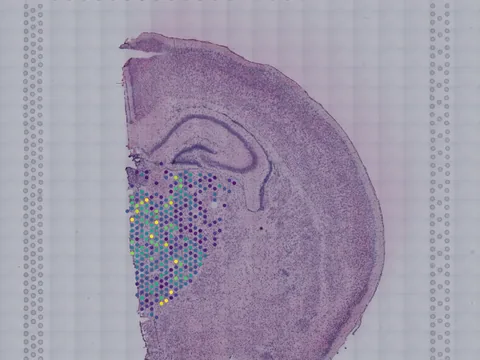 Visium
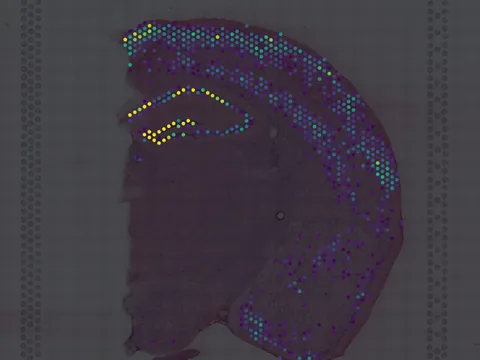 Visium
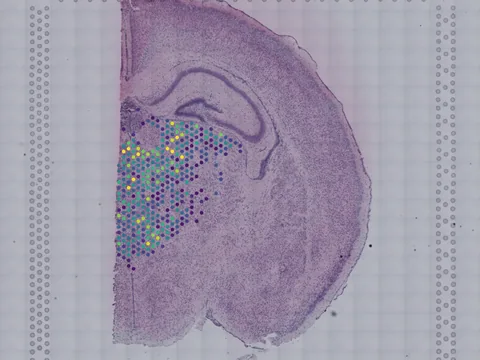 Visium
 Visium
 Visium
 Visium
 Visium
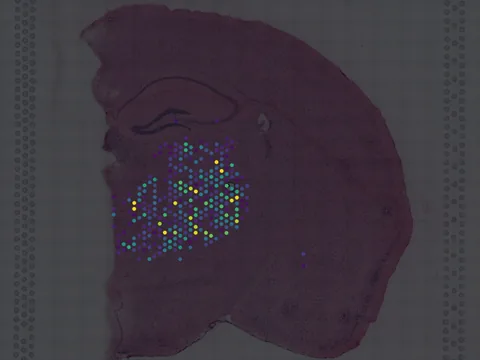 Visium
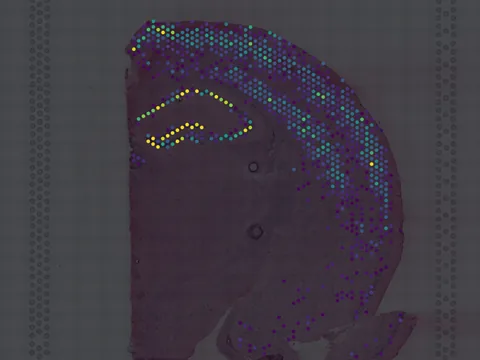 Visium
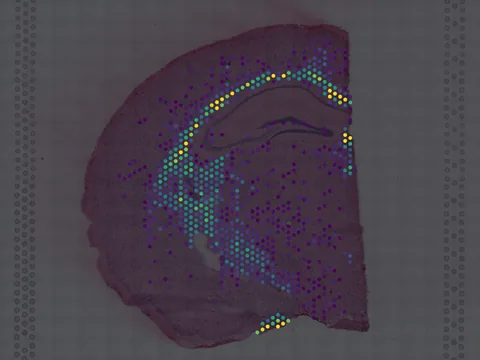 Visium
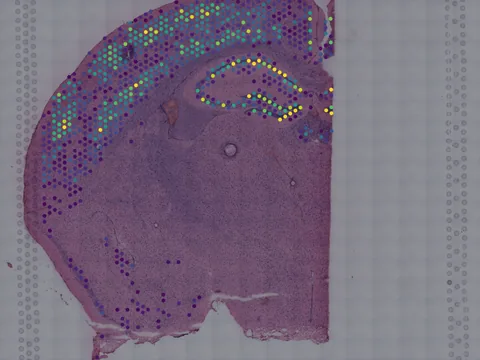 Visium
 Visium
 Visium
 Visium
 Visium
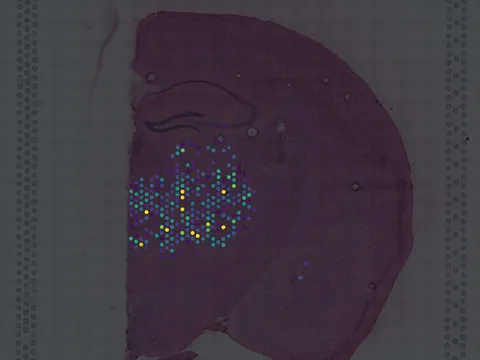 Visium
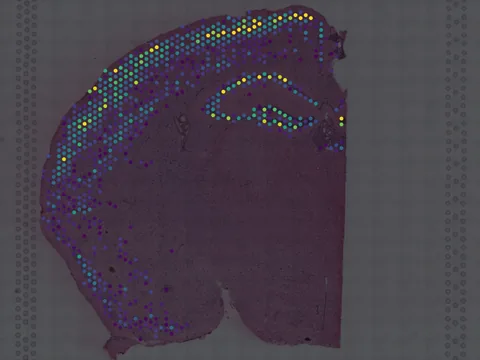 Visium
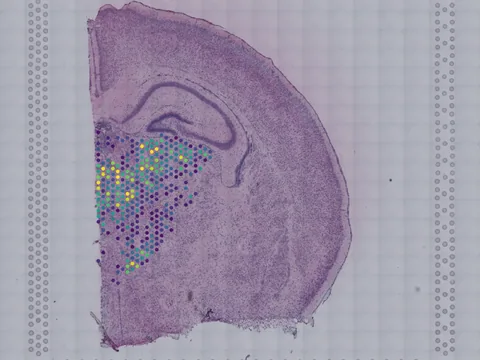 Visium
No linked publication found — please cite the data source.