
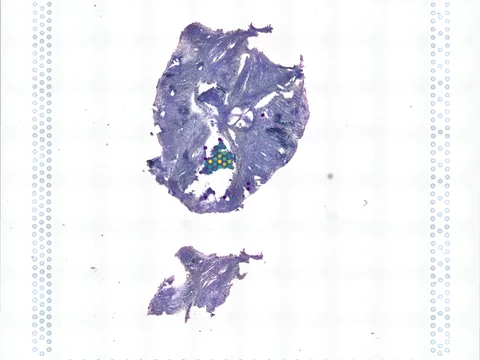
 Visium
Mouse diaphragm
GSM7804889
mouse diaphragm 21 MB 904 obs bronze H&E
TechnologyVisium
Organismmouse
Tissuediaphragm
Obs904
Magnificationother · 3.713 µm/px
bronze H&E
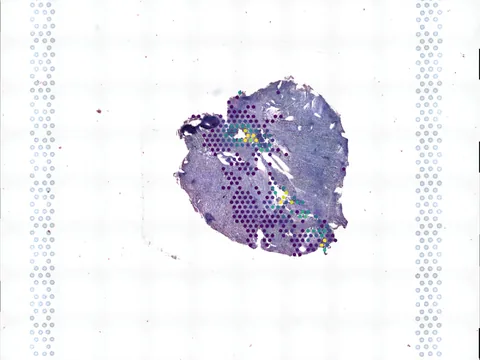
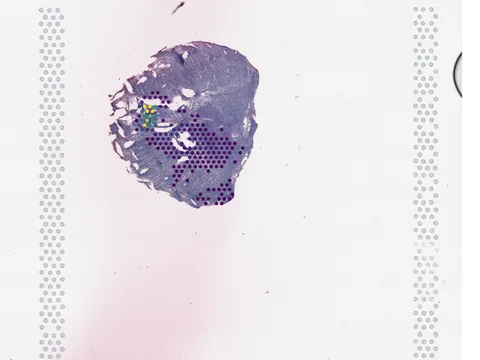
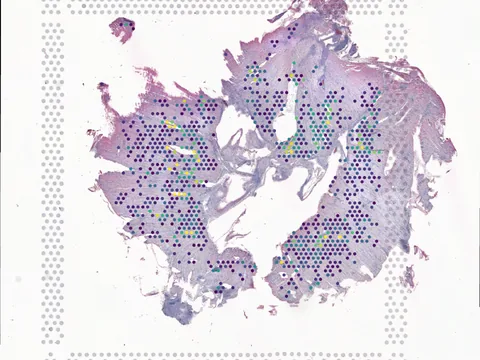
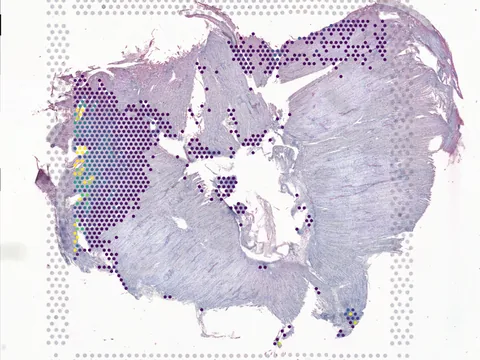
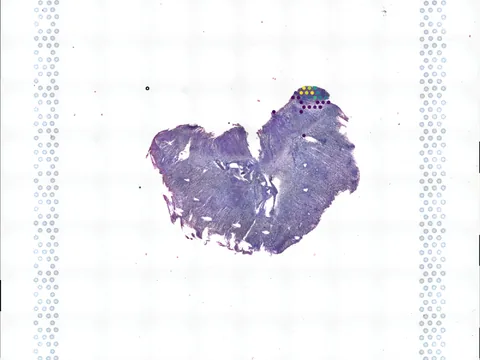
Embryonic mouse diaphragm is a primary model for studying myogenesis and neuro-muscular synaptogenesis, both of which represent processes regulated by spatially organized genetic programs of myonuclei located in distinct myodomains. However, a spatial gene expression pattern of embryonic mouse diaphragm has not been reported. Here we provide spatially resolved gene expression data for horizontally sectioned embryonic mouse diaphragms at E14.5 and E18.5. These data reveal gene signatures for specific muscle regions with distinct maturity and fiber type composition, as well as for a central neuromuscular junction and a peripheral myotendinous junction compartments. Comparing spatial expression patterns of wild type mice with those of mouse mutants lacking either the skeletal muscle calcium channel CaV1.1 or b-catenin, reveals curtailed muscle development and dysregulated expression of genes potentially involved in NMJ formation. Altogether, these datasets provide a powerful recourse for further studies of muscle development and NMJ formation in the mouse embryo.
import lamindb as ln
import spatialdata as sd

coll = ln.Collection.get(key="geo-gse244014")
coll.ordered_artifacts.df()                 # the 8 members, ordered

# download every member .zarr to the local cache:
paths = [a.cache() for a in coll.ordered_artifacts.all()]

# …or load each straight into memory as a SpatialData object:
sdatas = {a.key: sd.read_zarr(a.cache()) for a in coll.ordered_artifacts.all()}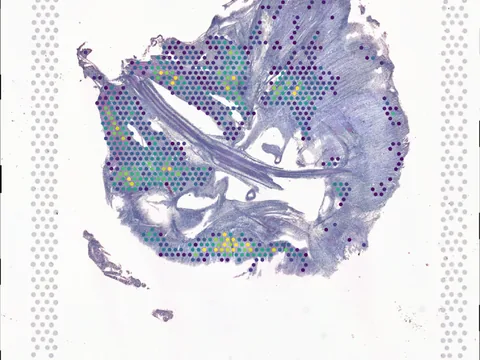 Visium
 Visium
 Visium
 Visium
 Visium
 Visium
 Visium
No linked publication found — please cite the data source.