
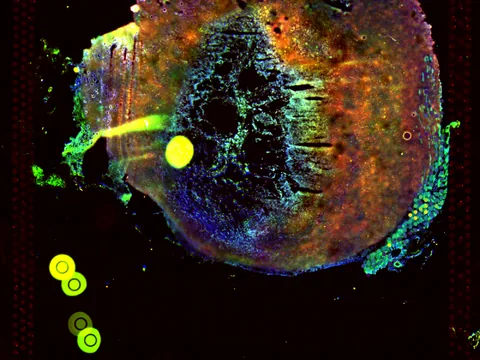
 Visium
Human breast
GSM7688225
human breast breast cancer 42 MB 2,846 obs bronze H&E
TechnologyVisium
Organismhuman
Tissuebreast
Conditionbreast cancer
Obs2,846
Magnificationother · 3.380 µm/px
bronze H&E
To understand the role of hypoxia in metastatic progression, we sought to spatially map gene expression in hypoxic cells compared with cells that migrated to oxygenated tumor regions. We adapted the Visium spatial transcriptomics protocol to perform concurrent transcriptional profiling and fluorescent imaging of our hypoxia fate-mapping system.
import lamindb as ln
import spatialdata as sd

coll = ln.Collection.get(key="geo-gse240212")
coll.ordered_artifacts.df()                 # the 2 members, ordered

# download every member .zarr to the local cache:
paths = [a.cache() for a in coll.ordered_artifacts.all()]

# …or load each straight into memory as a SpatialData object:
sdatas = {a.key: sd.read_zarr(a.cache()) for a in coll.ordered_artifacts.all()}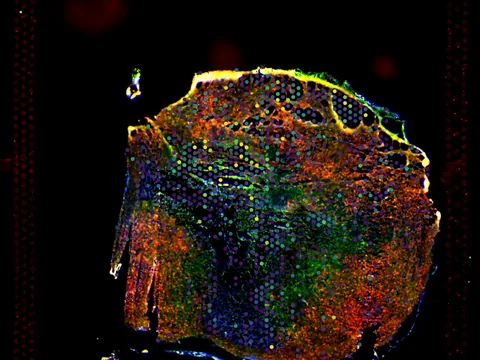 Visium
No linked publication found — please cite the data source.