Collections / Pharmacological targeting Netrin-1 inhibits EMT in cancer [Visium]

Pharmacological targeting Netrin-1 inhibits EMT in cancer [Visium]

Epithelial-to-Mesenchymal transition (EMT) regulates tumour initiation, progression, metastasis and resistance to anti-cancer therapy. Whereas great progress had recently been made in understanding the role and mechanisms that regulate EMT in cancer, no therapeutic strategy to pharmacologically target EMT had been identified so far. Here, we found that Netrin-1 is upregulated in a primary mouse model of skin squamous cell carcinoma (SCCs) presenting spontaneous EMT. Pharmacological inhibition of Netrin-1 by administrating NP137, an anti-Netrin-1 blocking monoclonal antibody currently used in clinical trials in human cancer, decreased the proportion EMT tumour cells in skin SCCs, as well as decreased the number of metastasis and increased the sensitivity of tumour cells to chemotherapy. Single-cell RNA-seq revealed the presence of different EMT states including epithelial, early and late hybrid EMT as well as fully EMT states in control SCCs. In contrast, administration of NP137 prevents the progression of cancer cells towards a late EMT state and sustains tumour epithelial states. ShRNA knockdown (KD) of Netrin-1 and its receptor Unc5b in EPCAM+ tumour cells inhibited EMT in vitro in the absence of stromal cells and regulated a common gene signature promoting tumour epithelial state and restricting EMT. To assess the relevance of these findings to human cancers, we treated mice transplanted with A549 human cancer cell line that undergoes EMT following TGF-b1 administration with NP137. Netrin-1 inhibition decreased EMT in A549 cells in vivo. Altogether, our results identify a new pharmacological strategy to target EMT in cancer opening novel therapeutic interventions for anti-cancer therapy.

Datasets2
Size~54 MB
AssayVisium
Samplemouse · skin of body
KindComparison
PMID:37532929 ↗
Python · lamindb
import lamindb as ln
import spatialdata as sd

coll = ln.Collection.get(key="geo-gse234266")
coll.ordered_artifacts.df()                 # the 2 members, ordered

# download every member .zarr to the local cache:
paths = [a.cache() for a in coll.ordered_artifacts.all()]

# …or load each straight into memory as a SpatialData object:
sdatas = {a.key: sd.read_zarr(a.cache()) for a in coll.ordered_artifacts.all()}
Open in Vitessce
Visium
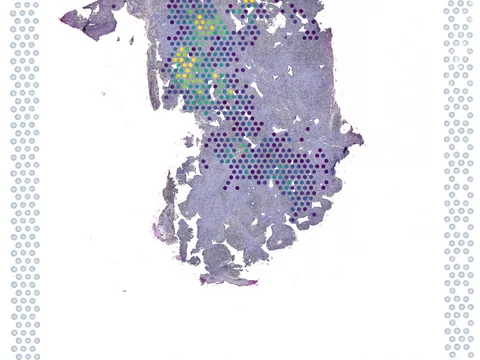
Mouse skin of body
GSM7461403
mouse skin of body skin squamous cell carcinoma 33 MB 1,426 obs bronze H&E
TechnologyVisium
Organismmouse
Tissueskin of body
Conditionskin squamous cell carcinoma
Size33 MB
Obs1,426
Magnificationother · 3.324 µm/px
bronze H&E Open in Vitessce
Open in Vitessce
Visium
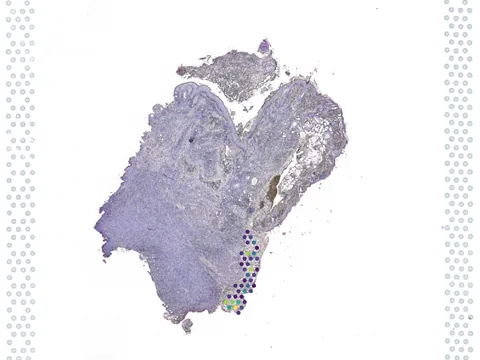
Mouse skin of body
GSM7461404
mouse skin of body skin squamous cell carcinoma 21 MB 1,166 obs bronze H&E
TechnologyVisium
Organismmouse
Tissueskin of body
Conditionskin squamous cell carcinoma
Size21 MB
Obs1,166
Magnificationother · 3.305 µm/px
bronze H&E Open in Vitessce

Cite this collection

No linked publication found — please cite the data source.