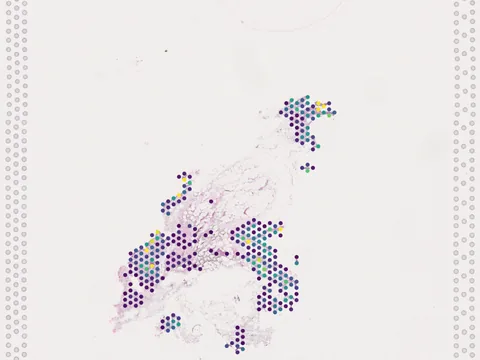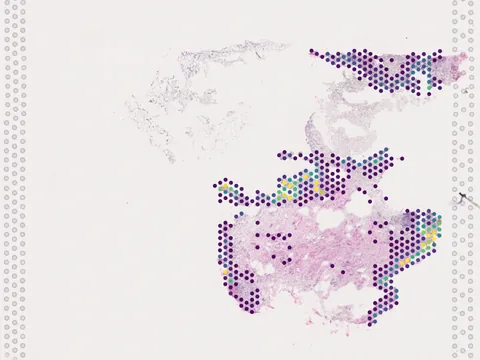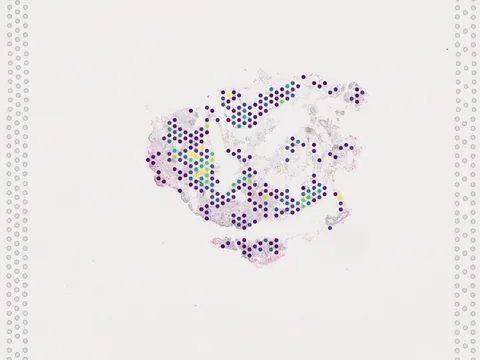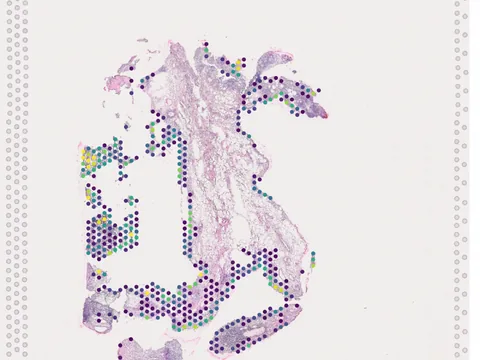
Molecular reframing of fibroblasts during resolution of arthritis [Visium]
Fibroblasts are key orchestrators of inflammation. Little is known whether these cells change phenotype during resolution of inflammation. We adopted a method to visualise fibroblast activation during inflammation in humans in vivo, which is based on a fibroblast activation protein (FAP) tracer detected by positron emission tomography (PET). While tracer accumulation was high in active arthritis, it decreased significantly after TNF- and IL-17A inhibition. Biopsy-based scRNA-seq analyses in experimental arthritis demonstrated that FAP signal reduction reflected a phenotypic switch from pro-inflammatory MMP3+/IL6+ fibroblasts (high FAP internalisation) to pro-resolving CD200+DKK3+ fibroblasts (low FAP internalisation). Spatial transcriptomics of human joints revealed that pro-resolving niches of CD200+DKK3+ fibroblasts clustered with innate lymphoid cells (ILC)2, whereas MMP3+/IL6+ fibroblasts were co-localised with inflammatory immune cells. CD200+DKK3+ fibroblasts stabilised the ILC2 phenotype and induced resolution of arthritis via CD200/CD200R1 pathway. Taken together, these data suggest a dynamic molecular regulation of the mesenchymal compartment during resolution of inflammation.
import lamindb as ln
import spatialdata as sd
coll = ln.Collection.get(key="geo-gse228972")
coll.ordered_artifacts.df() # the 4 members, ordered
# download every member .zarr to the local cache:
paths = [a.cache() for a in coll.ordered_artifacts.all()]
# …or load each straight into memory as a SpatialData object:
sdatas = {a.key: sd.read_zarr(a.cache()) for a in coll.ordered_artifacts.all()} Cite this collection
No linked publication found — please cite the data source.