
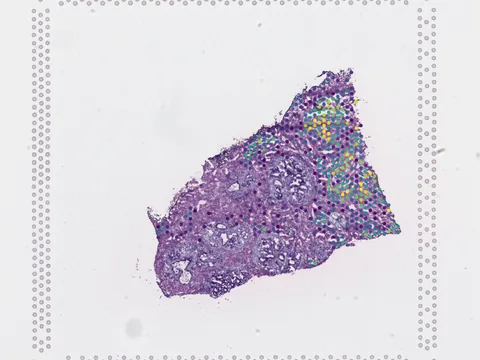
 Visium
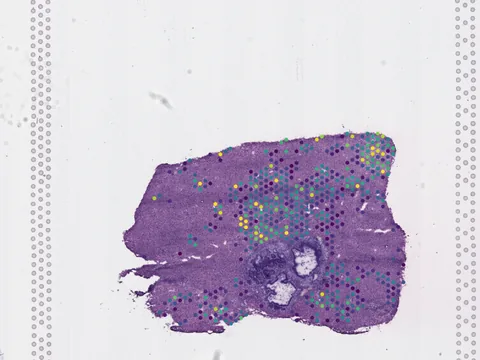
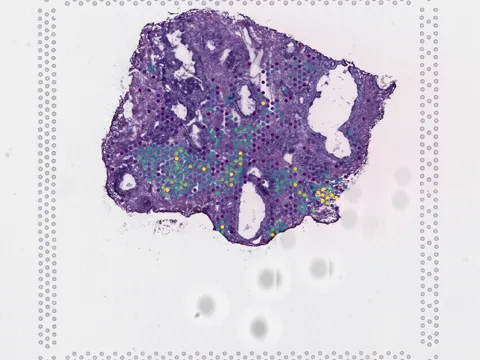
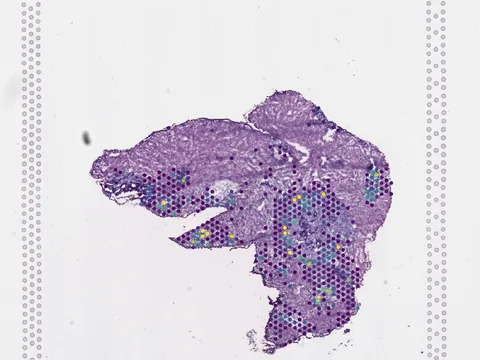
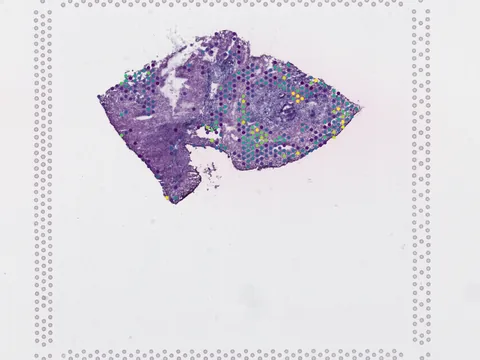
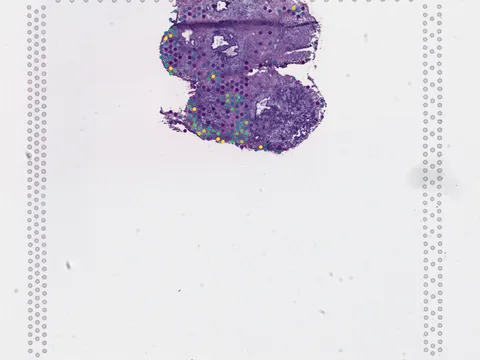
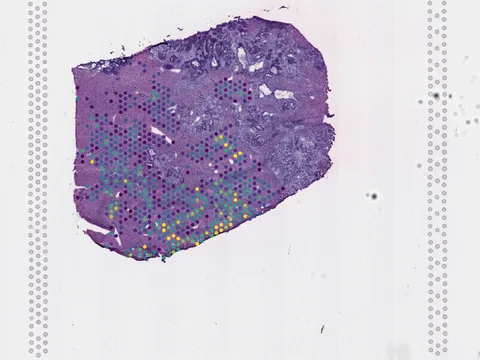
Mouse liver
GSM6859067
mouse liver colorectal cancer 24 MB 1,284 obs silver H&E
TechnologyVisium
Organismmouse
Tissueliver
Conditioncolorectal cancer
Obs1,284
silver H&E
Liver metastases are associated with poor response to current pharmacological treatments, including immunotherapy. We describe a lentiviral vector (LV) platform to selectively engineer liver macrophages, including Kupffer cells and tumor-associated macrophages (TAMs), to deliver type I interferon (IFNα) to liver metastases. Gene-based IFNα delivery delays the growth of colorectal and pancreatic ductal adenocarcinoma liver metastases in mice. Response to IFNα is associated with TAM immune activation, enhanced MHC-II-restricted antigen presentation and reduced exhaustion of CD8+ T cells. Conversely, increased IL-10 signaling, expansion of Eomes CD4+ T cells, a cell type displaying features of type I regulatory T (Tr1) cells, and CTLA-4 expression are associated with resistance to therapy. Targeting regulatory T cell functions by combinatorial CTLA-4 immune checkpoint blockade and IFNα LV delivery expands tumor-reactive T cells, attaining complete response in most mice. These findings support a promising therapeutic strategy with feasible translation to patients with unmet medical need.
import lamindb as ln
import spatialdata as sd

coll = ln.Collection.get(key="geo-gse221359")
coll.ordered_artifacts.df()                 # the 8 members, ordered

# download every member .zarr to the local cache:
paths = [a.cache() for a in coll.ordered_artifacts.all()]

# …or load each straight into memory as a SpatialData object:
sdatas = {a.key: sd.read_zarr(a.cache()) for a in coll.ordered_artifacts.all()}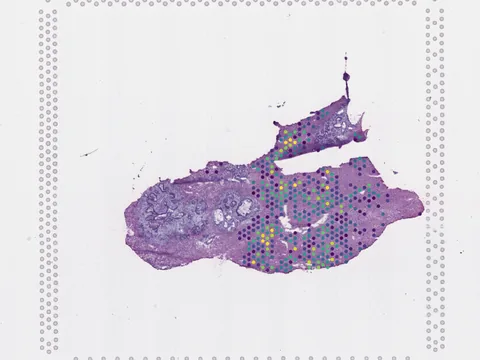 Visium
 Visium
 Visium
 Visium
 Visium
 Visium
 Visium
No linked publication found — please cite the data source.