
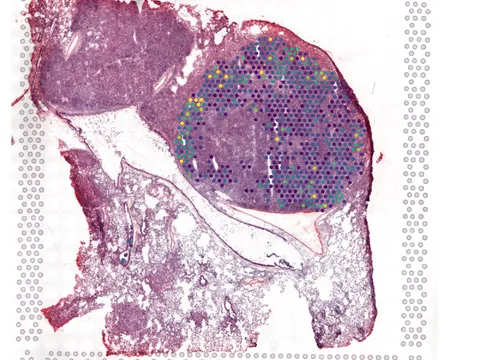
 Visium
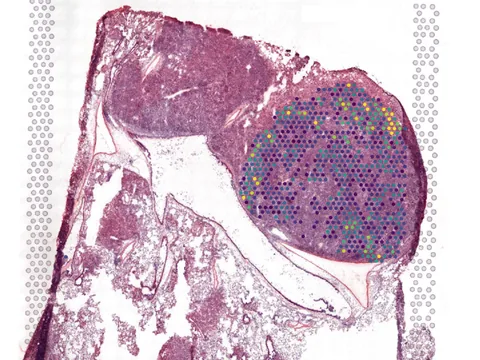
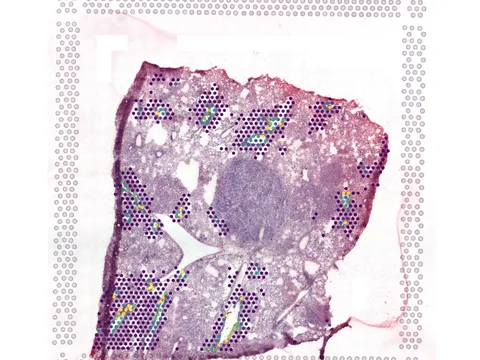
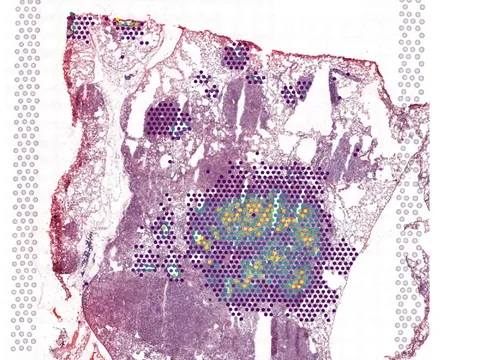
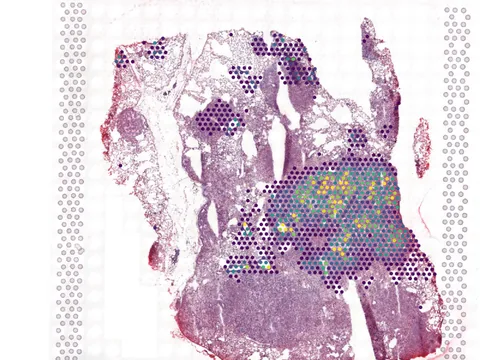
Mouse lung
GSM6634336
mouse lung lung adenocarcinoma 44 MB 2,947 obs bronze H&E
TechnologyVisium
Organismmouse
Tissuelung
Conditionlung adenocarcinoma
Obs2,947
Magnificationother · 3.728 µm/px
bronze H&E
While regulatory T (Treg) cells are traditionally viewed as professional suppressors of antigen presenting and effector T cells in both autoimmunity and cancer, recent findings of distinct Treg functions in tissue maintenance suggest that their regulatory purview extends to a wider range of cells and is broader than previously assumed. To elucidate tumoral Treg “connectivity” to diverse tumor-supporting accessory cell types, we explored immediate early changes in their single cell transcriptomes upon punctual Treg depletion in experimental lung cancer and injury-induced inflammation. Prior to any notable T cell activation and inflammation, fibroblasts, endothelial and myeloid cells exhibited pronounced changes in their gene expression in both cancer and injury settings. Factor analysis revealed shared Treg-dependent gene programs, foremost, prominent upregulation of VEGF signaling-related genes upon Treg deprivation in either setting, as well as in Treg-poor vs Treg-rich human lung adenocarcinomas. Accordingly, punctual Treg depletion combined with short-term VEGF blockade showed markedly improved control of PD-1 blockade-resistant lung adenocarcinoma progression in mice compared to the corresponding monotherapies, highlighting a promising factor-based querying approach to elucidating novel rational combination treatments of solid organ cancers.
import lamindb as ln
import spatialdata as sd

coll = ln.Collection.get(key="geo-gse215361")
coll.ordered_artifacts.df()                 # the 8 members, ordered

# download every member .zarr to the local cache:
paths = [a.cache() for a in coll.ordered_artifacts.all()]

# …or load each straight into memory as a SpatialData object:
sdatas = {a.key: sd.read_zarr(a.cache()) for a in coll.ordered_artifacts.all()}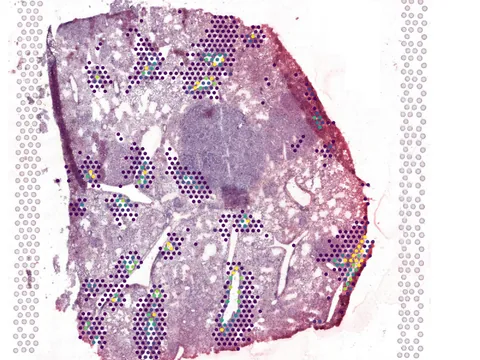 Visium
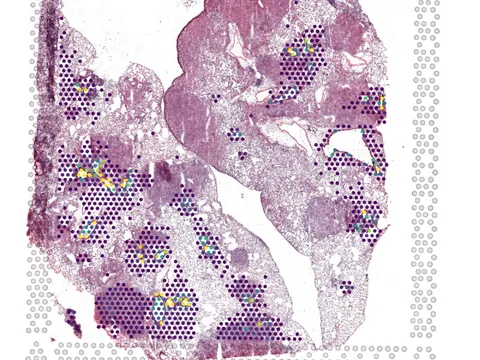 Visium
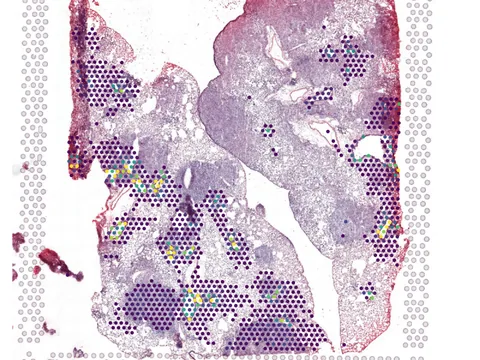 Visium
 Visium
 Visium
 Visium
 Visium
No linked publication found — please cite the data source.