
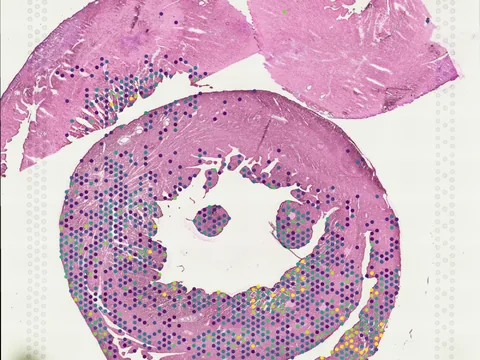
 Visium
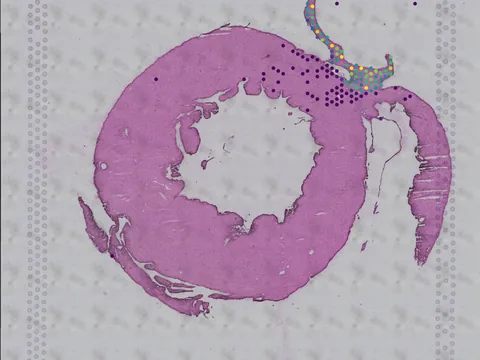
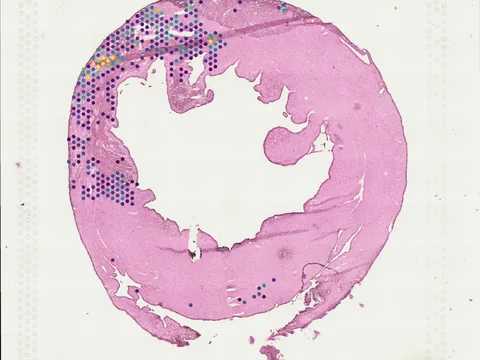
Mouse heart
GSM6613080
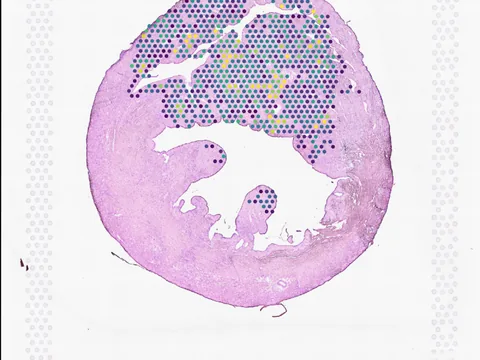
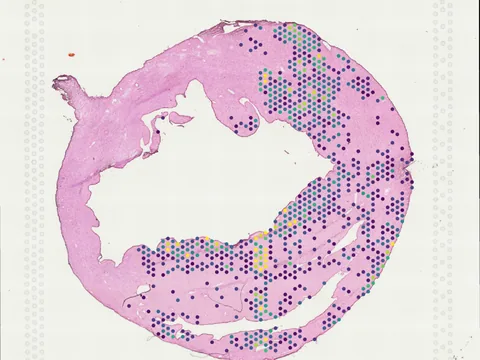
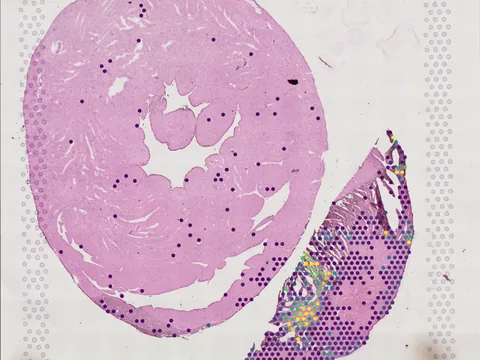
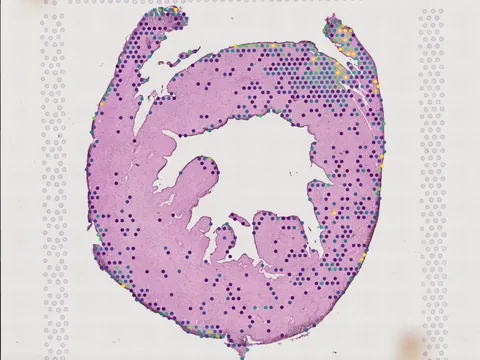
mouse heart 32 MB 3,540 obs silver H&E
TechnologyVisium
Organismmouse
Tissueheart
Obs3,540
silver H&E
The ischemic borderzone (BZ) is a geographically complex and biologically enigmatic interface separating poorly perfused infarct zones (IZ) from comparatively healthy remote zones (RZ). BZ cellular and molecular mechanisms are not well understood because efforts to dissect it inevitably include RZ and IZ in uncontrolled proportions. Here, we use single-cell/nuclei RNA-sequencing, spatial transcriptomics, and multiplexed RNA fluorescence in situ hybridization (mFISH) to identify BZ cardiomyocytes (CMs) subsets. BZ1 (Nppa+Xirp2-) forms a hundreds-of-microns-thick transitional layer adjacent to RZ, while BZ2 (Nppa+Xirp2+) forms a tens-of-microns-thick layer that the IZ edge. BZ2 CMs have reduced CM cell contact; colocalize with matricellular-protein-expressing myofibroblasts; and upregulate focal adhesion-, sarcomere-, and cytoskeletal-genes. Surprisingly, the transcriptional BZ emerges within an hour of injury and is inducible by non-ischemic fine-needle-trauma. We suggest that mechanical instability and “loss of neighbor” at the BZ edge are the dominant inducers of the BZ transcriptional response.
import lamindb as ln
import spatialdata as sd

coll = ln.Collection.get(key="geo-gse214611")
coll.ordered_artifacts.df()                 # the 14 members, ordered

# download every member .zarr to the local cache:
paths = [a.cache() for a in coll.ordered_artifacts.all()]

# …or load each straight into memory as a SpatialData object:
sdatas = {a.key: sd.read_zarr(a.cache()) for a in coll.ordered_artifacts.all()}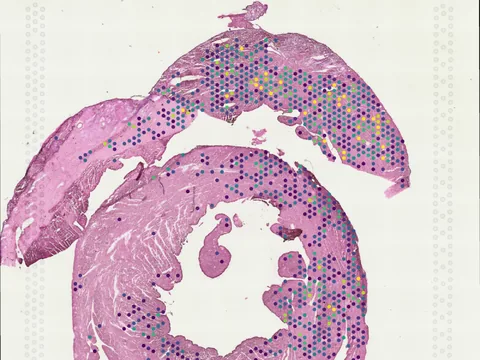 Visium
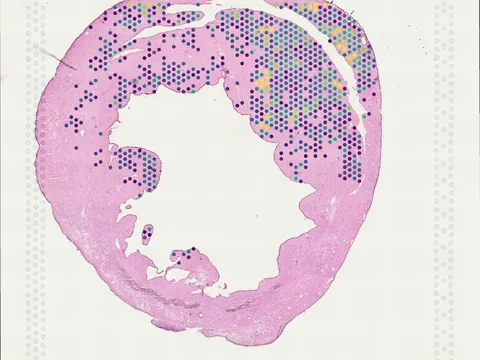 Visium
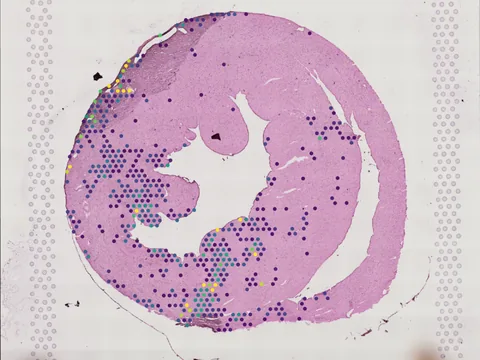 Visium
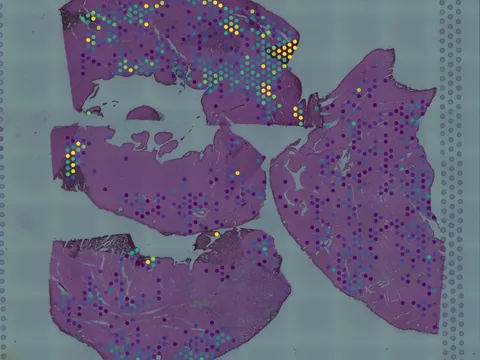 Visium
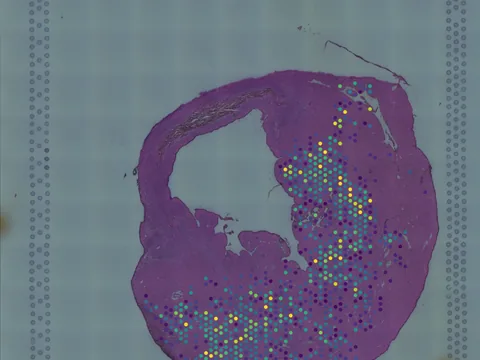 Visium
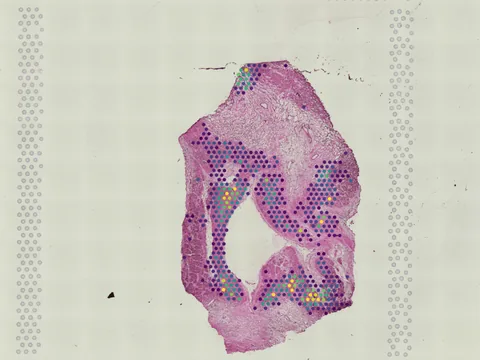 Visium
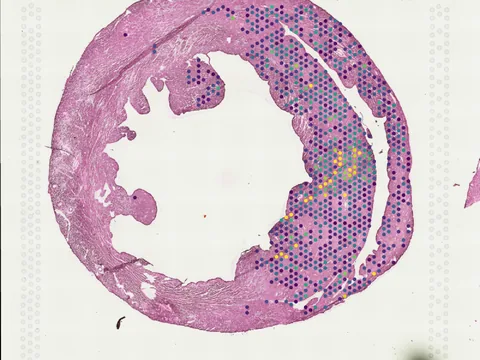 Visium
 Visium
 Visium
 Visium
 Visium
 Visium
 Visium
No linked publication found — please cite the data source.