
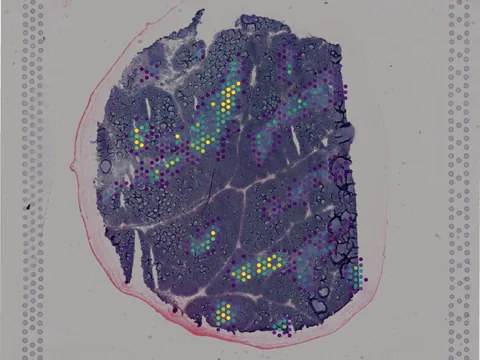
 Visium
Human thymus
GSM6281322
human thymus 44 MB 4,992 obs bronze H&E
TechnologyVisium
Organismhuman
Tissuethymus
Obs4,992
bronze H&E
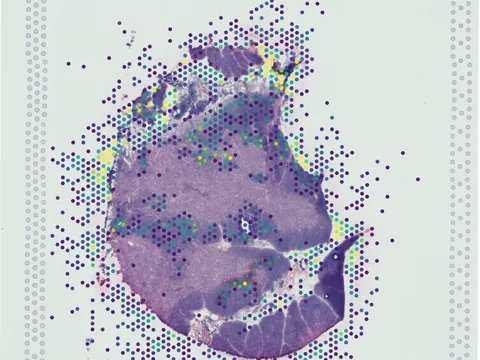
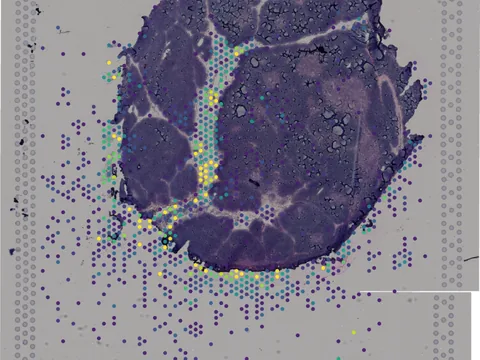
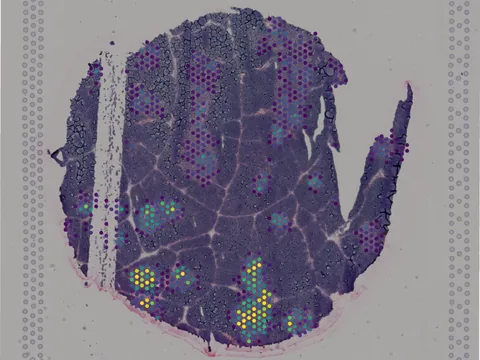
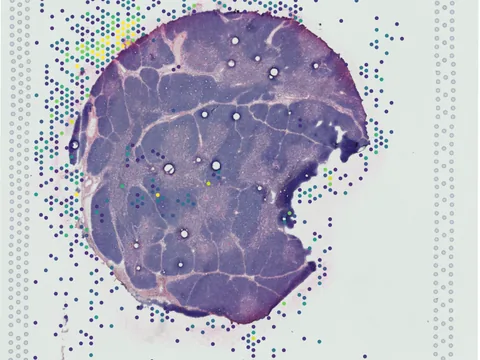
To prevent autoimmunity, thymocytes expressing self-reactive T cell receptors (TCRs) are negatively selected, however, divergence into tolerogenic, agonist-selected lineages represent an alternative fate. As thymocyte development, selection, and lineage choices are dependent on spatial context and cell-to-cell interactions, we have performed Cellular Indexing of Transcriptomes and Epitopes by sequencing (CITE-seq) and spatial transcriptomics on paediatric human thymus. Thymocytes expressing markers of strong TCR signalling diverged from the conventional developmental trajectory prior to CD4+ lineage commitment, while markers of different agonist cell populations (CD8αα(I), CD8αα(II), T(agonist), Treg(diff) and Treg) exhibited variable timing of induction. Expression profiles of chemokines and co-stimulatory molecules, together with spatial localization, supported that dendritic cells, B cells, and stromal cells contribute to agonist selection, with different subsets influencing thymocytes at specific developmental stages within distinct spatial niches. Understanding factors influencing agonist T cells is needed to benefit from their immunoregulatory effects in clinical use.
import lamindb as ln
import spatialdata as sd

coll = ln.Collection.get(key="geo-gse207205")
coll.ordered_artifacts.df()                 # the 8 members, ordered

# download every member .zarr to the local cache:
paths = [a.cache() for a in coll.ordered_artifacts.all()]

# …or load each straight into memory as a SpatialData object:
sdatas = {a.key: sd.read_zarr(a.cache()) for a in coll.ordered_artifacts.all()}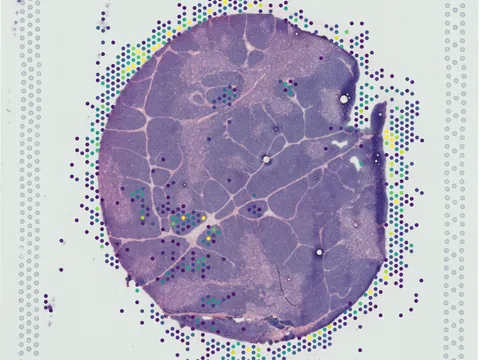 Visium
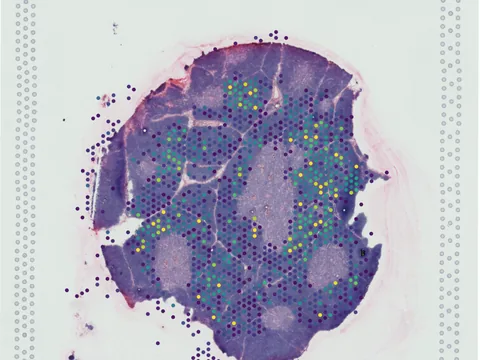 Visium
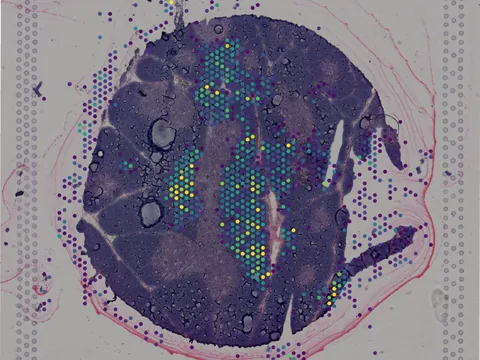 Visium
 Visium
 Visium
 Visium
 Visium
No linked publication found — please cite the data source.