
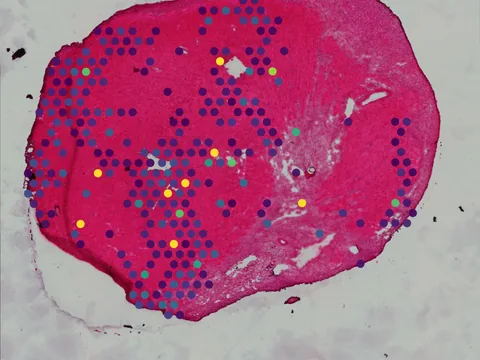
 Visium
Mouse cardiac ventricle
GSM7898099
mouse cardiac ventricle myocardial infarction 36 MB 948 obs silver H&E
TechnologyVisium
Organismmouse
Tissuecardiac ventricle
Conditionmyocardial infarction
Obs948
silver H&E
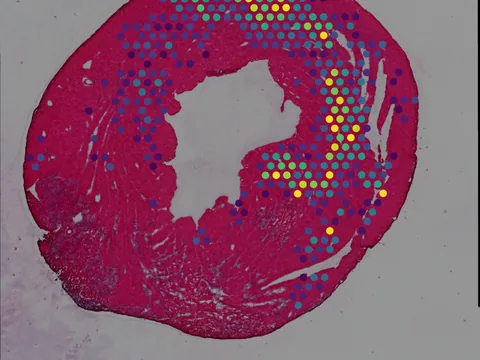
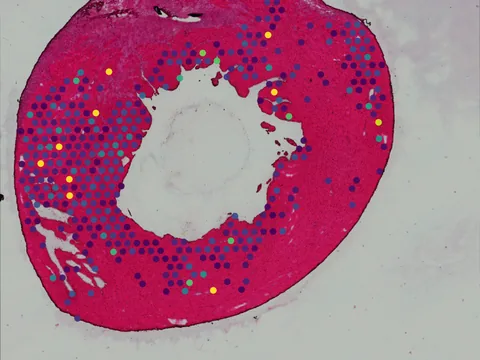
Therapeutic angiogenesis represents a promising avenue to revascularize the ischemic heart. Its limited success is partly due to our poor understanding of the cardiac stroma, specifically mural cells, and their response to ischemic injury. Here, we combine single-cell and positional transcriptomics to assess the behaviour of mural cells within the healing heart. In response to myocardial infarction, mural cells adopt an altered state closely associated with the infarct and retain a distinct lineage from fibroblasts. This response is concurrent with vascular rarefaction and reduced coverage by mural cells. Positional transcriptomics reveal that the infarcted heart is governed by regional-dependent and temporally regulated programs. While the remote zone acts as an important source of pro-angiogenic signals, the infarct zone is accentuated by chronic activation of anti-angiogenic, pro-fibrotic, and inflammatory cues. Together, our work unveils the spatiotemporal programs underlying cardiac repair and establishes an association between vascular deterioration and mural cell dysfunction.
import lamindb as ln
import spatialdata as sd

coll = ln.Collection.get(key="geo-gse206787")
coll.ordered_artifacts.df()                 # the 4 members, ordered

# download every member .zarr to the local cache:
paths = [a.cache() for a in coll.ordered_artifacts.all()]

# …or load each straight into memory as a SpatialData object:
sdatas = {a.key: sd.read_zarr(a.cache()) for a in coll.ordered_artifacts.all()}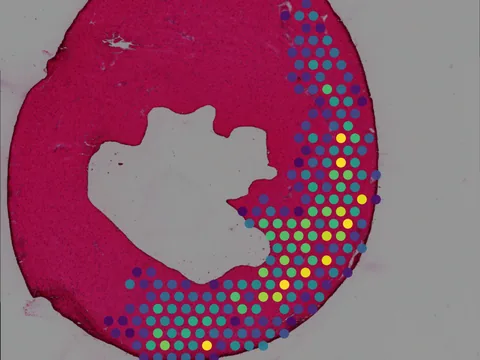 Visium
 Visium
 Visium
No linked publication found — please cite the data source.