
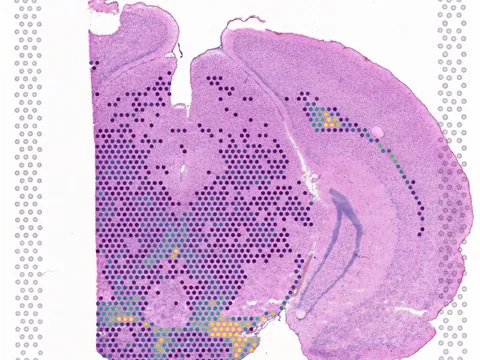
 Visium
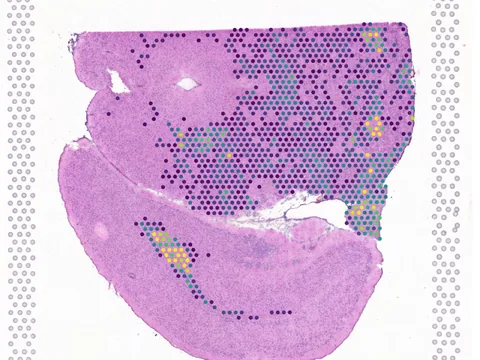
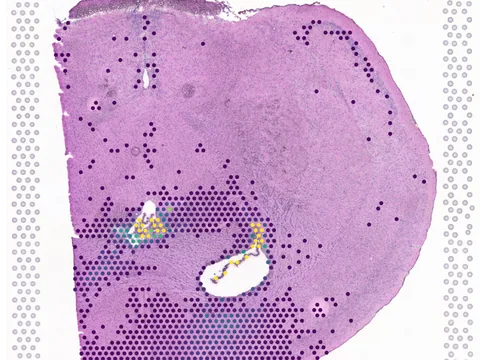
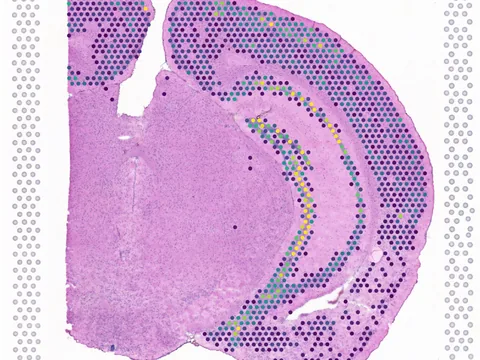
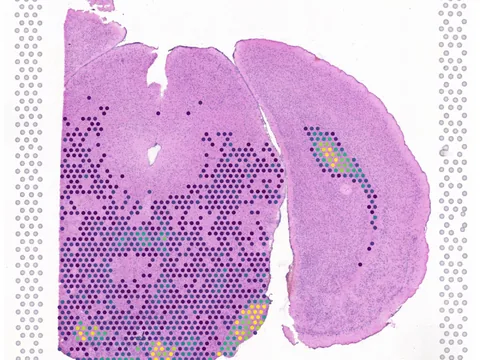
Mouse brain
GSM5773455
mouse brain 393 MB 3,400 obs silver H&E
TechnologyVisium
Organismmouse
Tissuebrain
Obs3,400
silver H&E
The mammalian brain can be divided into distinct structural and functional regions to perform a variety of diverse functions, but during normal aging, exactly how each region is affected, and the information interaction changes between different regions, remains largely unknown. To gain a better insight into these processes, here we generate a single-cell spatial transcriptomic (ST) atlas of young and old mice brains involving cerebrum, brain stem and fiber tracts regions. Based on the unbiased classification of spatial molecular atlas, 27 distinguished brain spatial domains were obtained, which are similar to known anatomical regions, but slightly different. Through differential expression analysis and gene set enrichment analysis (GSEA), we identified aging-related genes and pathways that vary in a coordinated or opposite manner across regions. Combined with single-cell transcriptomic data, we characterized the spatial distribution of cell types, identified an up-regulated gene Ifi27 across regions and cell types in VIS region. Through ligand-receptor interaction analysis, we identified all possible information interaction changes between regions with aging. In summary, we establish a brain spatial molecular atlas (accessible online at https:) to provide a rich resource of spatially differentially expressed genes and information interaction, which may help to understand aging and provide novel insights into the molecular mechanism of brain aging.
import lamindb as ln
import spatialdata as sd

coll = ln.Collection.get(key="geo-gse193107")
coll.ordered_artifacts.df()                 # the 8 members, ordered

# download every member .zarr to the local cache:
paths = [a.cache() for a in coll.ordered_artifacts.all()]

# …or load each straight into memory as a SpatialData object:
sdatas = {a.key: sd.read_zarr(a.cache()) for a in coll.ordered_artifacts.all()}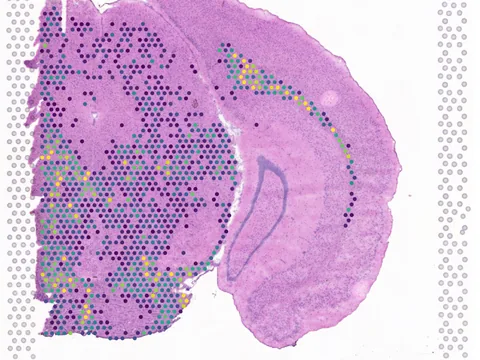 Visium
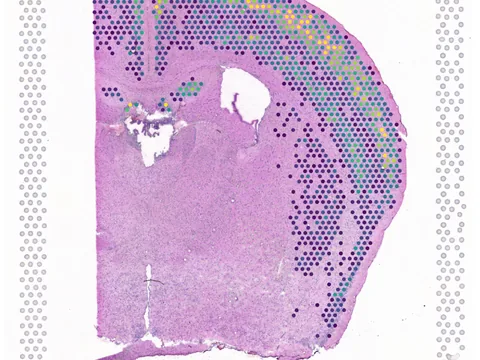 Visium
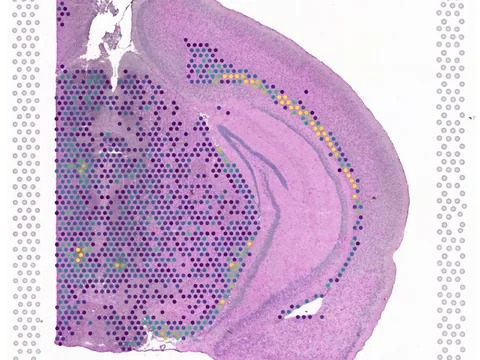 Visium
 Visium
 Visium
 Visium
 Visium
No linked publication found — please cite the data source.