
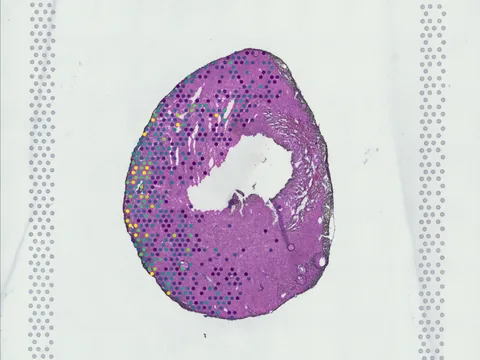
 Visium
Mouse heart
GSM5943191
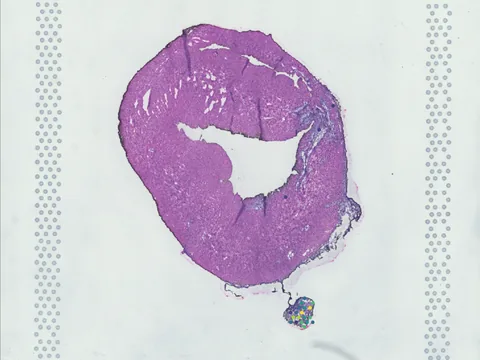
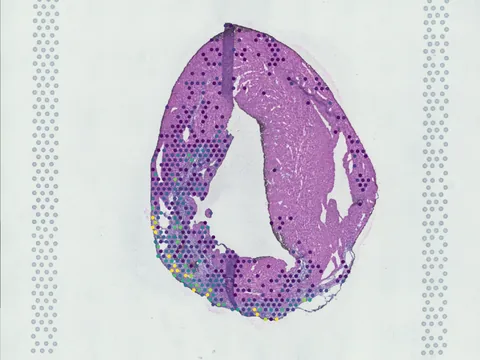
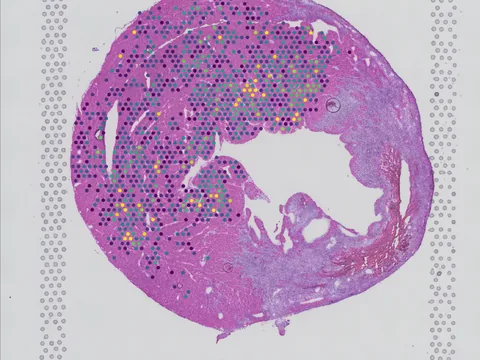
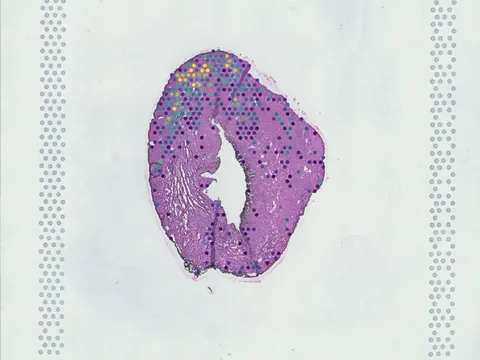
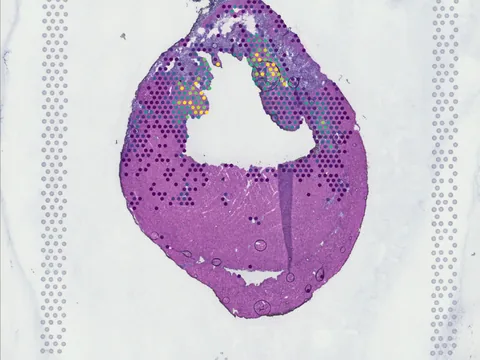
mouse heart myocardial infarction 47 MB 1,457 obs silver H&E
TechnologyVisium
Organismmouse
Tissueheart
Conditionmyocardial infarction
Obs1,457
silver H&E
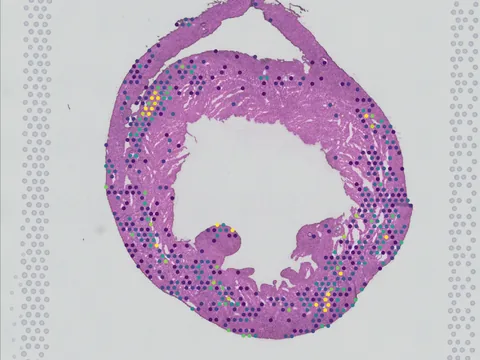
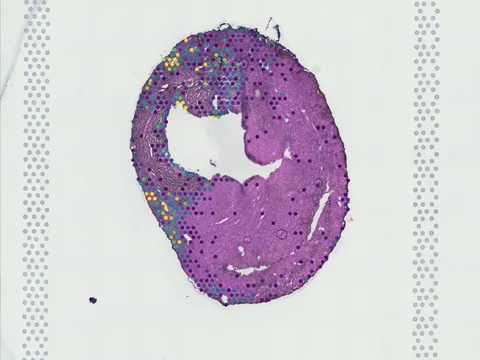
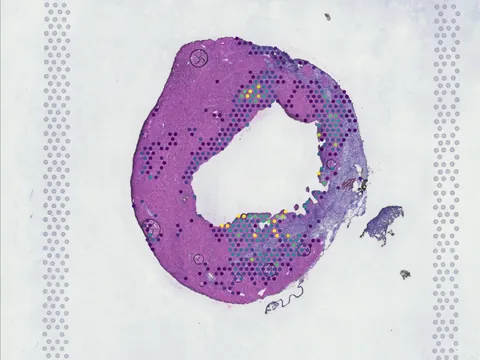
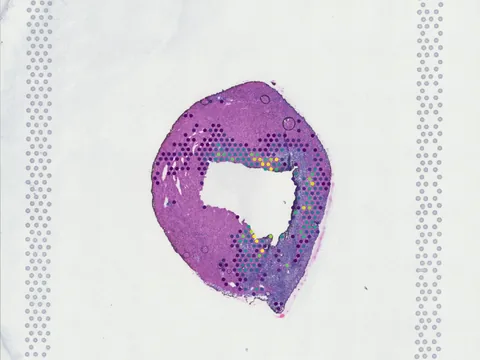
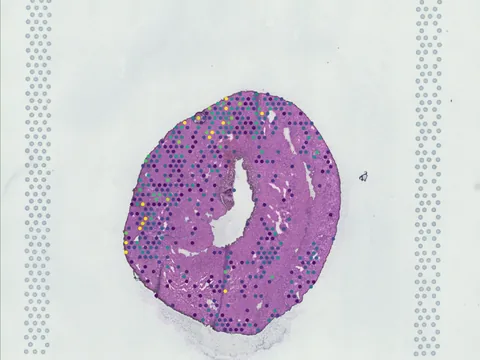
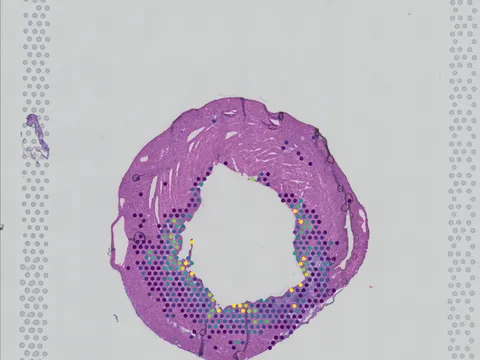
The underlying mechanisms of ventricular remodeling after myocardial infarction (MI) remain largely unknown. Here, we performed an integrative analysis of spatial transcriptomics and single-nucleus RNA-seq in a murine MI model and found that mechanical stress-response genes are expressed at the border zone and play a critical role in left ventricular remodeling following MI. An integrative analysis of single-nucleus RNA-seq and spatial transcriptome of the heart tissue after MI identified the unique cluster that appeared at the border zone in an early stage, highly expressing mechano-sensing genes such as Csrp3. AAV9-mediated gene silencing and overexpression of Csrp3 demonstrated that upregulation of Csrp3 plays critical roles in preventing cardiac remodeling after MI via regulation of genes associated with mechano-sensing. Overall, our study not only provides an insight into spatiotemporal molecular changes following MI but also highlights that the mechano-sensing genes at the border zone act as adaptive regulators of left ventricular remodeling.
import lamindb as ln
import spatialdata as sd

coll = ln.Collection.get(key="geo-gse176092")
coll.ordered_artifacts.df()                 # the 14 members, ordered

# download every member .zarr to the local cache:
paths = [a.cache() for a in coll.ordered_artifacts.all()]

# …or load each straight into memory as a SpatialData object:
sdatas = {a.key: sd.read_zarr(a.cache()) for a in coll.ordered_artifacts.all()}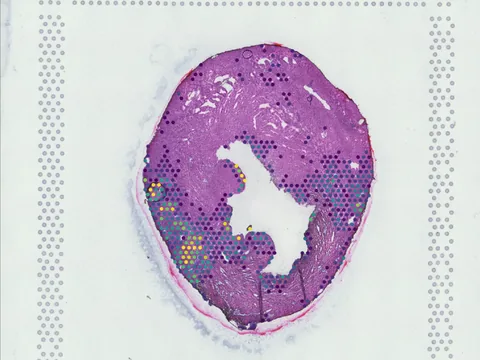 Visium
 Visium
 Visium
 Visium
 Visium
 Visium
 Visium
 Visium
 Visium
 Visium
 Visium
 Visium
 Visium
No linked publication found — please cite the data source.