
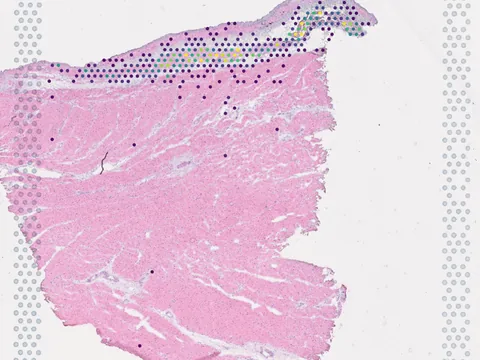
 Visium
Human heart
MISC132
human heart 705 MB 2,843 obs silver H&E
TechnologyVisium
Organismhuman
Tissueheart
Obs2,843
Magnification20x · 0.442 µm/px
silver H&E
import lamindb as ln
import spatialdata as sd

coll = ln.Collection.get(key="doi-10.1038/s41586-023-06311-1")
coll.ordered_artifacts.df()                 # the 41 members, ordered

# download every member .zarr to the local cache:
paths = [a.cache() for a in coll.ordered_artifacts.all()]

# …or load each straight into memory as a SpatialData object:
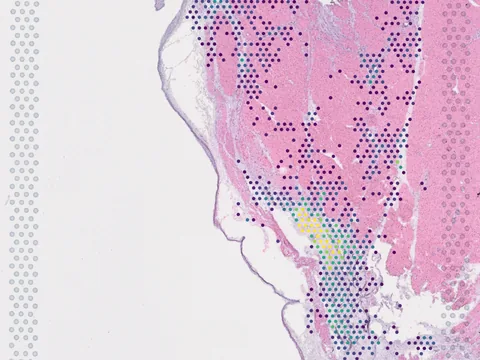
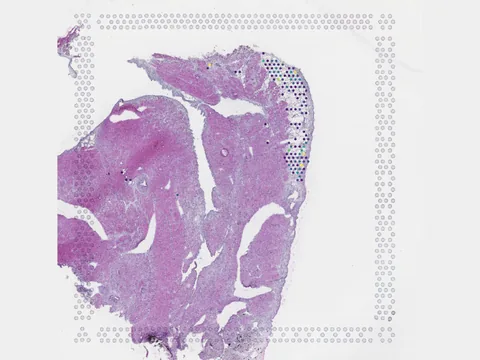
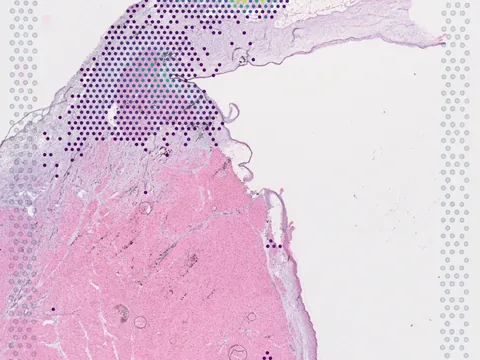
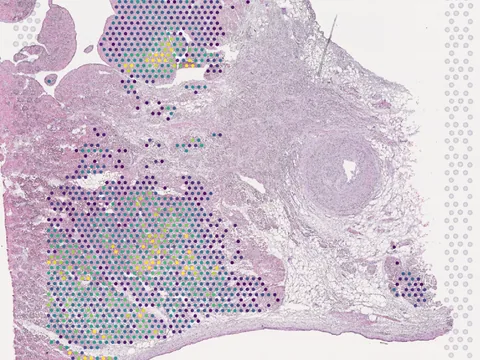
sdatas = {a.key: sd.read_zarr(a.cache()) for a in coll.ordered_artifacts.all()}The function of a cell is defined by its intrinsic characteristics and its niche: the tissue microenvironment in which it dwells. Here we combine single-cell and spatial transcriptomics data to discover cellular niches within eight regions of the human heart. We map cells to microanatomical locations and integrate knowledge-based and unsupervised structural annotations. We also profile the cells of the human cardiac conduction system<sup>1</sup>. The results revealed their distinctive repertoire of ion channels, G-protein-coupled receptors (GPCRs) and regulatory networks, and implicated FOXP2 in the pacemaker phenotype. We show that the sinoatrial node is compartmentalized, with a core of pacemaker cells, fibroblasts and glial cells supporting glutamatergic signalling. Using a custom CellPhoneDB.org module, we identify trans-synaptic pacemaker cell interactions with glia. We introduce a druggable target prediction tool, drug2cell, which leverages single-cell profiles and drug-target interactions to provide mechanistic insights into the chronotropic effects of drugs, including GLP-1 analogues. In the epicardium, we show enrichment of both IgG<sup>+</sup> and IgA<sup>+</sup> plasma cells forming immune niches that may contribute to infection defence. Overall, we provide new clarity to cardiac electro-anatomy and immunology, and our suite of computational approaches can be applied to other tissues and organs.
Visium 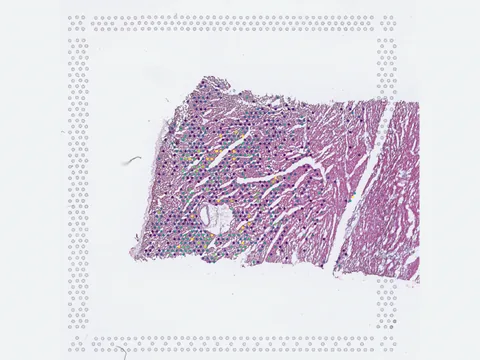 Visium
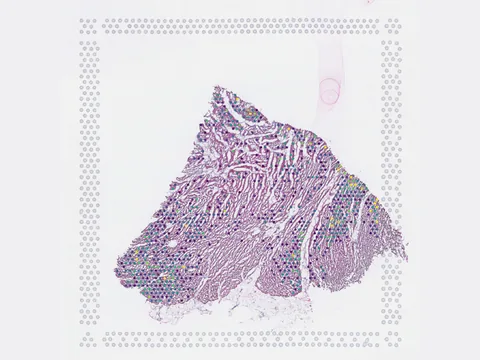 Visium
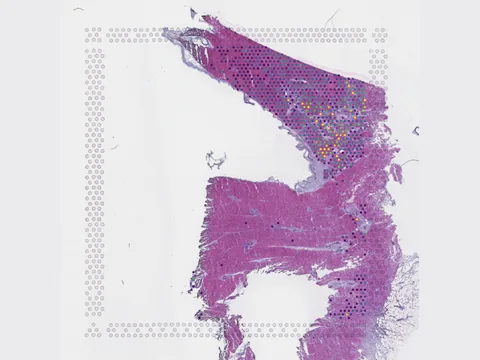 Visium
 Visium
 Visium
 Visium
 Visium
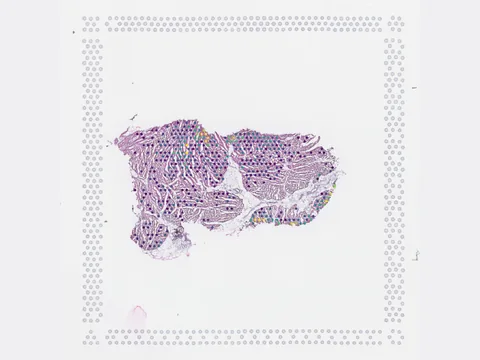 Visium
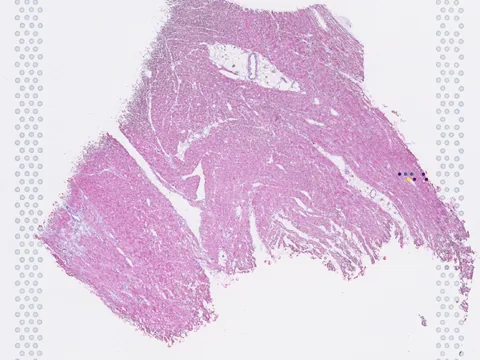 Visium
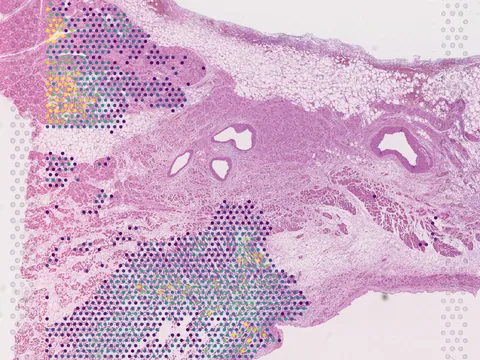 Visium
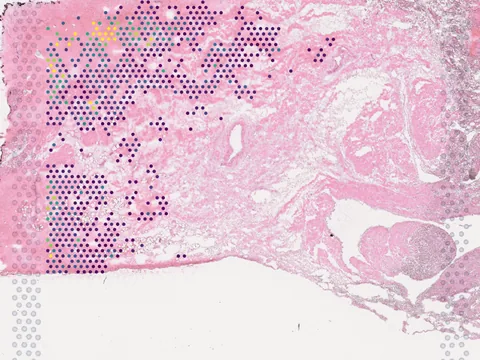 Visium
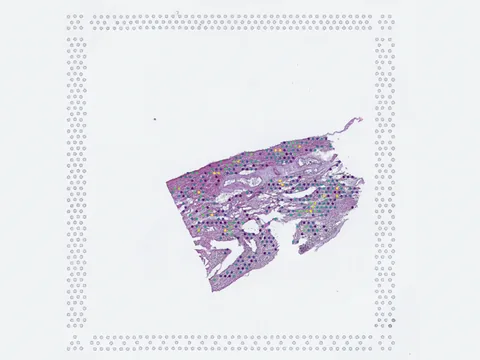 Visium
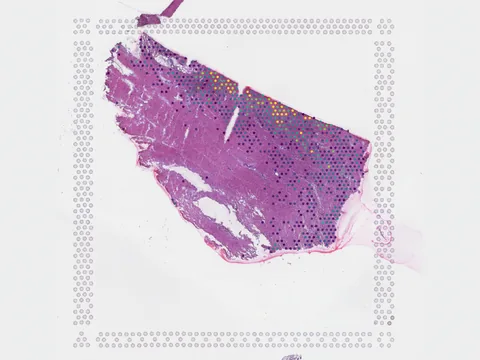 Visium
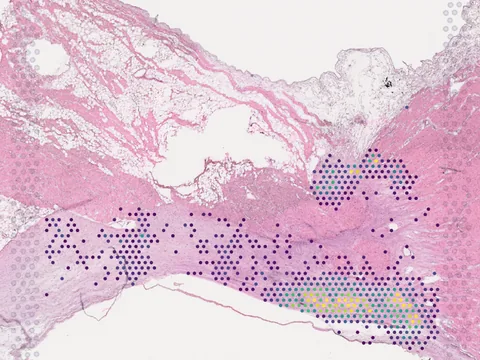 Visium
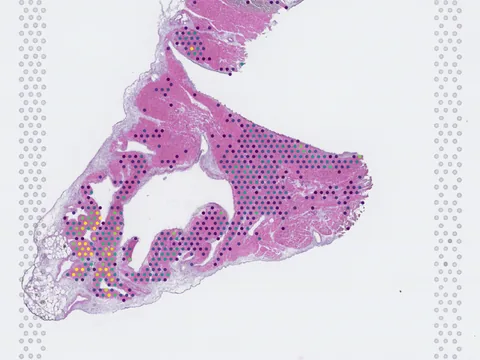 Visium
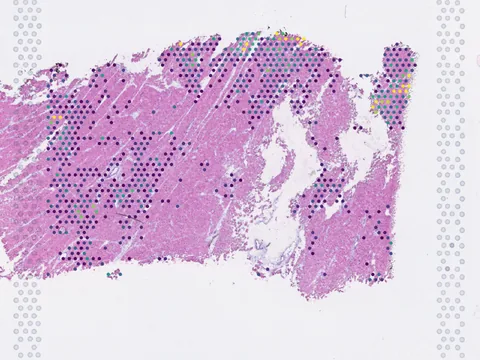 Visium
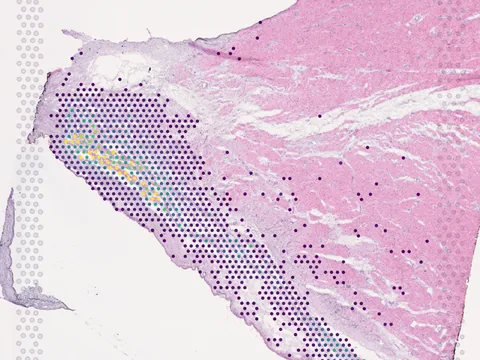 Visium
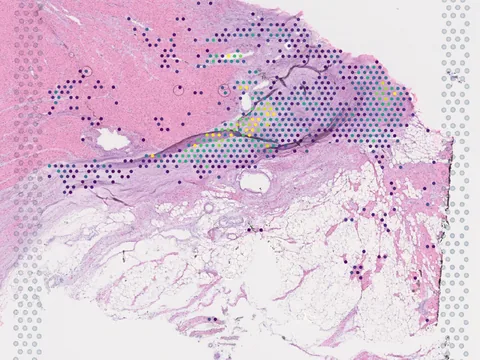 Visium
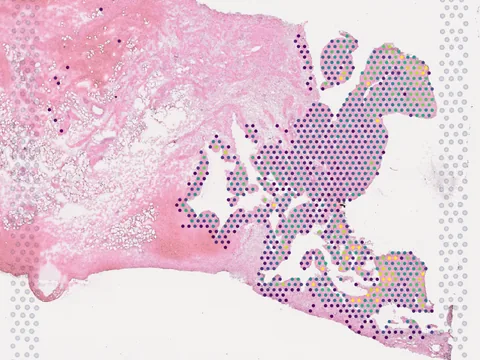 Visium
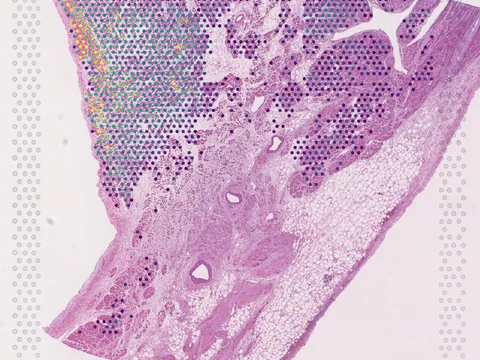 Visium
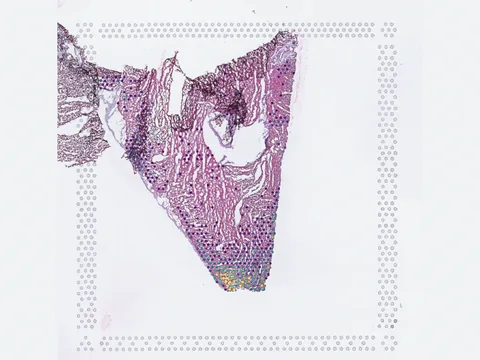 Visium
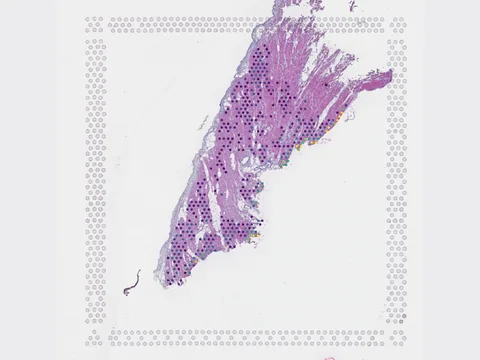 Visium
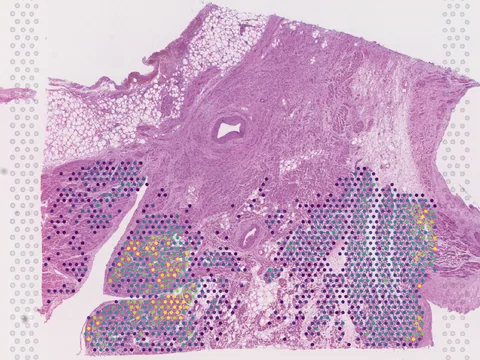 Visium
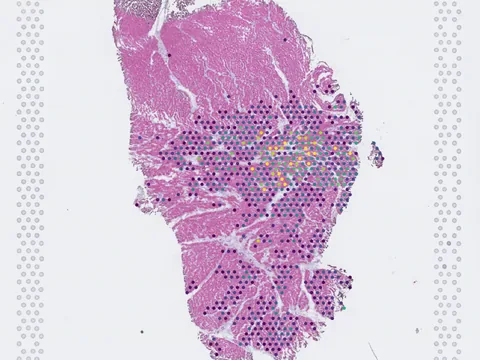 Visium
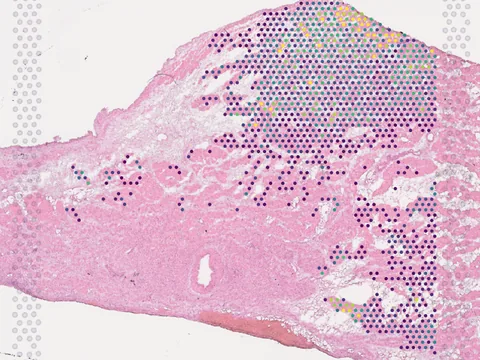 Visium
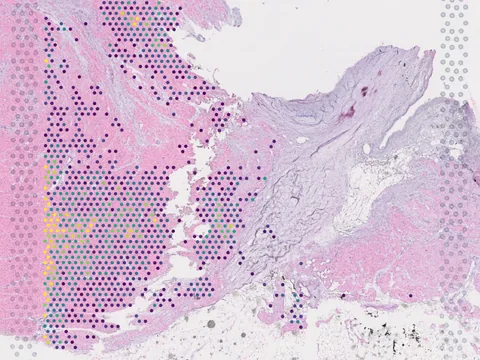 Visium
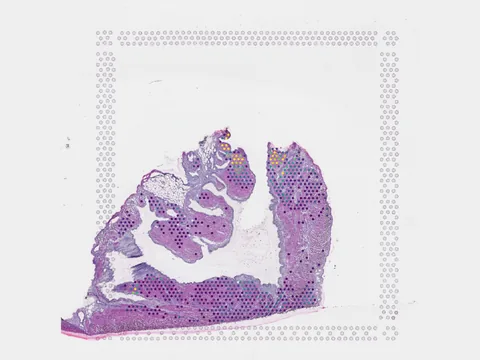 Visium
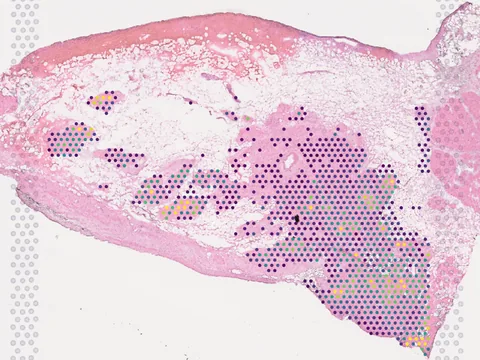 Visium
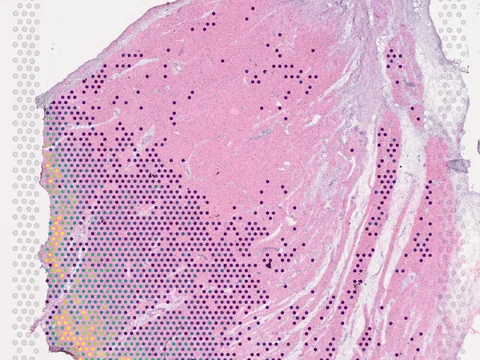 Visium
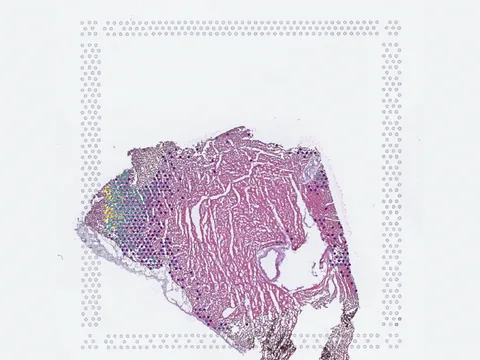 Visium
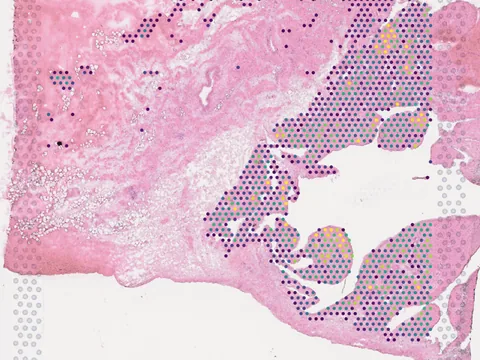 Visium
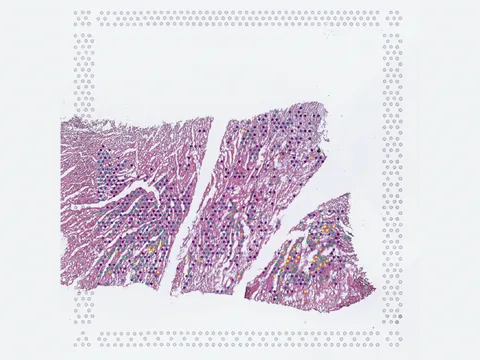 Visium
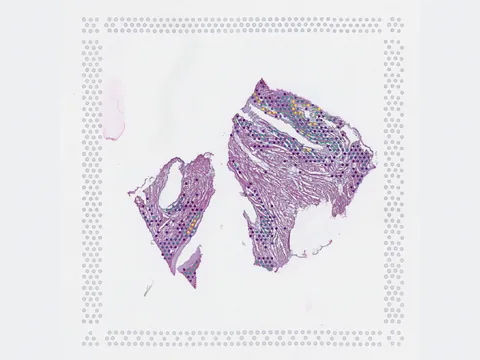 Visium
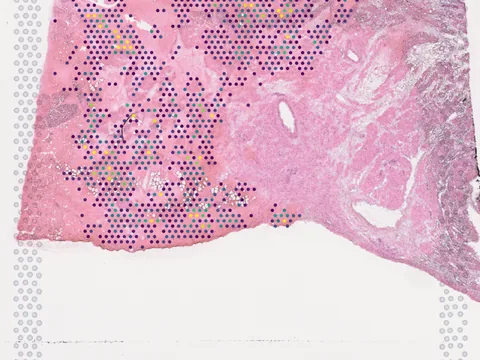 Visium
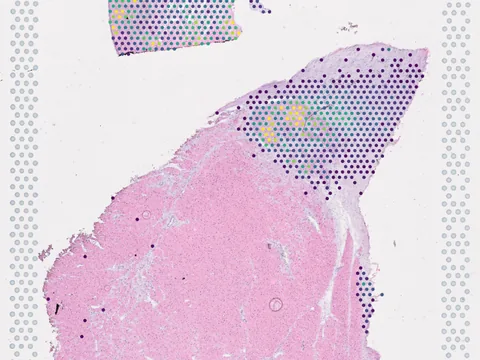 Visium
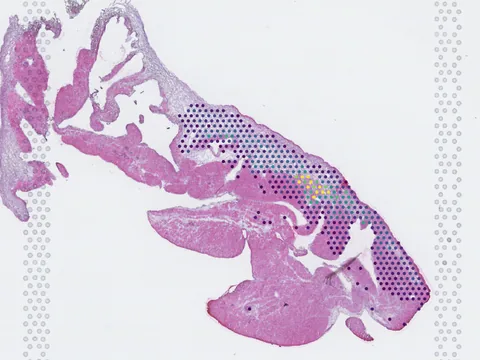 Visium
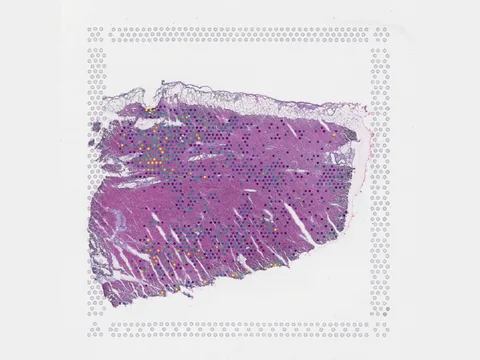 Visium
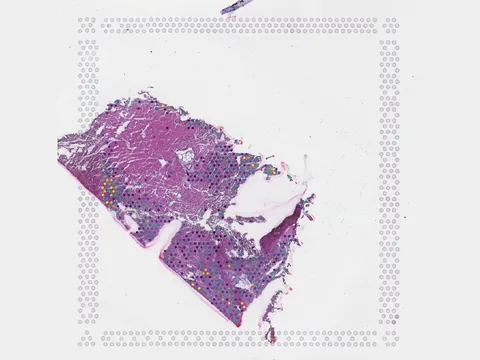 Visium
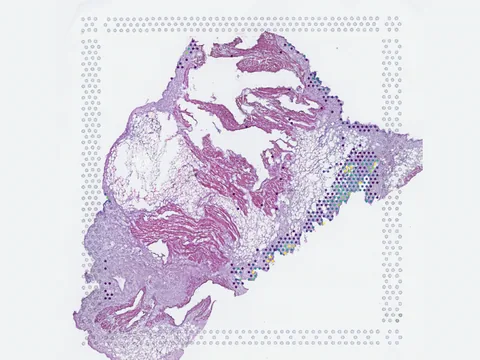 Visium
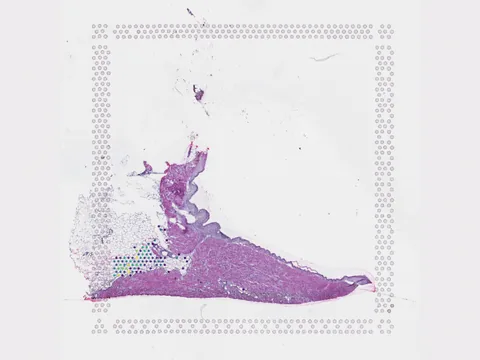 Visium
@article{Kanemaru_2023,
  title = {Spatially resolved multiomics of human cardiac niches},
  volume = {619},
  ISSN = {1476-4687},
  url = {http://dx.doi.org/10.1038/s41586-023-06311-1},
  DOI = {10.1038/s41586-023-06311-1},
  number = {7971},
  journal = {Nature},
  publisher = {Springer Science and Business Media LLC},
  author = {Kanemaru, Kazumasa and Cranley, James and Muraro, Daniele and Miranda, Antonio M. A. and Ho, Siew Yen and Wilbrey-Clark, Anna and Patrick Pett, Jan and Polanski, Krzysztof and Richardson, Laura and Litvinukova, Monika and Kumasaka, Natsuhiko and Qin, Yue and Jablonska, Zuzanna and Semprich, Claudia I. and Mach, Lukas and Dabrowska, Monika and Richoz, Nathan and Bolt, Liam and Mamanova, Lira and Kapuge, Rakeshlal and Barnett, Sam N. and Perera, Shani and Talavera-López, Carlos and Mulas, Ilaria and Mahbubani, Krishnaa T. and Tuck, Liz and Wang, Lu and Huang, Margaret M. and Prete, Martin and Pritchard, Sophie and Dark, John and Saeb-Parsy, Kourosh and Patel, Minal and Clatworthy, Menna R. and Hübner, Norbert and Chowdhury, Rasheda A. and Noseda, Michela and Teichmann, Sarah A.},
  year = {2023},
  month = July,
  pages = {801–810}
}