
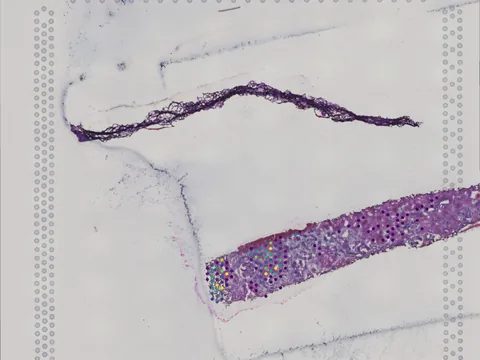
 Visium
Human kidney
NCBI703
human kidney diabetic kidney disease 202 MB 453 obs silver H&E
TechnologyVisium
Organismhuman
Tissuekidney
Conditiondiabetic kidney disease
Obs453
silver H&E
import lamindb as ln
import spatialdata as sd

coll = ln.Collection.get(key="doi-10.1038/s41586-023-05769-3")
coll.ordered_artifacts.df()                 # the 23 members, ordered

# download every member .zarr to the local cache:
paths = [a.cache() for a in coll.ordered_artifacts.all()]

# …or load each straight into memory as a SpatialData object:
sdatas = {a.key: sd.read_zarr(a.cache()) for a in coll.ordered_artifacts.all()}Understanding kidney disease relies on defining the complexity of cell types and states, their associated molecular profiles and interactions within tissue neighbourhoods<sup>1</sup>. Here we applied multiple single-cell and single-nucleus assays (>400,000 nuclei or cells) and spatial imaging technologies to a broad spectrum of healthy reference kidneys (45 donors) and diseased kidneys (48 patients). This has provided a high-resolution cellular atlas of 51 main cell types, which include rare and previously undescribed cell populations. The multi-omic approach provides detailed transcriptomic profiles, regulatory factors and spatial localizations spanning the entire kidney. We also define 28 cellular states across nephron segments and interstitium that were altered in kidney injury, encompassing cycling, adaptive (successful or maladaptive repair), transitioning and degenerative states. Molecular signatures permitted the localization of these states within injury neighbourhoods using spatial transcriptomics, while large-scale 3D imaging analysis (around 1.2 million neighbourhoods) provided corresponding linkages to active immune responses. These analyses defined biological pathways that are relevant to injury time-course and niches, including signatures underlying epithelial repair that predicted maladaptive states associated with a decline in kidney function. This integrated multimodal spatial cell atlas of healthy and diseased human kidneys represents a comprehensive benchmark of cellular states, neighbourhoods, outcome-associated signatures and publicly available interactive visualizations.
Visium 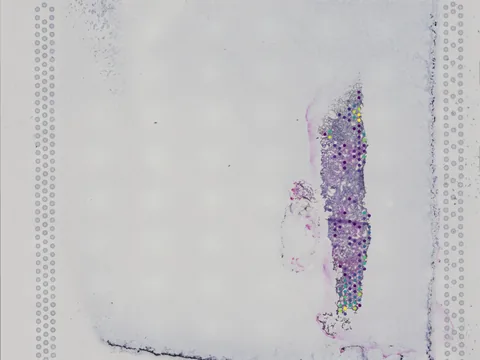 Visium
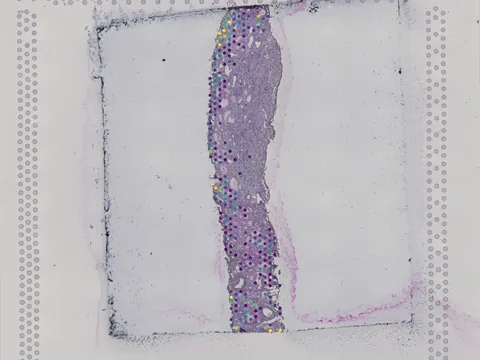 Visium
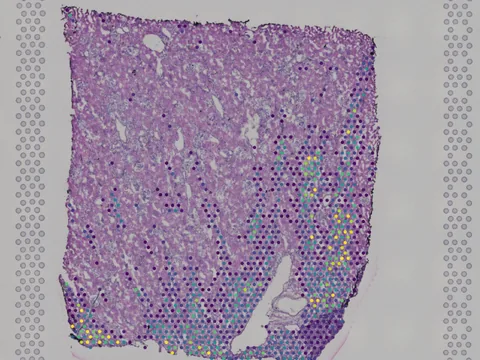 Visium
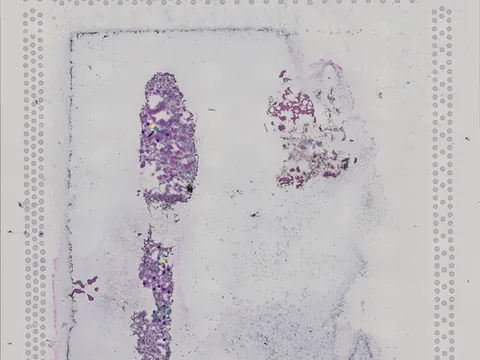 Visium
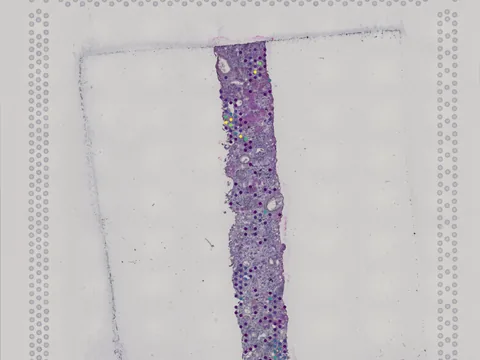 Visium
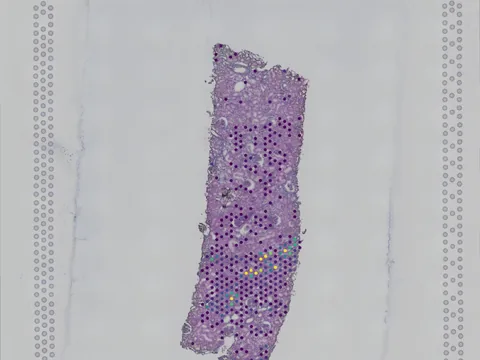 Visium
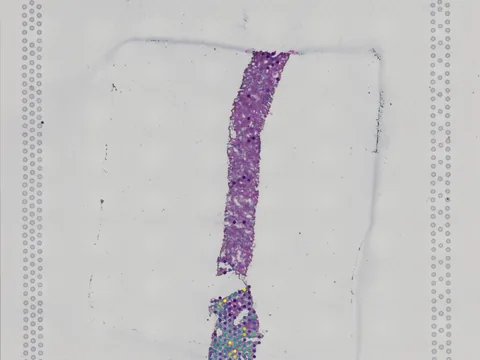 Visium
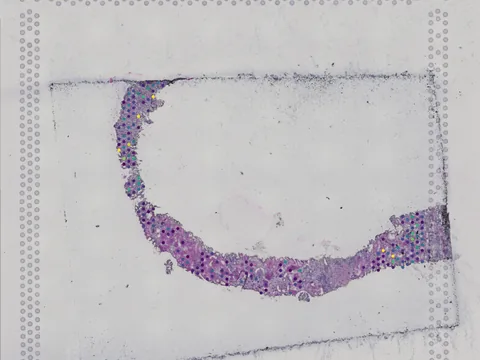 Visium
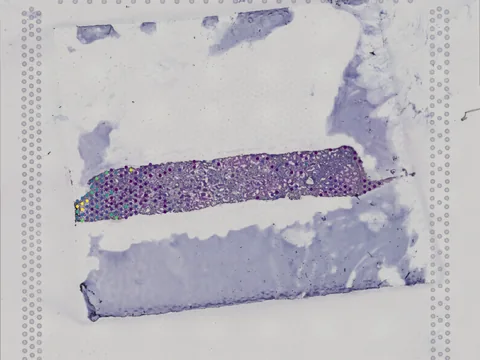 Visium
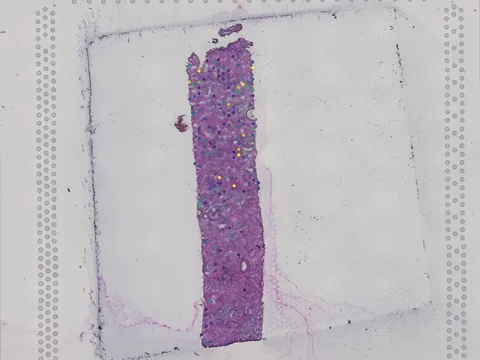 Visium
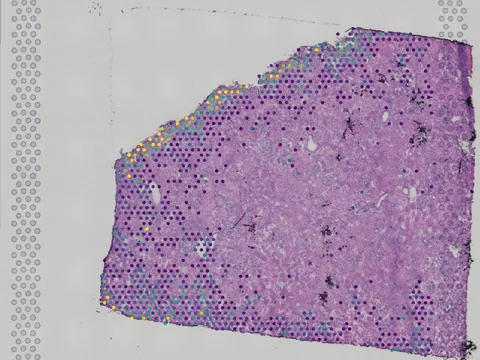 Visium
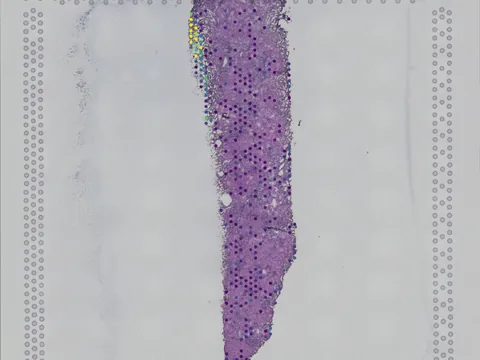 Visium
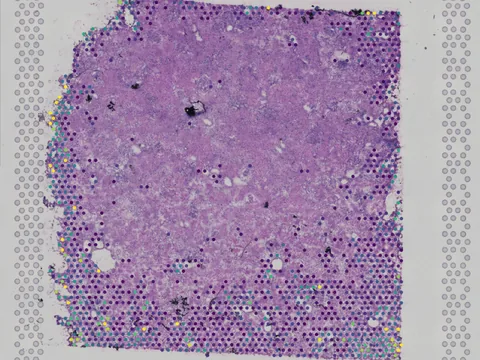 Visium
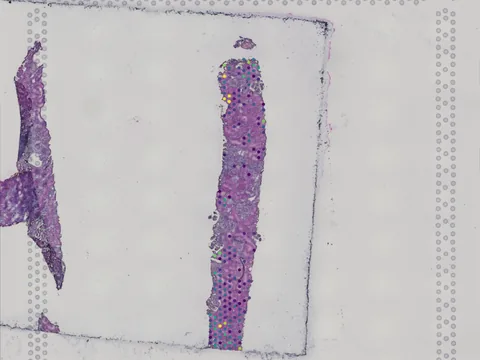 Visium
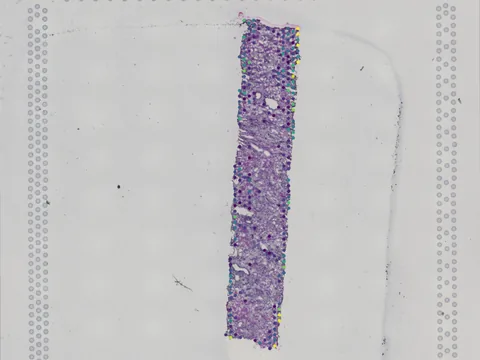 Visium
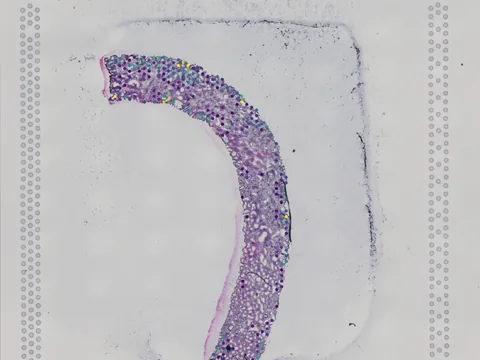 Visium
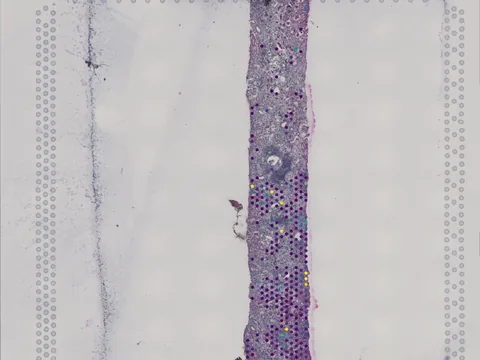 Visium
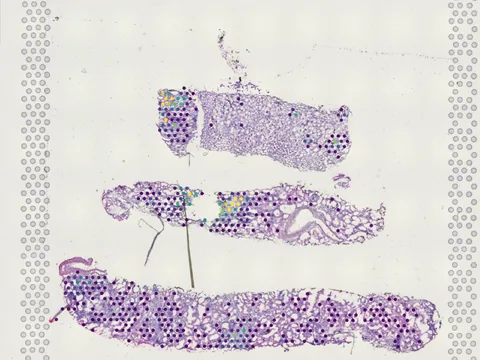 Visium
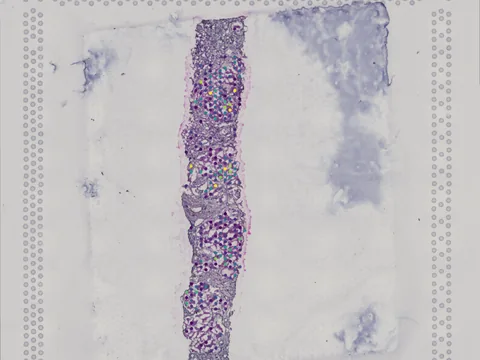 Visium
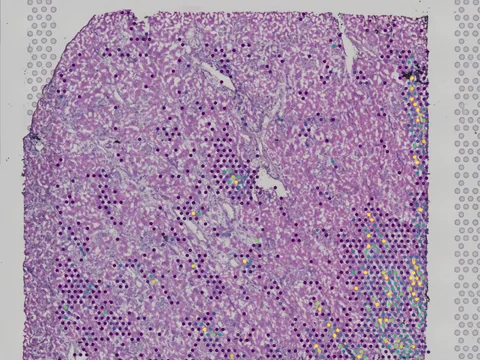 Visium
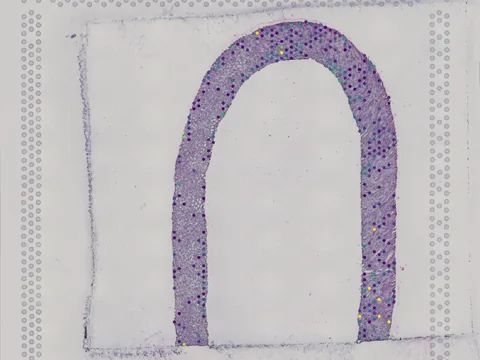 Visium
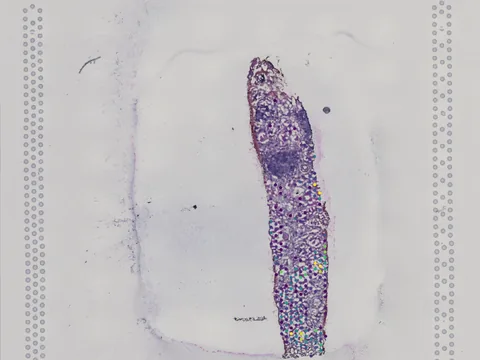 Visium
@article{Lake_2023,
  title = {An atlas of healthy and injured cell states and niches in the human kidney},
  volume = {619},
  ISSN = {1476-4687},
  url = {http://dx.doi.org/10.1038/s41586-023-05769-3},
  DOI = {10.1038/s41586-023-05769-3},
  number = {7970},
  journal = {Nature},
  publisher = {Springer Science and Business Media LLC},
  author = {Lake, Blue B. and Menon, Rajasree and Winfree, Seth and Hu, Qiwen and Melo Ferreira, Ricardo and Kalhor, Kian and Barwinska, Daria and Otto, Edgar A. and Ferkowicz, Michael and Diep, Dinh and Plongthongkum, Nongluk and Knoten, Amanda and Urata, Sarah and Mariani, Laura H. and Naik, Abhijit S. and Eddy, Sean and Zhang, Bo and Wu, Yan and Salamon, Diane and Williams, James C. and Wang, Xin and Balderrama, Karol S. and Hoover, Paul J. and Murray, Evan and Marshall, Jamie L. and Noel, Teia and Vijayan, Anitha and Hartman, Austin and Chen, Fei and Waikar, Sushrut S. and Rosas, Sylvia E. and Wilson, Francis P. and Palevsky, Paul M. and Kiryluk, Krzysztof and Sedor, John R. and Toto, Robert D. and Parikh, Chirag R. and Kim, Eric H. and Satija, Rahul and Greka, Anna and Macosko, Evan Z. and Kharchenko, Peter V. and Gaut, Joseph P. and Hodgin, Jeffrey B. and Knight, Richard and Lecker, Stewart H. and Stillman, Isaac and Amodu, Afolarin A. and Ilori, Titlayo and Maikhor, Shana and Schmidt, Insa and McMahon, Gearoid M. and Weins, Astrid and Hacohen, Nir and Bush, Lakeshia and Gonzalez-Vicente, Agustin and Taliercio, Jonathan and O’toole, John and Poggio, Emilio and Cooperman, Leslie and Jolly, Stacey and Herlitz, Leal and Nguyen, Jane and Palmer, Ellen and Sendrey, Dianna and Spates-Harden, Kassandra and Appelbaum, Paul and Barasch, Jonathan M. and Bomback, Andrew S. and D’Agati, Vivette D. and Mehl, Karla and Canetta, Pietro A. and Shang, Ning and Balderes, Olivia and Kudose, Satoru and Barisoni, Laura and Alexandrov, Theodore and Cheng, Yinghua and Dunn, Kenneth W. and Kelly, Katherine J. and Sutton, Timothy A. and Wen, Yumeng and Corona-Villalobos, Celia P. and Menez, Steven and Rosenberg, Avi and Atta, Mohammed and Johansen, Camille and Sun, Jennifer and Roy, Neil and Williams, Mark and Azeloglu, Evren U. and He, Cijang and Iyengar, Ravi and Hansen, Jens and Xiong, Yuguang and Rovin, Brad and Parikh, Samir and Madhavan, Sethu M. and Anderton, Christopher R. and Pasa-Tolic, Ljiljana and Velickovic, Dusan and Troyanskaya, Olga and Sealfon, Rachel and Tuttle, Katherine R. and Laszik, Zoltan G. and Nolan, Garry and Sarwal, Minnie and Anjani, Kavya and Sigdel, Tara and Ascani, Heather and Balis, Ulysses G. J. and Lienczewski, Chrysta and Steck, Becky and He, Yougqun and Schaub, Jennifer and Blanc, Victoria M. and Murugan, Raghavan and Randhawa, Parmjeet and Rosengart, Matthew and Tublin, Mitchell and Vita, Tina and Kellum, John A. and Hall, Daniel E. and Elder, Michele M. and Winters, James and Gilliam, Matthew and Alpers, Charles E. and Blank, Kristina N. and Carson, Jonas and De Boer, Ian H. and Dighe, Ashveena L. and Himmelfarb, Jonathan and Mooney, Sean D. and Shankland, Stuart and Williams, Kayleen and Park, Christopher and Dowd, Frederick and McClelland, Robyn L. and Daniel, Stephen and Hoofnagle, Andrew N. and Wilcox, Adam and Bansal, Shweta and Sharma, Kumar and Venkatachalam, Manjeri and Zhang, Guanshi and Pamreddy, Annapurna and Kakade, Vijaykumar R. and Moledina, Dennis and Shaw, Melissa M. and Ugwuowo, Ugochukwu and Arora, Tanima and Ardayfio, Joseph and Bebiak, Jack and Brown, Keith and Campbell, Catherine E. and Saul, John and Shpigel, Anna and Stutzke, Christy and Koewler, Robert and Campbell, Taneisha and Hayashi, Lynda and Jefferson, Nichole and Pinkeney, Roy and Roberts, Glenda V. and Eadon, Michael T. and Dagher, Pierre C. and El-Achkar, Tarek M. and Zhang, Kun and Kretzler, Matthias and Jain, Sanjay},
  year = {2023},
  month = July,
  pages = {585–594}
}