
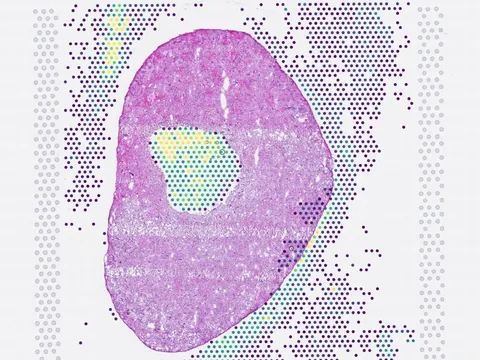
 Visium
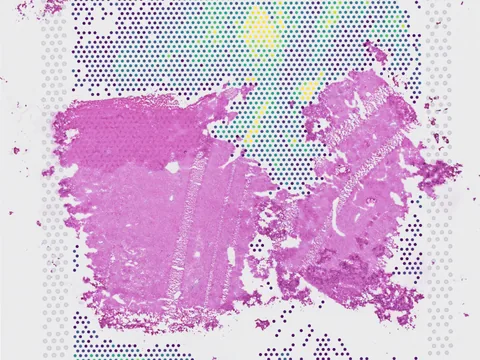
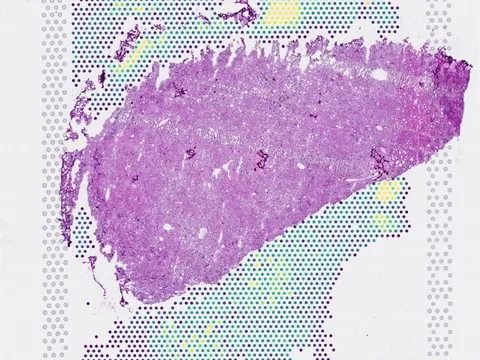
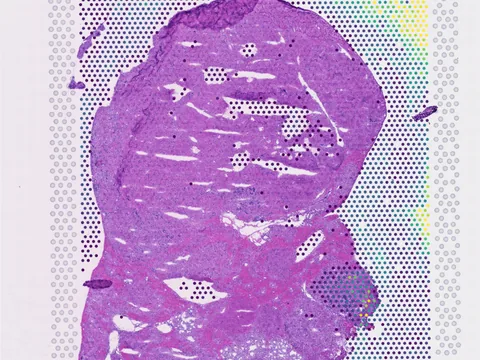
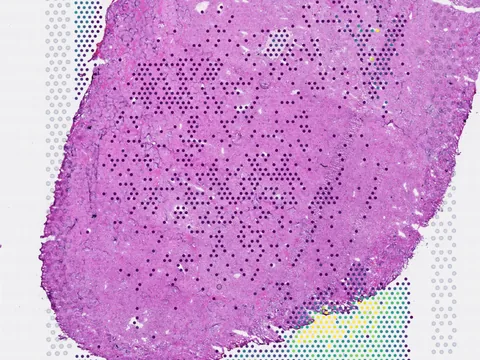
Mouse liver
NCBI623
mouse liver hepatoblastoma 169 MB 4,992 obs silver H&E
TechnologyVisium
Organismmouse
Tissueliver
Conditionhepatoblastoma
Obs4,992
silver H&E
import lamindb as ln
import spatialdata as sd

coll = ln.Collection.get(key="doi-10.1038/s41467-023-39717-6")
coll.ordered_artifacts.df()                 # the 10 members, ordered

# download every member .zarr to the local cache:
paths = [a.cache() for a in coll.ordered_artifacts.all()]

# …or load each straight into memory as a SpatialData object:
sdatas = {a.key: sd.read_zarr(a.cache()) for a in coll.ordered_artifacts.all()}A lack of relevant genetic models and cell lines hampers our understanding of hepatoblastoma pathogenesis and the development of new therapies for this neoplasm. Here, we report an improved MYC-driven hepatoblastoma-like murine model that recapitulates the pathological features of embryonal type of hepatoblastoma, with transcriptomics resembling the high-risk gene signatures of the human disease. Single-cell RNA-sequencing and spatial transcriptomics identify distinct subpopulations of hepatoblastoma cells. After deriving cell lines from the mouse model, we map cancer dependency genes using CRISPR-Cas9 screening and identify druggable targets shared with human hepatoblastoma (e.g., CDK7, CDK9, PRMT1, PRMT5). Our screen also reveals oncogenes and tumor suppressor genes in hepatoblastoma that engage multiple, druggable cancer signaling pathways. Chemotherapy is critical for human hepatoblastoma treatment. A genetic mapping of doxorubicin response by CRISPR-Cas9 screening identifies modifiers whose loss-of-function synergizes with (e.g., PRKDC) or antagonizes (e.g., apoptosis genes) the effect of chemotherapy. The combination of PRKDC inhibition and doxorubicin-based chemotherapy greatly enhances therapeutic efficacy. These studies provide a set of resources including disease models suitable for identifying and validating potential therapeutic targets in human high-risk hepatoblastoma.
Visium 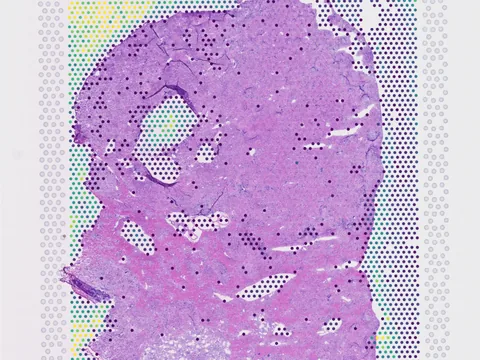 Visium
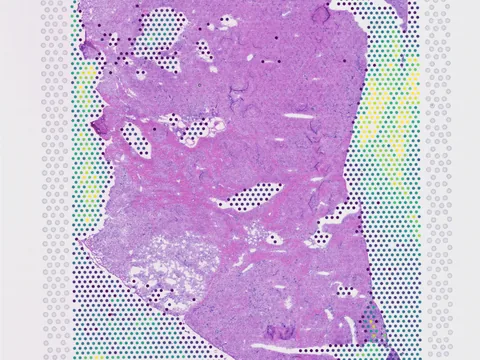 Visium
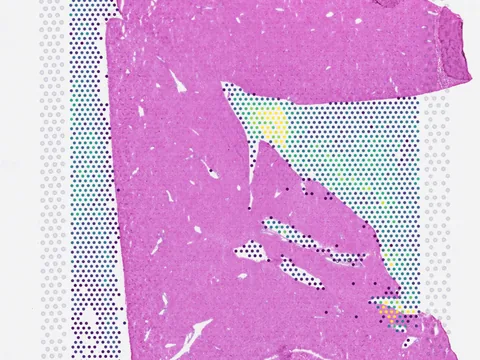 Visium
 Visium
 Visium
 Visium
 Visium
 Visium
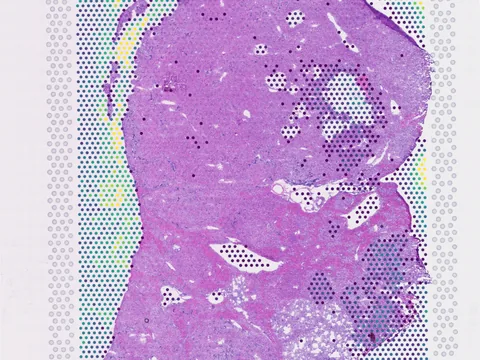 Visium
@article{Fang_2023,
  title = {Genome-wide mapping of cancer dependency genes and genetic modifiers of chemotherapy in high-risk hepatoblastoma},
  volume = {14},
  ISSN = {2041-1723},
  url = {http://dx.doi.org/10.1038/s41467-023-39717-6},
  DOI = {10.1038/s41467-023-39717-6},
  number = {1},
  journal = {Nature Communications},
  publisher = {Springer Science and Business Media LLC},
  author = {Fang, Jie and Singh, Shivendra and Cheng, Changde and Natarajan, Sivaraman and Sheppard, Heather and Abu-Zaid, Ahmed and Durbin, Adam D. and Lee, Ha Won and Wu, Qiong and Steele, Jacob and Connelly, Jon P. and Jin, Hongjian and Chen, Wenan and Fan, Yiping and Pruett-Miller, Shondra M. and Rehg, Jerold E. and Koo, Selene C. and Santiago, Teresa and Emmons, Joseph and Cairo, Stefano and Wang, Ruoning and Glazer, Evan S. and Murphy, Andrew J. and Chen, Taosheng and Davidoff, Andrew M. and Armengol, Carolina and Easton, John and Chen, Xiang and Yang, Jun},
  year = {2023},
  month = July
}